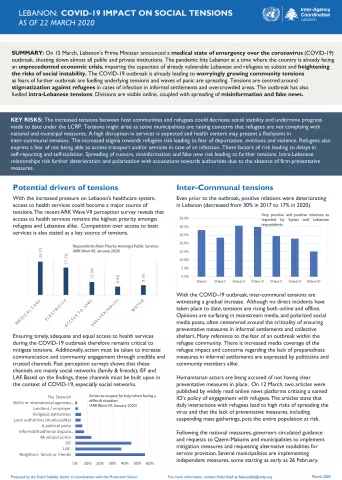
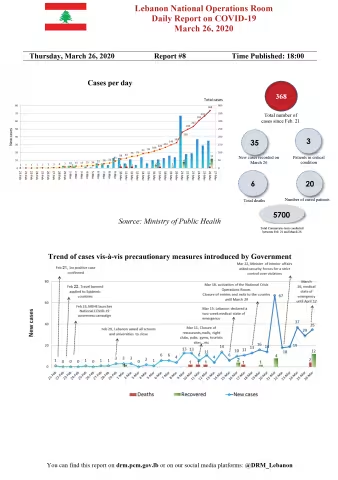
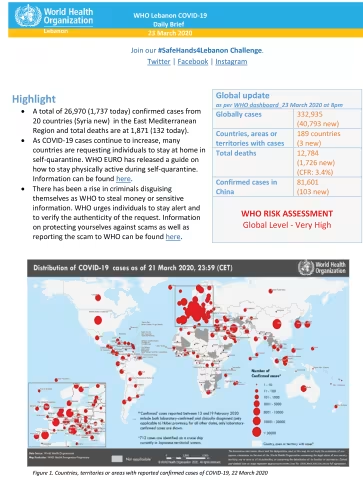
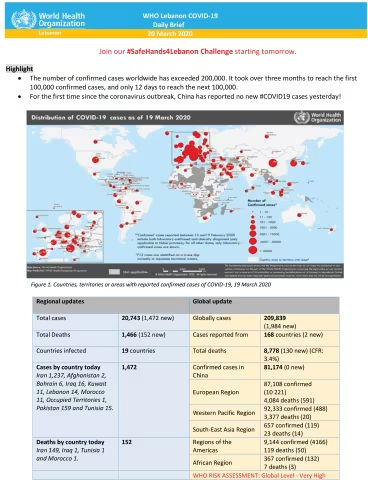
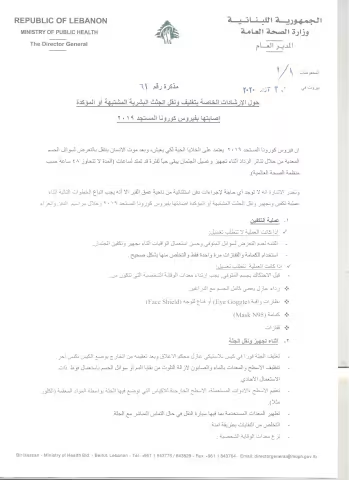
On 15 March, Lebanon’s Prime Minister announced a medical state of emergency over the coronavirus (COVID-19) outbreak, shutting down almost all public and private institutions. The pandemic hits Lebanon at a time where the country is already facing an unprecedented economic crisis, impairing the capacities of already vulnerable Lebanese and refugees to subsist and heightening the risks of social instability. The COVID-19 outbreak is already leading to worryingly growing community tensions as fears of further outbreak are fuelling underlying tensions and waves of panic are spreading. Tensions...
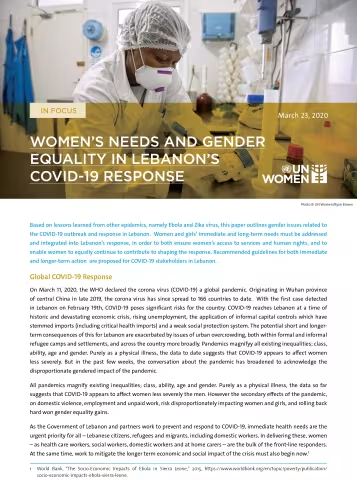
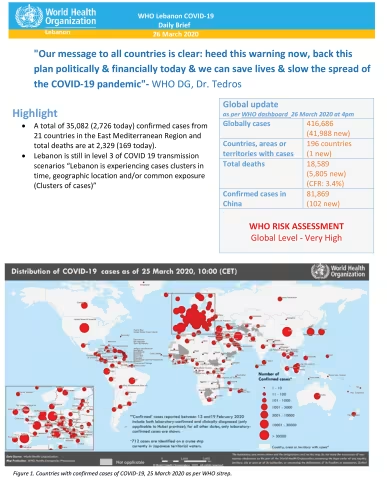
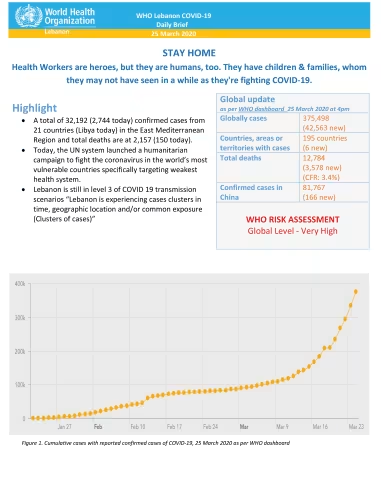
On March 11, 2020, the WHO declared the corona virus (COVID-19) a global pandemic. Originating in Wuhan province
of central China in late 2019, the corona virus has since spread to 166 countries to date.
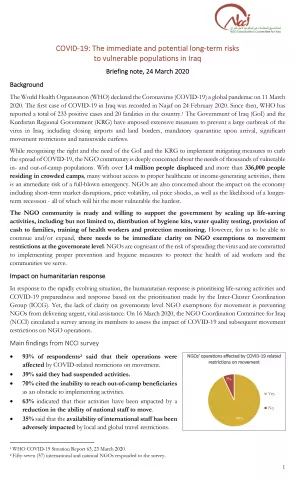
The World Health Organisation (WHO) declared the Coronavirus (COVID-19) a global pandemic on 11 March 2020. The first case of COVID-19 in Iraq was recorded in Najaf on 24 February 2020. Since then, WHO has reported a total of 233 positive cases and 20 fatalities in the country.1 The Government of Iraq (GoI) and the Kurdistan Regional Government (KRG) have imposed extensive measures to prevent a large outbreak of the virus in Iraq, including closing airports and land borders, mandatory quarantine upon arrival, significant movement restrictions and nationwide curfews.
This briefing note summarizes key mental health and psychosocial support (MHPSS) considerations in relation to the
2019 novel coronavirus (COVID-19) outbreak. The brief was last updated February 2020.
The 2019 CPDE Monitoring Report’s Key Messages and Recommendations aim to inform and augment dialogue in the Global Partnership for Effective Development Cooperation (henceforth the Global Partnership). CPDE is committed to dialogue on outstanding development effectiveness challenges, including ‘unfinished business’ for many key commitments and indicators agreed in Paris (2005) and Busan (2011).
The Report focuses on the centrality of democratic country ownership by examining in more depth issues of inclusion in development policy and practices, in the context of a human rights-based approach...
This Gender Manual is a practical guide for civil society organisations in Lebanon that wish to enhance gender equity in their practices and policies. Far from being exhaustive, this manual contains practical guidelines that can help to both gain a better understanding of gender-sensitive topics, as well as to integrate and implement them in internal processes, action plans, and organisational structures and policies. It is informed by the findings of a series of meetings and consultations with various stakeholders engaged in gender issues. It is worth noting, however, that the guidelines...