Research and Policy Memo #2 | January 2009
Public Sector Can Reduce Push Factors that Drive Youth Emigration Jad Chaaban
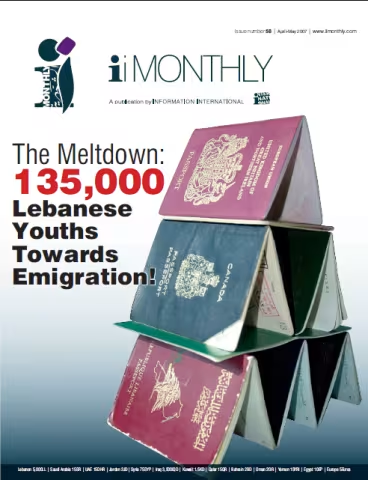
Young men and women prefer to leave Lebanon either temporarily or permanently to work abroad, leading to a decline in the country’s human capital and welfare. While the factors that attract youth abroad cannot be altered, the onus rests on public institutions in Lebanon to reduce the internal “push” factors that drive youth away.
“The Lebanese population’s age pyramid shows a shrinking trend in the 20-35 age categories,” said Jad Chaaban, a leading economist and researcher...
مذكرات للباحثين و صناع القرار #1 | تشرين الثاني 2008
شباب مصريون يعيدون اكتشاف المشاركة المدنية، ويؤسسون لأشكال جديدة من الخدمة العامبربارة إبراهيم
يمثل جيل الحركات الشبابية المصرية الحالي أكبر المجموعات الشبابية التي تخوض معركة اثبات الوجود في العالم العربي. أدواتهم تتراوح بين الخدمات الاجتماعية التقليدية، و تقنيات الاتصال الجديدة في سبيل مواجهة الحظر المفروض عليهم من قبل الأنظمة السياسية والعائلية. وهذه الحركات هي التجربة التي سلطت الضوء عليها الدكتورة بربارة ابراهيم ومجموعة أخرى من الباحثين في مصر
ويسود في عالمنا ”اجتاه لمعاملة الشباب وقضايا الشباب بطريقة جد موعظية، ومبسطة،“ بحسب إبراهيم،...
Research and Policy Memo #1 | November 2008
Young Egyptians reinvent civic engagement, leading to new forms of public serviceBarbara Ibrahim
As the largest ever cohort of young people in the Arab World struggles to find its place in society, youth are forging arenas for public participation that draw upon new media and traditional social service. Initiated by young people, this movement responds to the exclusion they feel from family and state structures that block their public participation. It is a new brand of youth movements that Dr. Barbara Ibrahim and other researchers have identified in...
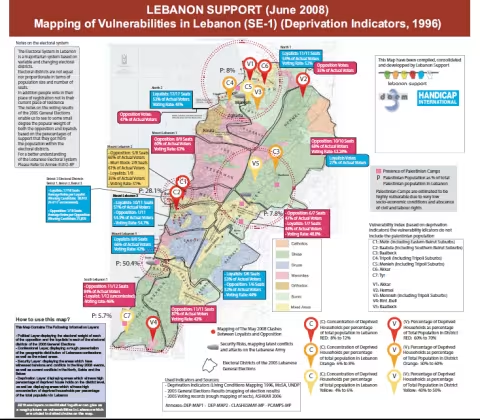
This Map Contains The Following Information Layers: - Political Layer displaying the electoral weight of each of the opposition and the loyalists in each of the electoral districts of the 2005 General Elections - Confessional Layer, displaying a rough presentation of the geogr
Events and experiences over the past years have confirmed that Lebanon is not a "country" in the legal and political context of the term but an "agreement" between 18 confessions to live on one land and find an appropriate framework (the state) to deal with their differences.
The Lebanese people are divided behind their zu'ama (leaders), who always disagree over national and critical matters in order to protect their status and interests.
In the previous issue, Information International surveyed the opinion of the Lebanes on various issues, namely their political belonging, their position toward Hizbullah's arms and rearmament of political parties, their most preferred candidates for presidency and premiership,
This law is prepared by the National Commission on Parliamentary Electoral Law appointed by the Council of Ministers under Decision no 58 dated 8/8/2005.
A detailed report on ANND’s participation in this forum that covered the issues of neoliberal globalization and human development, women’s rights, geopolitical changes, democracy and public freedoms, cultural dimensions, environment and sustainable development, migration and t
The popularity of the women’s rights cause and its obvious intrinsic merit have unfortunately generated many facile assumptions and much confusion about the conditions of women in the Middle East and the problems they face