Research and Policy Memo #5 | June 2009
Carbon Trading: A Potential for Arab Countries to Abate Climate ChangeJad Chaaban,and Souheil Abboud
Carbon emissions trading provides a financial incentive for Arab countries to mitigate the effects of climate change, but they still need to reduce carbon emissions and follow the Kyoto Protocol in an international effort to fend off global warming.
This was the view from academia and the private sector on carbon trading as a climate change mitigation strategy for the Arab world, presented during a recent lecture at the American University of Beirut (AUB)...
Research and Policy Memo #5 | June 2009
Carbon Trading: A Potential for Arab Countries to Abate Climate ChangeJad Chaaban,and Souheil Abboud
Carbon emissions trading provides a financial incentive for Arab countries to mitigate the effects of climate change, but they still need to reduce carbon emissions and follow the Kyoto Protocol in an international effort to fend off global warming.
This was the view from academia and the private sector on carbon trading as a climate change mitigation strategy for the Arab world, presented during a recent lecture at the American University of Beirut (AUB)...
مذكرات للباحثين وصناع القرار #5 | حزيران 2009
تجارة الكربون: إمكانية أمام الدول العربية للحد من تغير المناخجاد شعبان
.يوفر الاتجار في انبعاثات الكربون حافزاً مالياً للدول العربية للتخفيف من آثار تغير المناخ، لكنها لا تزال بحاجة إلى خفض انبعاثات الكربون ومتابعة بروتوكول كيوتو في جهد دولي لدرء ظاهرة الاحتباس الحراري
.وكان هذا رأي الاوساط الاكادميية والقطاع الخاص حول تجارة الكربون كاستراتيجية للتخفيف من حدة تغير المناخ في العالم العربي الذي تم عرضه خلال محاضرة جرت مؤخرا في الجامعة الاميركية في بيروت
Research and Policy Memo #4 | May 2009
Water Mismanagement Responsible for High Levels of Saline and Chloride in Greater Beirut GroundwaterMark Saadeh
Intrusion in the coastal aquifers of Greater Beirut has largely been a direct consequence of decades of water mismanagement – exacerbated by a civil war lasting more than fifteen years, according to Dr Mark Saadeh, consultant to the Litani River Authority. Concurrent urban growth and repeated natural drought conditions have also amplified this phenomenon.
Dr. Saadeh presented two lectures at AUB, as part of the Research and Policy Forum on...
Research and Policy Memo #4 | May 2009
Water Mismanagement Responsible for High Levels of Saline and Chloride in Greater Beirut GroundwaterMark Saadeh
Intrusion in the coastal aquifers of Greater Beirut has largely been a direct consequence of decades of water mismanagement – exacerbated by a civil war lasting more than fifteen years, according to Dr Mark Saadeh, consultant to the Litani River Authority. Concurrent urban growth and repeated natural drought conditions have also amplified this phenomenon.
Dr. Saadeh presented two lectures at AUB, as part of the Research and Policy Forum on...
Research and Policy Memo #3 | February 2009
Multi-Faceted Mitigation Can Reduce Risk of Complete Collapse of Arab World’s Water, Food, and Land SystemsGeorge J. Nasr
Shifts in trade and transport patterns due to global warming may cut off Arab countries from food and water, affecting them more than developed countries. This is only one of many urgent implications of climate change on food, water, and land in the Arab world - as outlined by George Nasr during a lecture at the American University of Beirut.
“Cross-border mobilization and immediate investment in research and development would...
The starting point for the present Report is that, since the publication of the first volume in the series, the region’s human development fault lines have grown more complex, and in some cases deepened.
أنجزت الدكتورة فهميّة شرف الدين هذه الدراسة الميدانية التحليليّة، بالتعاون مع برنامج اللأمم المتحدة الإنمائي(مشروع حقوق المر أة اللبنانية وقانون الجنسية) واللجنة الاهلية لمتابعة قضايا المرأة، في 2009.
مذكرات للباحثين و صناع القرار#2 | كانون الثاني 2009
بإمكان القطاع العام أن يخفف من العوامل التي تسبب هجرة الشبابجاد شعبان
يفضل الشباب، ذكوراً وإناثاً، مغادرة لبنان بشكل مؤقت أو نهائي للعمل خارجاً ّ ، مما يقلص من الثروة البشرية والمجتمعية للبلد. وبما أن العوامل الخارجية التي تجذب الشباب للهجرة لا يمكن تغييرها، فإن الحمل يبقى على ّ كاهل المؤسسات الرسمية لتحد من العوامل الداخلية التي تدفع بالشباب للهجرة.
ويضيق الهرم السكاني في لبنان عند فئة الشباب من عمر 20-35، بحسب الباحث والخبير الاقتصادي جاد شعبان، المهتم أيضا بقضايا الشباب فيالعالم العربي.
كما أن معظم من يهاجرون من الشباب إلى أميركا...
IFI Research and Policy Memo #2 | January 2009
Governments Should Practice 'Water Demand Management' to Rescue Region's Water ResourcesHamed Assaf
Surging populations and increasing living standards in the Middle East are exacerbating the region’s water problem as countries begin to expect more of scarce and poorly managed water, warned Dr. Hamed Assaf, a professor of water resources engineering at the American University of Beirut. High water demand, negligence of water quality, and over-pumping are more serious threats to the region’s water supply than are the potential impacts of climate...
2009 مذكرات للباحثين وصناع القرار #2 | كانون الثاني
على الحكومات أن تمارس "إدارة الطلب على المياه" كي تنقذ الموارد المائية للمنطقة من التغير المناخيحامد عساف
حذر البروفيسور حامد عساف من تفاقم مشكلة المياه في الشرق الاوسط يوماً بعد يوم، في ظل الزيادات السكانية وازدياد المتطلبات والمستوى المعيشي، مما يعني أنه على دول المنطقة توقع المزيد من الشح وتبعات سوء الإدارة في مواردها المائيةّ
وجاء كلام عساف، الدكتور برتبة بروفيسور في هندسة الموارد المائية في الجامعة الاميركية في بيروت، خلال محاضرته التي نظمها معهد عصام فارس للسياسات العامة والشؤون الدولية
Parliamentary elections of 2009 and the year 2008 in review. The evenings of tuesday and Wednesday, April 7/8 marked the last day to register as a candidate for the Lebanese Parliamentary Elections scheduled on Sunday June 7, 2009.
Research and Policy Memo #2 | January 2009
Public Sector Can Reduce Push Factors that Drive Youth Emigration Jad Chaaban
Young men and women prefer to leave Lebanon either temporarily or permanently to work abroad, leading to a decline in the country’s human capital and welfare. While the factors that attract youth abroad cannot be altered, the onus rests on public institutions in Lebanon to reduce the internal “push” factors that drive youth away.
“The Lebanese population’s age pyramid shows a shrinking trend in the 20-35 age categories,” said Jad Chaaban, a leading economist and researcher...
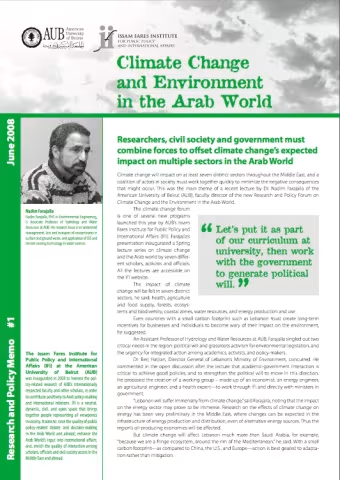
Research and Policy Memo by Nadim Farajalla, PhD in Environmental Engineering, who is an Associate Professor of Hydrology and Water Resources at AUB. The policy adresses climate change and environment in the Arab world, where Dr. Nadim Farajalla talked about in his lecture.
Climate change will impact on at least seven distinct sectors throughout the Middle East, and a coalition of actors in society must work together quickly to minimize the negative consequences that might occur.
Research and Policy Memo #1 | June 2008
Researchers, Civil Society and Government Must Combine Forces to Offset Climate Change’s Expected Impact on Multiple Sectors in the Arab World Nadim Farajalla
Climate change will impact on at least seven distinct sectors throughout the Middle East, and a coalition of actors in society must work together quickly to minimize the negative consequences that might occur. This was the main theme of a recent lecture by Dr. Nadim Farajalla of the American University of Beirut (AUB), faculty director of the new Research and Policy Forum on Climate Change and the...
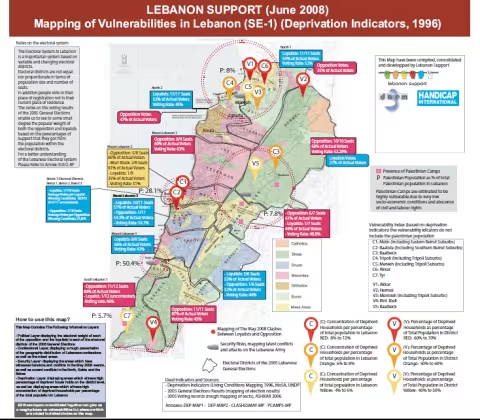
This Map Contains The Following Information Layers: - Political Layer displaying the electoral weight of each of the opposition and the loyalists in each of the electoral districts of the 2005 General Elections - Confessional Layer, displaying a rough presentation of the geogr
Events and experiences over the past years have confirmed that Lebanon is not a "country" in the legal and political context of the term but an "agreement" between 18 confessions to live on one land and find an appropriate framework (the state) to deal with their differences.
The Lebanese people are divided behind their zu'ama (leaders), who always disagree over national and critical matters in order to protect their status and interests.
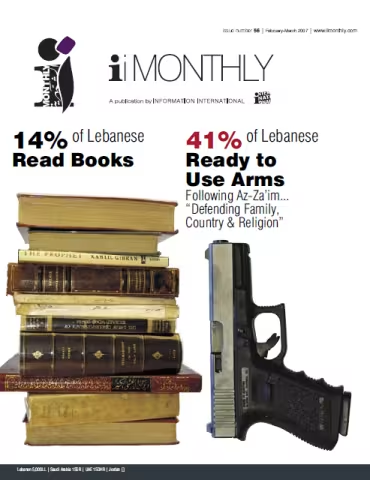
In the previous issue, Information International surveyed the opinion of the Lebanes on various issues, namely their political belonging, their position toward Hizbullah's arms and rearmament of political parties, their most preferred candidates for presidency and premiership,