يهدف هذا الدليل الثنائي اللغة للتزويد بالأدوات والمهارات لتأسيس مجموعة أومؤسسة وتنظيم عملها في لبنان، ونُشرَ ضمن مشروع قاعدة المعرفة حول المجتمع المدني، بالشراكة مع الوكالة السويسرية للشراكة والتعاون (SDC).
يجمع تصميم الدليل بين اللغتين العربية والانكليزية من أجل التأكد من وصوله لأكبر عدد ممكن من الفاعلين. وقد صمّمته نايلا يحيا.
This resource published within Lebanon Support's Humanitarian Knowledge Base, in partnership with the Swiss Agency for Development and Cooperation (SDC), aims to provide the tools and know-how to establish an organisation or collective and operate in Lebanon. It provides the basics relevant to establishing and running an NGO or unregistered group in Lebanon.
The Guidebook, designed by Nayla Yehia, presents the information in both English and Arabic so that it has a wider reach.
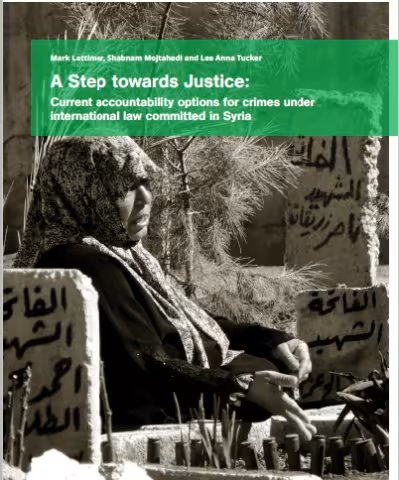
This document is an adaption of a speech delivered on May 12, 2015 at the launch of a report by the Syrian Justice and Accountability Center (SJAC) entitled ”A Step Towards Justice: Current Accountability Options for Crimes under International Law Committed in Syria.” The repo
This resource published within Lebanon Support's Humanitarian Knowledge Base, in partnership with the Swiss Agency for Development and Cooperation (SDC)
The 2015 Global Humanitarian Assistance (GHA) Report highlights that in 2013, 147 countries received humanitarian assistance, with countries from the Arab region, particularly those affected by the Syrian crisis, being the highest beneficiaries of aid.
Local actors experience conflicts first hand. Therefore, they have an intimate understanding of what conflict dynamics need to be addressed in order to build sustainable peace.
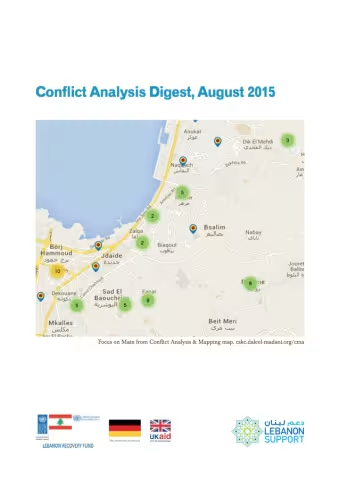
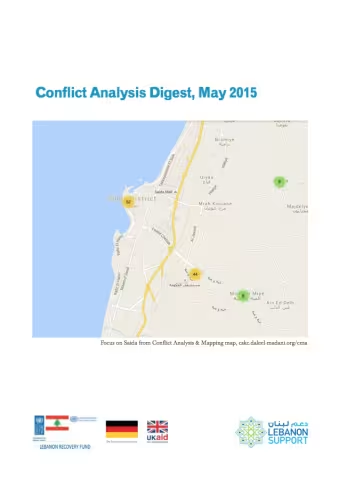
This Conflict Analysis Digest is composed of:
I. Current conflict trends
1- Overview of mapped conflict incidents in Lebanon, with the villages where most incidents are mapped for each classification. (Between 1 July 2014 and 28 June 2015) 2- Mapped air strikes/ armed conflicts and violations classified as Syrian Border Conflicts. (Between 1 July 2014 and 28 June 2015) 3- Overview of mapped conflict incidents in the Matn.
II. Brief thematic report Politics of security, discourses of fear and economic fatigue: the conflict dynamics in al-Matn
Abstract: This short report provides an...
This Conflict Analysis Digest is composed of:
I.Current conflict trends - p.5
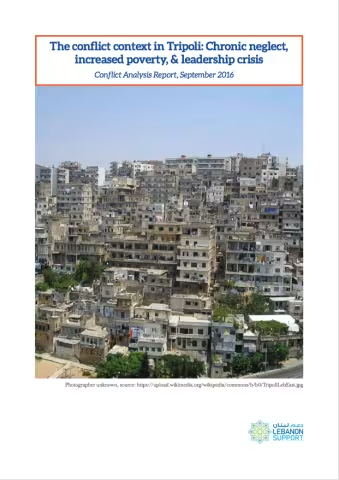
II.Brief thematic report - p.11 Spatial Fragmentation and rise in poverty: the conflict context in Saida
Abstract: This short report provides a contextual and analytical summary of the conflict in the region of Saida, south of Lebanon, with a focus on spatial struggles and poverty growth. It describes the main conflict actors and how they have historically contributed to the shaping of conflictual dynamics in Saida from the fifties until today. Findings highlight that while most observers and media attention are...
ينتمي مفهوم المجتمع المدني إلى تلك المجموعة من المفاهيم التي كلما زاد حضورها في حياة الناس زاد عليهم غموضها، ما يحوّلها إلى أيقونة يحتشد الناس انتصارا لها وينبرون للدفاع عنها، خاصة في بلدان الاستبداد حيث يُحاصر المجتمع المدني ويُضَيّق عليه الخناق حتى يكاد يختنق ويتلاشى. والواقع أن لمفهوم المجتمع المدني دلالات متغيرة بتغيّر الأوضاع التي تمر بها الدولة والمجتمع. كذا هو الحال في منتقطنا حيث تختلف دلالة المجتمع المدني إبان بداية أحداث العنف اختلافا جذريا عما كانت عليه قبلها وكذلك عما آلت إليه الأوضاع اليوم. لكن يبقى وجود مجتمع مدني حر وفاعل شرطا أساسيا لتحقيق الديمقراطية المنشودة، ولا يبدو هذا...
The conflict in Syria is forging new forms of territorial control, and a political economy that is not unlike the patronage system that was previously fostered by the ruling Ba’ath party.
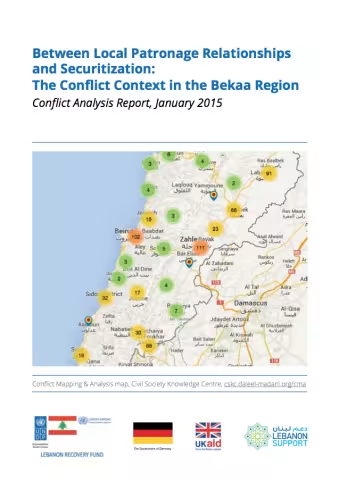
This report provides an analytical summary of the conflict context in the Bekaa region of Lebanon, with a focus on the relationships between the Syrian de facto refugees and the Lebanese host communities in the Baalbeck-Hermel area. It is based on a socio-political qualitative assessment and a conflict analysis that are primarily based on experiences and perspectives of key informants,2 as well as Lebanese and Syrian residents of the Bekaa. Unless otherwise noted, information in this report is based on these interviews. The report is intended as a quick reading of the field at a set point in...
The objective of the Civil Society Review is to bring civil society practitioners, experts, activists, and researchers together to develop knowledge, as well as to innovate new tools and practices so as to strengthen Lebanon’s civil society and its voice. The Civil Society Review produces evidence-based research and analysis and disseminates findings and recommendations to promote civic engagement, shape policies, and stimulate debate within civil society spheres in Lebanon.
Launched on 12 December 2014, the Core Humanitarian Standard on Quality and Accountability (CHS) describes the essential elements of principled, accountable and quality humanitarian action.