مساعدة ذوي الإعاقة العقلیّة (الإخوة) في جمیع مجالات حیاتھم من خلال توفیر الدعم العملي والعاطفي بتوجیه من مسؤول البيت، والمساعدة في تطویر مقدراتھم بخلق بیئة محفزة ورعایة مناسبة.
“More than 60% of Syrian refugees households comprise a person with disabilities and 1/5 Syrian refugees has a disability in Lebanon and Jordan”, shows a large study conducted by Humanity & Inclusion (HI) and iMMAP.
Maps of businesses open in Nahr El Bared's adjacent area including food production businesses, construction and hardware industries, beauty and entertainment enterprises, and health, education and communication businesses.
This regional Guidebook explores the different approaches in design, implementation and analysis of disability data collection in the Arab countries, in view of improving the standardization and implementation of the Washington Group Short Set on Functioning and related indica
GVC and YAB have implemented a pilot initiative in 6 public schools in order to provide directors, teachers, special educators and social workers with technical tools and expertise to encourage the inclusion of children with special needs. Almost 60 children have been included in regular classes all along the implementation (2012-2015). At the same time, the project involved parents and communities where the 6 schools are located to raise culture of diversity and respect and to enhance participation of children with special needs at all levels of social and cultural life.
About the Zero Project: For a World without Barriers
The Zero Project was initiated by the Essl Foundation in 2010. It has been run in partnership with the World Future Council (WFC) since 2011 and the European Foundation Centre (EFC) since 2013. The mission of the Zero Project is to work for a world without barriers, according to the principles and Articles of the UN CRPD.
This "Thirty Questions Guide" is the first guide that addresses the various stages of work and employment based on the principles of the CRPD and its relevant detailed provisions.
Disability & Vulnerability Focal Point (DVFP) have been developed based on the observation that one of the greatest difficulties following a crisis is not only to identify and to access to vulnerable people including people with disabilities, but also to accompany them wit
This "Thirty Questions Guide" is the first guide that addresses the various stages of work and employment based on the principles of the CRPD and its relevant detailed provisions.
The purpose of this manual is to inform different employers on people with disabilities and inclusion
in the workplace. It provides a basic principle on how to start accessing this untapped labor pool,
raise awareness about disability, provide tools for recruitment and ways of integration.
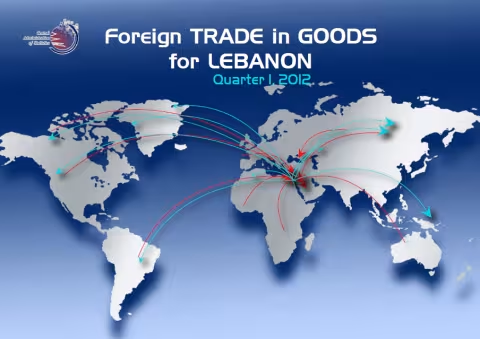
The value of Lebanese imports of goods in Quarter Q1 year 2012 was 9346 billion LBP. This was 518 billion LBP, 5.9% higher than imports in Q4 of previous year 2011, and 2162 billion LBP, i.e. 30% increase comparing to the same Quarter Q1 of year 2011.
The European Bank for Reconstruction and Development (EBRD) was established in 1991, in response to the major changes in the political and economic context in Central and Eastern European countries.1 Today it has 65 shareholders, of which 63 are countries, and the other two ar
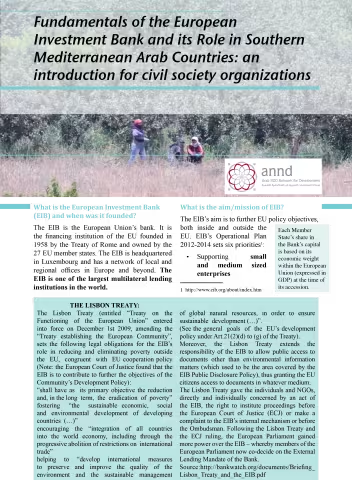
The EIB is the European Union’s bank. It is the financing institution of the EU founded in 1958 by the Treaty of Rome and owned by the 27 EU member states. The EIB is headquartered in Luxembourg and has a network of local and regional offices in Europe and beyond.