About NARA
نَرى (NARA) – Nurture, Access, Relief – is a youth-led initiative based in South Lebanon that empowers youth of all nationalities, including refugees, through education, protection, mental health support, and community peacebuilding.
مساعدة ذوي الإعاقة العقلیّة (الإخوة) في جمیع مجالات حیاتھم من خلال توفیر الدعم العملي والعاطفي بتوجیه من مسؤول البيت، والمساعدة في تطویر مقدراتھم بخلق بیئة محفزة ورعایة مناسبة.
أطلقت لجنة الإنماء الوطني برنامج "نهضة" الزراعي في تموز 2020 استجابة للوضع الإقتصادي المتردي في لبنان. حددت الجمعية أن السبب الرئيسي لذلك التردي، هو الإتكال الكبير في استهلاك المنتجات الزراعية الاستراتيجية على استيراد تلك المُنتجات من الخارج. الحل المباشر يكون في التحول التدريجي للمقومات الإقتصادية الزراعية إلى نموذج إنتاجي تصاعدي وفق خطة طويلة الأمد، يتم ترشيدها بأهداف محددة في الأمن الغذائي، وتنفيذها في خطة علمية منهجية تحرص على استدامة النتائج المتوخاة، لتتكامل مع النسيج الإقتصادي للبنان. يتم مراقبة وضبط نجاح وتقدم هكذا خطة عبر قياس دوري لمكونات محددة وواضحة، استناداً لمعلوماتٍ دقيقة تكون...
يهدف هذا البحث العمليّ المنحى إلى إعلام الممارِسين وصانعي القرار بشأن وضع الحماية الاجتماعيّة واحتياجاتها والثغرات الموجودة فيها، وذلك بالنسبة إلى العاملين في قطاع المجتمع المدنيّ. يقدّم هذا البحث توصيات مستهدَفة تهدف إلى تعزيز وصول العاملين في قطاع المجتمع المدنيّ إلى الحماية الاجتماعيّة، كما تستهدف الدولة، جماعة المانحين والمنظّمات غير الحكوميّة الدّولية، والمنظّمات غير الحكوميّة المحليّة.
This action-oriented research aims to inform practitioners and decision makers on social protection status, needs and gaps of workers in the civil society sector. It formulates targeted recommendations that aim at enhancing access to civil society workers to social protection, and that target the Lebanese state, the donor community and international NGOs, and local NGOs.
“More than 60% of Syrian refugees households comprise a person with disabilities and 1/5 Syrian refugees has a disability in Lebanon and Jordan”, shows a large study conducted by Humanity & Inclusion (HI) and iMMAP.
This regional Guidebook explores the different approaches in design, implementation and analysis of disability data collection in the Arab countries, in view of improving the standardization and implementation of the Washington Group Short Set on Functioning and related indica
This report introduces the conflict context in the Central Bekaa region. The area is of geostrategic importance as it contains the main border crossing to Syria and the Damascus highway, the international route from Beirut to Damascus.
Based on the findings of participatory protection research that Oxfam undertook with refugees in Lebanon between late 2016 and early 2017, this paper explores refugees’ own definitions and conceptions of safety, and highlights refugee perspectives on how the international comm
This report explores the impact of transport infrastructure and service availability and efficiency on the connectivity – the state of being connected – of GVCs.
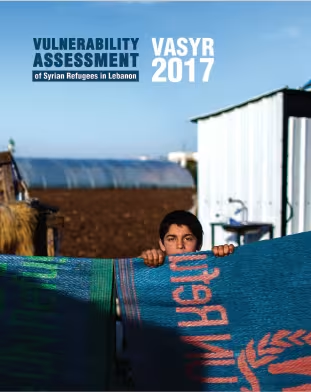
The 2017 Vulnerability Assessment of Syrian Refugees in Lebanon (VASyR) is the fifth annual survey assessing the situation of a representative sample of registered Syrian refugee households to identify situational changes and trends.
The purpose of this policy brief is to inform policy formulation on local level security provision and refugee protection, and to propose modalities for upgrading the sys- tems of the Lebanese security institutions in a way that strengthens protection of the Lebanese communities and the Syrian refugees they host. Based on eld research conducted between February and May 2016 in three locations across Lebanon, this brief analyses the challenges to protecting local communities and refugees in a hybrid system, in which formal and informal security actors coexist and implement a mix of security...
This report aims to analyse how formal and informal security providers implement their respective social order agendas through a security “assemblage”. It also aims to inform the debate on refugee protection and security provision in urban settings, in the context of Lebanon’s hybrid security system. The accounts collected illustrate how state security institutions tacitly accept – or even rely on – informal security actors, managing at times to achieve their political and strategic goals through decentralised and/or illegal forms of control. In this vein, local municipalities imposed curfews...