Analyzing the Impact on the Personal and Professional Development
of Young Participants at Erasmus Plus/Youth in Action/Euromed projects through “Chabibeh Sporting Club” From 2008 till 2017
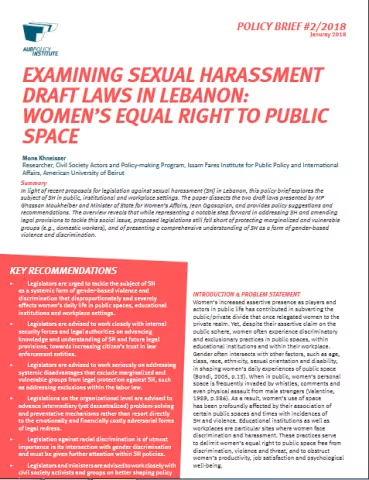
In light of recent proposals for legislation againsts sexual harassment (SH) in Lebanon, this policy brief explores the subject of SH in public, institu
This report aims to provide a contextual understanding of migration governance in the Lebanese context, as well as its implications for refugees and migrants.
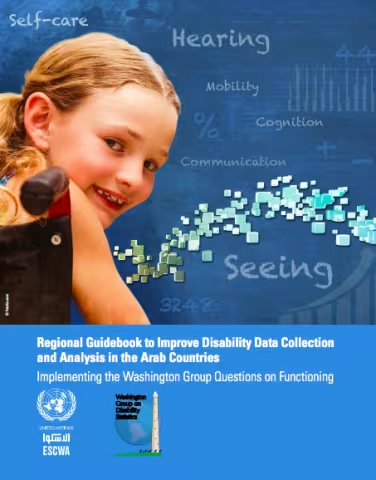
This regional Guidebook explores the different approaches in design, implementation and analysis of disability data collection in the Arab countries, in view of improving the standardization and implementation of the Washington Group Short Set on Functioning and related indica
“الجهل بالقانون لا يُنهض عُذراً لأحد”
يشير هذا المبدأ الجوهري في الممارسة المواطنية إلى ضرورة توعية المواطنين على قوانينهم وأهميتها وسبل التمتع بما توفره من حماية لهم ولحقوقهم. والمعرفة بالقانون تستدعي أيضا معرفة بالنظام المخوّل بتطبيقه وتنفيذه.
التوعية القانونية عملية معقدة وواسعة وتتطلب تفاعل العديد من المؤسسات الوطنية كالمدرسة والجامعة ووسائل الإعلام ومنظمات المجتمع المدني… ولا نكشف سرّاً إذ نقول إن هذه التوعية لا تمارَس إلا بحدّها الأدنى في بلادنا، في حين يُمارس التعسف في تطبيق القانون، بل ويُنتهك القانون طولاً وعرضاً، بدون ضابط أو قيد.
يحاول هذا الكتاب أن يساهم في عملية التوعية هذه،...
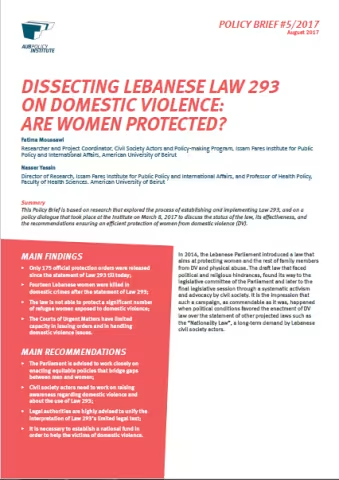
This Policy Brief is based on research that explored the process of establishing and implementing Law 293, and on a policy dialogue that took place at the Institute on March 8, 2017 t
This report aims to explore the fragmented organisation of healthcare services in Lebanon, for Syrian refugees. Although it is not an assessment of the Lebanese healthcare system, this report does nevertheless reflect on the challenges and underlying dynamics of the current Lebanese system, which are reproduced in the healthcare provision for Syrian refugees. In this sense, the report highlights the privatised, rather ad hoc, and irregular provision of healthcare in Lebanon, notably for Syrian refugees, which tends to take on a more curative rather than preventive approach, resulting in...
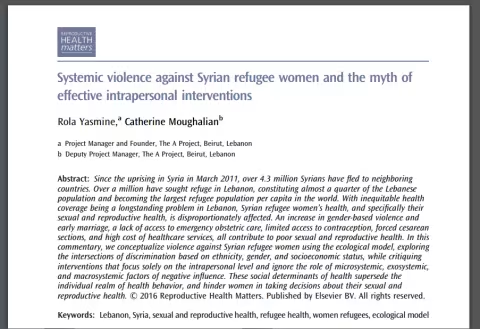
Since the uprising in Syria in March 2011, over 4.3 million Syrians have fled to neighboring countries. Over a million have sought refuge in Lebanon, constituting almost a quarter of the Lebanese population and becoming the largest refugee population per capita in the world.
With inequitable health coverage being a longstanding problem in Lebanon, Syrian refugee women’s health, and specifically their sexual and reproductive health, is disproportionately affected. An increase in gender-based violence and early marriage, a lack of access to emergency obstetric care, limited access to...
This cross sectional survey was conducted among Syrian refugees living in Lebanon, to monitor access to and utilization of key health services. Refugees in Lebanon are predominantly living in urban areas and informal settlements and there are no refugee camps.
Lebanon has had an ambiguous approach to the more than one million Syrians seeking protection in the country since 2011. The country is neither party to the 1951 Convention relating to the Status of Refugees, nor does it have any national legislation dealing with refugees.