Beyond the mere provision of healthcare, the right to health is entrenched in human rights and encompasses underlying determinants of health (including gender equality, right to food, right to housing for example), freedoms and rights, and entitlements such as equal opportunity to access the highest attainable standards of health.
الحقّ في الصحّة هو حقٌّ مُكرَّس من حقوق الإنسان، ولا يقتصر على الرعاية الصحّية. يتضمّن مجموعة من المُحدِّدات الأساسية للصحّة (بما في ذلك المساواة الجندرية، والحق في الغذاء، والحق في السكن على سبيل المثال)، والحريات والحقوق والاستحقاقات مثل تكافؤ الفرص للوصول إلى أعلى...
In Jordan, while the majority of the population has access to a wide range of public healthcare services, coverage and reach is still limited, unequal, and lacking in terms of quality. Vulnerable groups particularly, and more specifically unregistered refugees have limited access to healthcare benefits.
في الأردن، في حين يتمتع غالبية السكان بإمكانية الوصول إلى مجموعة واسعة من خدمات الرعاية الصحية العامة، لا تزال التغطية والوصول محدودة، غير متساوية، ونوعية متدنية
لقد تكون هذه التغطية محدودة خاصةً للفئات المهمّشة وبينهم اللاجئين غير المسجلين
The healthcare system in Lebanon is fragmented, exclusionary, and highly privatised.
Although there are multiple social protection schemes offering access to different healthcare benefits, some segments of the population, including unemployed, elderly, workers in the informal sector, migrants workers, and refugees have limited and unequal access to healthcare benefits and coverage.
نظام الرعاية الصحية في لبنان مجزأ، باهظ الكلفة ومخصخص إلى حد كبير. رغم وجود العديد من برامج الحماية الإجتماعية التي تغطي كل منها تقدمة مختلفة في مجال الرعاية الصحية، إلا أن بعض شرائح السكان، بما في ذلك العاطلين عن...
As the Novel Coronavirus (COVID-19) continues to spread in an unpredictable manner it presents a growing risk to all stakeholders involved in food assistance, particularly during food distributions.
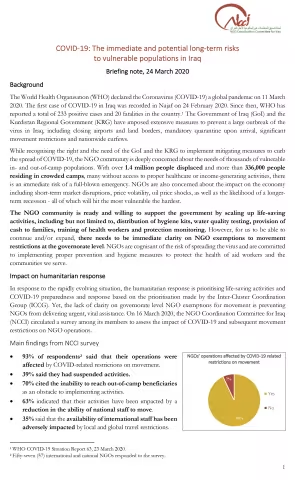
The World Health Organisation (WHO) declared the Coronavirus (COVID-19) a global pandemic on 11 March 2020. The first case of COVID-19 in Iraq was recorded in Najaf on 24 February 2020. Since then, WHO has reported a total of 233 positive cases and 20 fatalities in the country.1 The Government of Iraq (GoI) and the Kurdistan Regional Government (KRG) have imposed extensive measures to prevent a large outbreak of the virus in Iraq, including closing airports and land borders, mandatory quarantine upon arrival, significant movement restrictions and nationwide curfews.
This briefing note summarizes key mental health and psychosocial support (MHPSS) considerations in relation to the
2019 novel coronavirus (COVID-19) outbreak. The brief was last updated February 2020.
People affected by humanitarian crises, particularly those displaced and/or living in camps and camp-like settings,
are often faced with specific challenges and vulnerabilities that must be taken into consideration when planning for
readiness and response operations for the COVID-19 outbreak ..
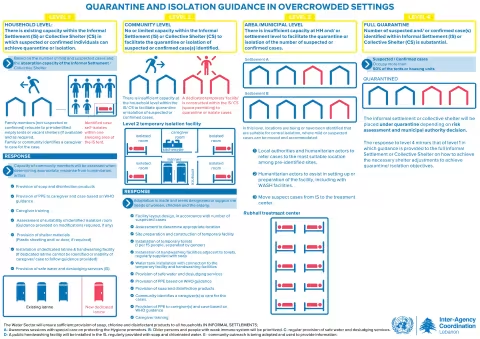
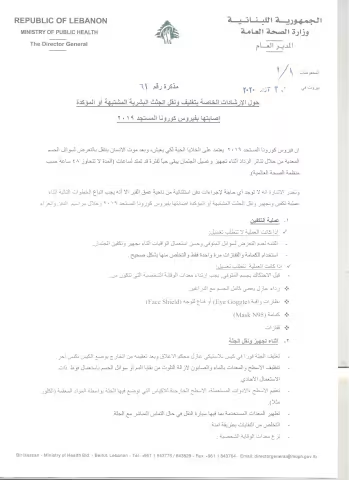
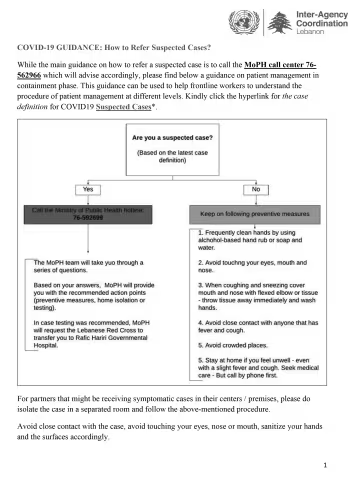
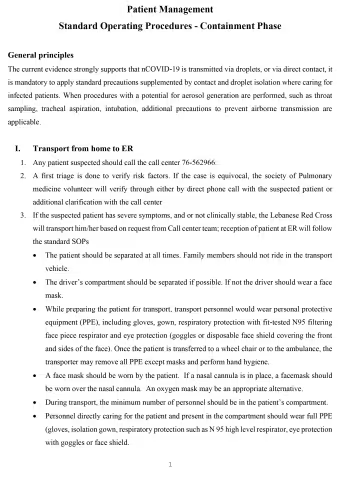
While the main guidance on how to refer a suspected case is to call the MoPH call center 76-562966 which will advise accordingly, please find below a guidance on patient management in containment phase.
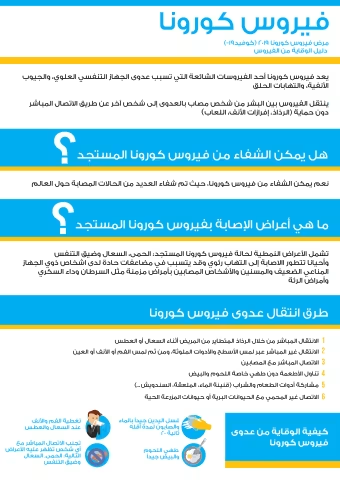
Coronaviruses are a large family of respiratory viruses that cause diseases ranging from the common cold to the more
severe diseases such as Severe Acute Respiratory Syndrome (SARS).
The LCRP Business Continuity Plan for COVID-19 reviews ongoing impact on LCRP operations and outlines risks and critical interventions needed to ensure life-saving access to services and protection for the most vulnerable displaced persons from Syria and vulnerable Lebanese during COVID-19 situation.
The current evidence strongly supports that nCOVID-19 is transmitted via droplets, or via direct contact, it
is mandatory to apply standard precautions supplemented by contact and droplet isolation where caring for
infected patients.