عندما تضع الحرب أوزارها وتصمت المدافع، تجد البلاد نفسها أمام استحقاقات مرحلة ما بعد الحرب. مهمات جسام تواجه المواطنين والمؤسسات في هذه المرحلة، من البدء بتوفير شروط بناء السلم إلى إطلاق عملية العدالة الانتقالية مرورا بوضع السياسات الناجعة لإعادة الإعمار وبناء الدولة… وقد لوحظ أنه غالبا ما تُهمل المسائل الاقتصادية في هذه المرحلة مع أنها تمثل في واقع الأمر ركيزة بالغة الأهمية لبناء السلم الأهلي ولترسيخ المواطنة.
في هذا الكتيب يقوم الباحث د. عمر ضاحي، وهو أستاذ الاقتصاد في “هامشير كوليج” في ولاية ماساشوسيتس، بتسليط الضوء على أهمية البعد الاقتصادي للعدالة الانتقالية..
التنمية بعد الأزمات، تأليف...
Les politiques de coopération au développement des bailleurs étatiques placent de plus en plus le secteur marchand comme un acteur clé du développement, à la fois comme un partenaire financier ou opérationnel mais aussi comme un objectif en soi. Sa croissance dans les pays du Sud, que ce soit dans le domaine productif ou de la fourniture de services, y compris pour de la délégation de services publics ou l’offre de services bancaires, est considérée comme un indicateur positif. Les gouvernements des pays membres de l’UE cherchent ainsi à maximiser son rôle comme catalyseur ou «substitut» de...
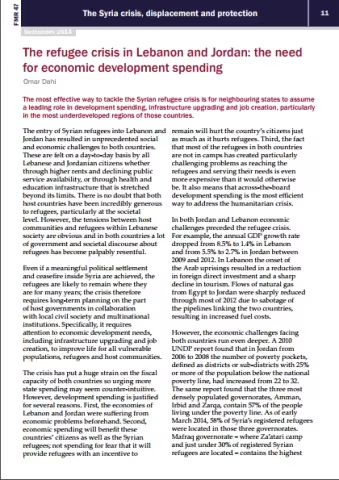
This thematic report provides an overview of available lessons identified from assessments undertaken concerning the humanitarian situation in Syria as well as the situation for Syrian refugees in host-countries.
The “Review of the Public Procurement Legal Framework in Lebanon” introduces the Sustainable Public Procurement (SPP) in Lebanon and elaborates on the legal of the country’s procurement and sustainability laws that may offer a legal possibility for the adoption of SPP principl
This thesis investigates transnational campaigns from the international and state level to consider the existence of transnational activism in Lebanon’s women’s movement.
This guide has been published in 2013 by ABAAD – Resource Center for Gender Equality, with the support of Save The Children. It is a manual intended for the use of facilitators, to guide them in explaining notions relevant to gender and gender equality to children and youth.
This report is a summary of the presentations given during the regional workshop on free trade agreements in the Arab region. The meeting was part of the two-year project on the “socio-economic impact of trade liberalization policies on the Arab region”.
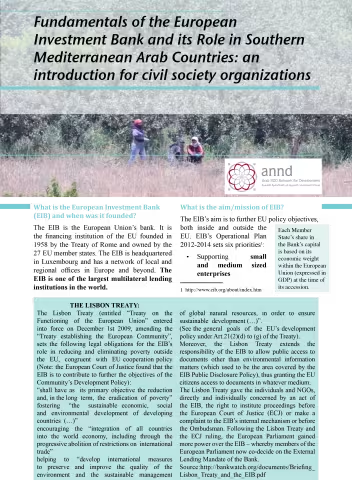
The EIB is the European Union’s bank. It is the financing institution of the EU founded in 1958 by the Treaty of Rome and owned by the 27 EU member states. The EIB is headquartered in Luxembourg and has a network of local and regional offices in Europe and beyond.
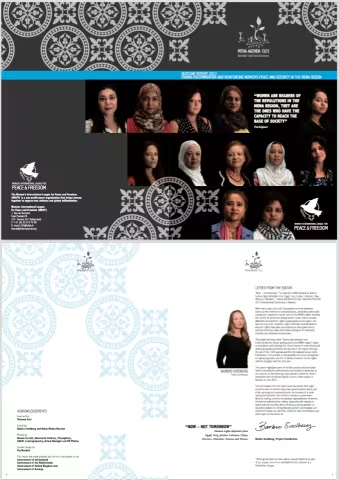
In late 2011, WILPF began to develop a programme to enhance the collective capacities of women’s rights organisations to respond to the unprecedented political events in the Middle East and North Africa (MENA).
Over 57,000 displaced Syrians are receiving protection and assistance in Lebanon through the efforts of the Government of Lebanon and UN and NGO partners.
The National Report for the United Nations Conference on Sustainable Development (Rio + 20) presents the current situation as is and highlights the achievements and failures, strengths and weaknesses, opportunities and risks.
It contains 8 chapters: 1) an introduction to the general debate on trade and development, 2) an overview of the situation In the Arab region, 3) the engagement of Arab countries with the WTO, 4) Arab countries and the Euro-Mediterranean partnership, 5) Arab countries and free