تجاوز إلى المحتوى الرئيسي

موارد

Intervention Sectors
Displaying 101 - 120 of 240
National
Publishing Date
   As the Syrian crisis enters the fourth year, there is a timely need to reflect on the wider implications on Lebanon. The influx of over a million and half Syrian refugees brought a total of 400,000 school age refugees to Lebanon. This dramatic demographic shift posed a formidable challenge to an education system suited to deliver education to a national student population of just over 900,000. To date, the Lebanese Ministry of Education and Higher Education (MEHE) which only host 30% of the student population in Lebanon shouldered the burden of education service delivery with support from...
National
Publishing Date
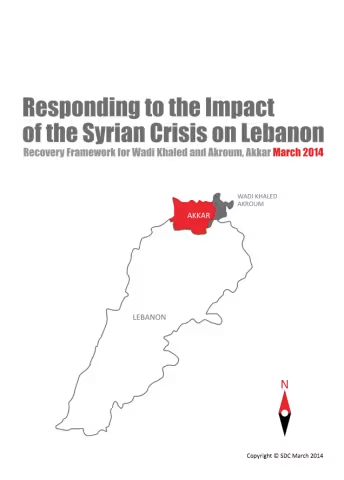
The Swiss Agency for Development and Cooperation (SDC) is pleased to share with you the report:  “Responding to the Impact of the Syrian Crisis on Lebanon: Recovery Framework for Wadi Khaled and Akroum, Akkar”, March 2014. SDC facilitated a process to shed light on the impact of the Syria crisis at the national level but also on the local level. The formulation of a recovery framework for Wadi Khaled and Akroum is a process that can be replicated for other affected regions of Lebanon. The findings and recommendations are based on consultations (between October 2013 and January 2014) with...
National
Publishing Date
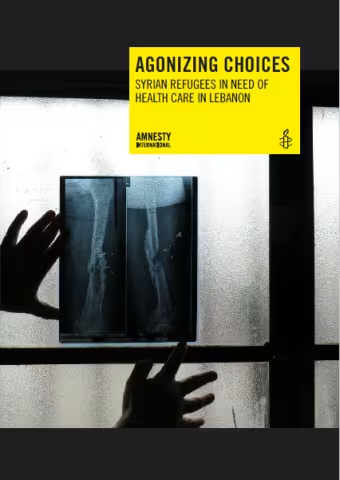
In May 2014 the Lebanese authorities put in place new requirements for Palestinian refugees from Syria trying to enter Lebanon. Many of the conditions are very difficult to meet and have the effect of denying people fleeing conflict the possibility of seeking safety in Lebanon. This briefing details the restrictions facing Palestinian refugees from Syria who try to enter or stay in Lebanon, as far as these are known. It describes some of the implications for refugees and includes the accounts of several Palestinian refugees from Syria who have been directly affected.
National
Publishing Date
This report is this first of a three-part series focusing on the current status and lessons learned relating to transitional justice and policing initiatives in opposition-controlled Syria. • Part I focuses on the effects of the departure of judicial and security elements of the Syrian state has had on conditions on the ground currently and on the nascent justice institutions that have emerged in this void (including levels of institutionalisation, Islamic law, and the legal systems currently being debated and trialed in some areas). • Part II examines the variety of institutions and...
National
Publishing Date

موجز السياسات | حزيران 2014
 الانسجام الاجتماعي والعلاقات بين المجموعات: اللاجئون السوريون و المواطنون اللبنانيون في البقاع وعكار من إعداد شارل حرب و ريم صعب
 

National
Publishing Date

Policy Memo | June 2014
Social Cohesion and Intergroup Relations: Syrian Refugees and Lebanese Nationals in the Bekaa and Akkar by Charles Harb and Reem Saab
The growing influx of Syrian refugees to Lebanon has strained its socio-economic fabric, piling pressure on employment opportunities, housing, trade, and infrastructure capacities (basic services). Tensions between Syrian refugees and their Lebanese host communities have led to intercommunity clashes, and it thus becomes imperative to identify the indicators of social instability and ways to reduce them. A research project initiated by...

National
Publishing Date
The growing influx of Syrian refugees to Lebanon has strained its socio-economic fabric, piling pressure on employment opportunities, housing, trade, and infrastructure capacities (basic services). Tensions between Syrian refugees and their Lebanese host communities have led to intercommunity clashes, and it thus becomes imperative to identify the indicators of social instability and ways to reduce them. A research project initiated by Save the Children (SC) and in association with faculty at AUB assessed the social psychological dimensions of Syrians and Lebanese relations in the Bekaa, Sahel...
National
Publishing Date
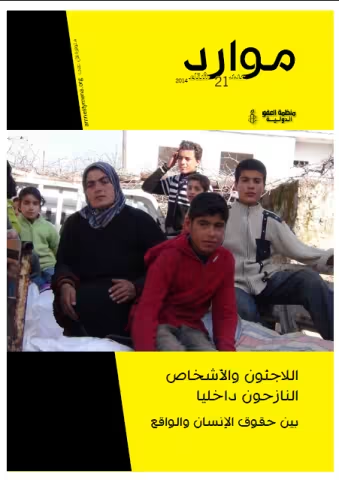
هذا هو العدد 21 من "موارد"، المجلة المتخصصة بالتربية على حقوق الانسان، التي يصدرها المكتب الإقليمي للشرق الأوسط و شمال أفريقيا بمنظمة العفو الدولية في بيروت. نخصص هذا العدد لموضوع اللاجئين والأشخاص النازحين داخليا، ويوفر العدد في هذا السياق مجموعة واسعة من الموارد.
National
Publishing Date
This paper highlights the specificity of the refugee crisis in the unstable Lebanese landscape and calls for the reconfiguring of current relief mechanisms by enabling decentralized local authorities to lead the process. Crisis Management Teams (CMTs), part of Mohafazat councils, will be responsible of collaborating with national and international agencies, planning and monitoring relief projects. The paper also draws on the experience gained by the Community Projects and Development unit (CDPu) – American University of Beirut (AUB), and recommends engaging refugees in municipal public works...
National
Publishing Date

Research Report | February 2014
Reconfiguring Relief Mechanisms: The Syrian Refugee Crisis in Lebanon by Rabih Shibli
The past three years of turmoil and bloodshed in Syria have forced more than 6 million Syrians to flee their homes and seek refuge in perceived safer areas inside and outside Syria. According to the latest reports1 issued by the United Nations High Commissioner for Refugees (UNHCR), more than 868,224 Syrian refugees have settled in Lebanon, with the majority facing severe living conditions. Due to financial and political constraints, the Lebanese government has not yet created...

National
Publishing Date
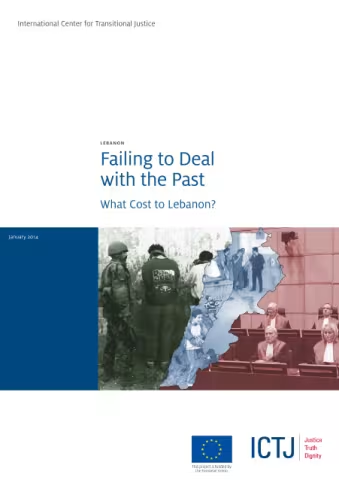
This paper examines the situation of impunity in Lebanon that has persisted since the 1975–1990 war. It highlights the price of the Lebanese authorities’ failure to address the legacy of past conflict. This study recommends a holistic approach to crafting a comprehensive and victim-centered transitional justice process in Lebanon. An incremental approach to reform would be of value, given the likely challenges to pursuing accountability in the country. Programming must involve state and nonstate actors—political and community leaders, civil society, and the broader public. In addition, human...
National
Publishing Date
Global civil society alliance, CIVICUS, has released a revised version of what is probably the world’s most comprehensive compilation of commitments made by governments on civil society rights. Originally released in 2008, and now fully updated, the compendium consolidates various international standards and commitments made by governments at the regional and global levels to protect civil society and ensure participation in public processes. In addition to collating relevant portions of major UN documents, the compendium also includes commitments made by regional bodies such as the Arab...