About NARA
نَرى (NARA) – Nurture, Access, Relief – is a youth-led initiative based in South Lebanon that empowers youth of all nationalities, including refugees, through education, protection, mental health support, and community peacebuilding.
The National Report on Freedom of Religion & Belief was launched by the National Working Group on FoRB in Lebanon, which Peace of Art is part of. This report is the proud work of the National Working Group on Freedom of Religion and Belief (FoRB) in Lebanon.
The first toolbox: Conflict Sensitive Cash
Assistance in Lebanon aims to support
partners to ensure that cash-based
assistance does not inadvertently do
harm and is conflict sensitive. The toolbox
is complementary to the Guidance Note:
Getting Started with Conflict Sensitivity in
Lebanon which introduces basic conflict
sensitivity elements and practical tips for
getting started with conflict sensitivity.
within the unique context of Lebanon.
The second toolbox: Conflict Sensitive Engagement with Local Authorities in Lebanon aims to support partners to ensure that such engagement does not inadvertently do harm and is conflict sensitive.
The three CS Guidance notes cover 3 essential areas; Getting started with CS in Lebanon; CS in Project Design Cycle; and CS Procurement, Recruitment, and accountability.
The three CS Guidance notes cover 3 essential areas; Getting started with CS in Lebanon; CS in Project Design Cycle; and CS Procurement, Recruitment, and accountability.
The three CS Guidance notes cover 3 essential areas; Getting started with CS in Lebanon; CS in Project Design Cycle; and CS Procurement, Recruitment, and accountability.
أطلقت لجنة الإنماء الوطني برنامج "نهضة" الزراعي في تموز 2020 استجابة للوضع الإقتصادي المتردي في لبنان. حددت الجمعية أن السبب الرئيسي لذلك التردي، هو الإتكال الكبير في استهلاك المنتجات الزراعية الاستراتيجية على استيراد تلك المُنتجات من الخارج. الحل المباشر يكون في التحول التدريجي للمقومات الإقتصادية الزراعية إلى نموذج إنتاجي تصاعدي وفق خطة طويلة الأمد، يتم ترشيدها بأهداف محددة في الأمن الغذائي، وتنفيذها في خطة علمية منهجية تحرص على استدامة النتائج المتوخاة، لتتكامل مع النسيج الإقتصادي للبنان. يتم مراقبة وضبط نجاح وتقدم هكذا خطة عبر قياس دوري لمكونات محددة وواضحة، استناداً لمعلوماتٍ دقيقة تكون...
More than a decade after the United Nations’ adoption of the Convention on the Elimination of All Forms of Discrimination against Women, which is adopted by many countries including Lebanon, these countries returned in 2015 to commit themselves to achieve gender equality and t
UNFPA on behalf of UNDP and UN Women organized a national workshop on gender-related laws, policies and practices in Lebanon, which was held in Beirut on the 7th and 8th of August, 2018.
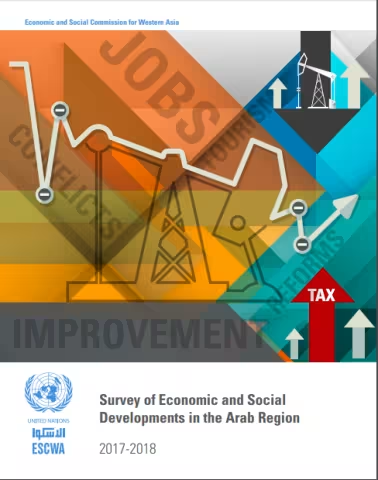
The Arab region continues to manage uncertainties on its path towards an inclusive and sustainable growth trajectory: geopolitical tensions persist, and global interest rates have soared.
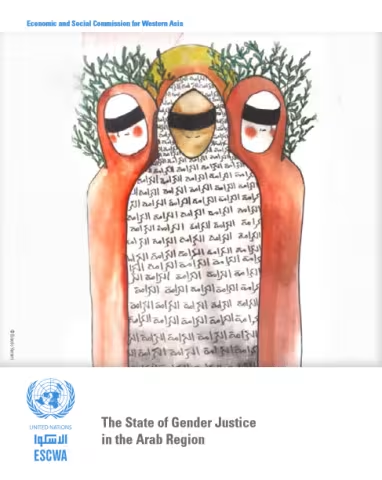
This study maps the current state of gender justice in the Arab region, documenting barriers as well as opportunities. Its primary research aim is to determine how to develop an environment, at the legal, policy, and social levels that is conducive to gender justice.
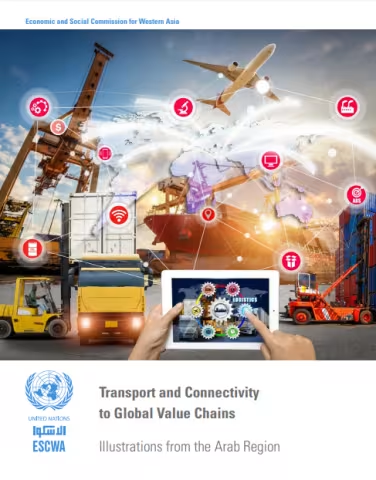
This report explores the impact of transport infrastructure and service availability and efficiency on the connectivity – the state of being connected – of GVCs.
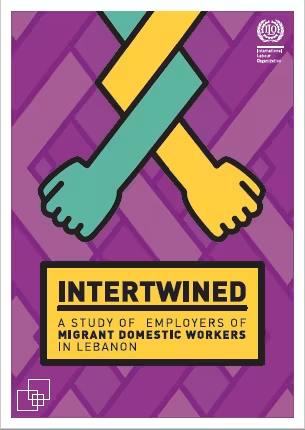
Over 250,000 migrant women are employed by private households in Lebanon to carry out household tasks such as cleaning, cooking, and caring for children and the elderly.
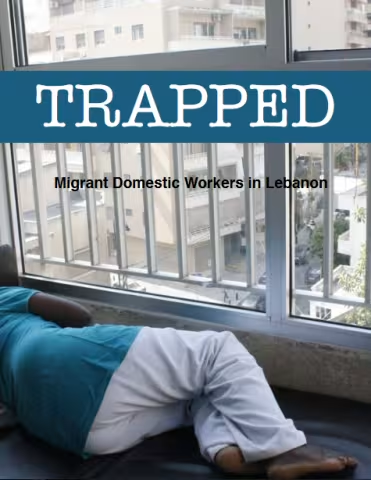
The right to freedom of movement forms one of the cornerstones of the international human rights regime and the Lebanese legal system. It is a right that everyone ought to enjoy regardless of race, national origin, residence status, religion or any other criteria.
This paper is inspired by examples of domestic workers organizing themselves in different parts of the world through social and solidarity economy enterprises and organizations which have become more evident since the advent of the ILO Domestic Workers Convention 2011, (No.189
This study aims to shed light on the industry that profits from the recruitment of women from South Asian countries into domestic work employment in the Middle East, with a particular focus on Bangladesh, Jordan and Lebanon.
Integrity’s research highlights that the truces agreed in several locations across Syria in the early months of 2014 do not represent the localised beginnings of a peacebuilding process. These agreements—and the negotiation and implementation processes that delivered them—were not built upon good practice and were significantly undermined by a lack of political will for peace from the outset. For opposition stakeholders, the truce agreements were a reaction to extreme levels of civilian suffering and a military capacity weakened by lengthy, government-enforced sieges. In all areas researched...
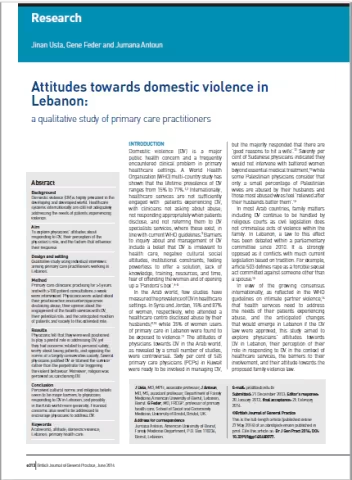
In most Arab countries, family matters including Domestic Violence continue to be handled by religious courts as civil legislation does not criminalise acts of violence within the family.