This document provides information about the situation of Palestine refugees in Lebanon, including non-registered Palestinian refugees, undocumented (“non-ID”) Palestinians, and Palestine refugees from Syria.
This report presents a brief analysis of the social stability context in the Qazas of Nabatieh and Bint Jbeil in the Nabatieh governorate, a sparsely populated religiously and politically homogenous area which hosts a small number of Syrian refugees.
Since the Syrian conflict began in 2011, 11 million people have been internally displaced or have fled to neighboring states. This has put an incredible strain on the hosting societies, particularly in Lebanon,Jordan, Iraq and Turkey.
The objective of the report is to identify the psychosocial impact and needs of humanitarian actors working with refugees in Syria, Lebanon, Jordan, Egypt, North Iraq and Palestine.
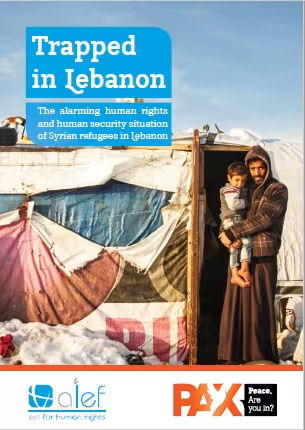
This report analyses the human rights and human security situation of refugees from Syria and their impact on the Lebanese society. Since the beginning of the conflict
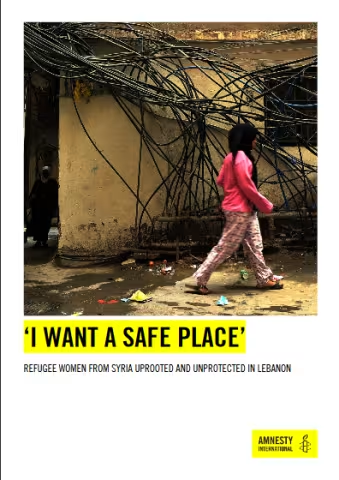
Syrian refugee women and Palestinian refugee women from Syria face risks of serious human rights violations and abuses in Lebanon, including gender-based violence and exploitation. Those who are heads of their households are at particular risk.
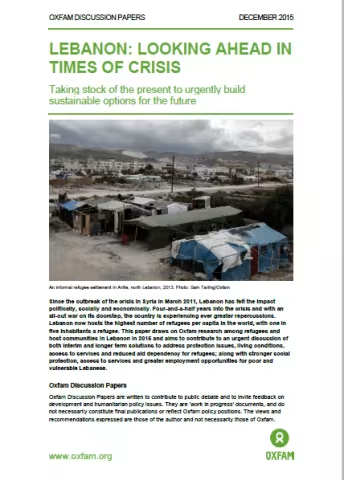
This paper draws on Oxfam research among refugees and host communities in Lebanon in 2015 and aims to contribute to an urgent discussion of both interim and longer term solutions to address protection issues, living conditions, access to services and reduced aid dependency for refugees; along with stronger social protection, access to services and greater employment opportunities for poor and vulnerable Lebanese.
الراصد السوري في لبنان يدرس حالة حقوق الإنسان لللاجئين السوريين في منطقة البقاع في لبنان ، بدعم من الصندوقوهو مشروع لمدة سنة حيث يقدر عدد اللاجئين السوريين ب 011 www.ahrfund.org العربي لحقوق الإنسانألف لاجئ حسب احصاءات الامم المتحدة وتم التركيز في هذه التقرير على منطقة البقاع الشرقي – برالياس وقد شملالتقرير 211 شخص موزعين على أكثر من مخيم .
This a survey aiming at studying the situation of Syrian refugees as newcomers as part pf SHEILD's project for assessing and distributing NFIs for newcomer HHs from 2012 to 2014. The study base is te data collected through door to door HH and individual assessments carrried out throughout the priod covered by the study via the standard newcomers assessment questionnaire which tackles all aspects of a newcomer refugee in terms of social, economic, shelter, health, protection, basic needs, food scurity and nutrition and other necessary aspects.
تقرير بحثي | أيلول 2015
هل لهم من مأوى؟ بحث في مجال توفير مآو مؤقتة للاجئين السوريين في لبنان من إعداد ناصر ياسين, طارق عسيران, ريما الراسي, و مروى البستاني
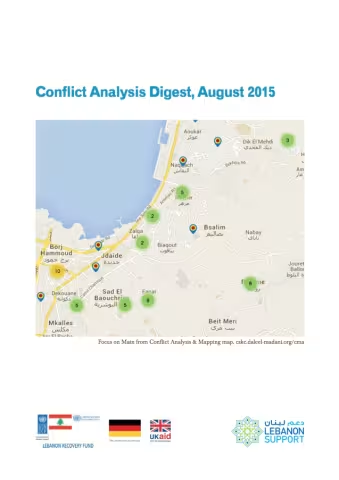
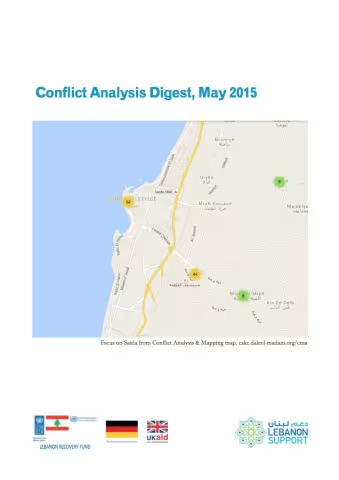
This Conflict Analysis Digest is composed of:
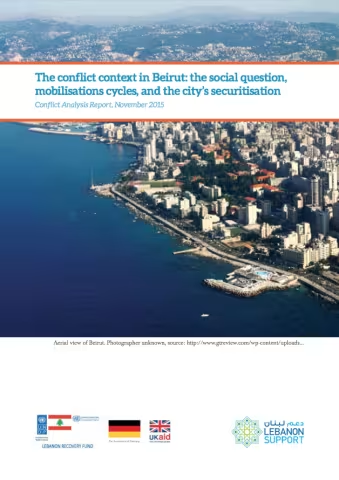
I. Current conflict trends
1- Overview of mapped conflict incidents in Lebanon, with the villages where most incidents are mapped for each classification. (Between 1 July 2014 and 28 June 2015) 2- Mapped air strikes/ armed conflicts and violations classified as Syrian Border Conflicts. (Between 1 July 2014 and 28 June 2015) 3- Overview of mapped conflict incidents in the Matn.
II. Brief thematic report Politics of security, discourses of fear and economic fatigue: the conflict dynamics in al-Matn
Abstract: This short report provides an...
This Conflict Analysis Digest is composed of:
I.Current conflict trends - p.5
II.Brief thematic report - p.11 Spatial Fragmentation and rise in poverty: the conflict context in Saida
Abstract: This short report provides a contextual and analytical summary of the conflict in the region of Saida, south of Lebanon, with a focus on spatial struggles and poverty growth. It describes the main conflict actors and how they have historically contributed to the shaping of conflictual dynamics in Saida from the fifties until today. Findings highlight that while most observers and media attention are...
The conflict in Syria is forging new forms of territorial control, and a political economy that is not unlike the patronage system that was previously fostered by the ruling Ba’ath party.
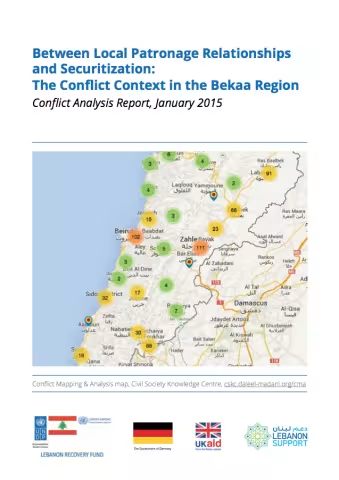
This report provides an analytical summary of the conflict context in the Bekaa region of Lebanon, with a focus on the relationships between the Syrian de facto refugees and the Lebanese host communities in the Baalbeck-Hermel area. It is based on a socio-political qualitative assessment and a conflict analysis that are primarily based on experiences and perspectives of key informants,2 as well as Lebanese and Syrian residents of the Bekaa. Unless otherwise noted, information in this report is based on these interviews. The report is intended as a quick reading of the field at a set point in...
This paper focuses on the outcomes of a nationwide survey on the Lebanese public’s perceptions of the security implications of the Syrian refugee presence.
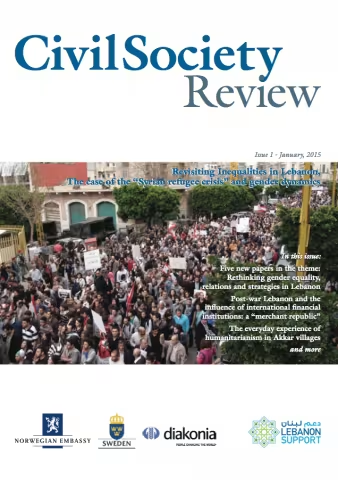
The objective of the Civil Society Review is to bring civil society practitioners, experts, activists, and researchers together to develop knowledge, as well as to innovate new tools and practices so as to strengthen Lebanon’s civil society and its voice. The Civil Society Review produces evidence-based research and analysis and disseminates findings and recommendations to promote civic engagement, shape policies, and stimulate debate within civil society spheres in Lebanon.
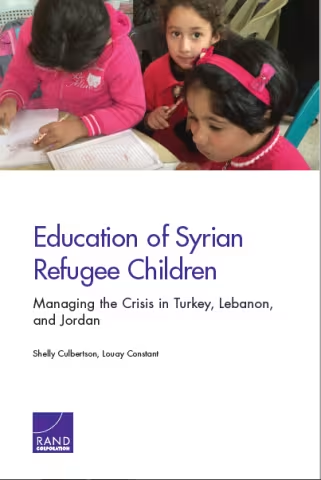
This scoping study is intended to contribute to the ongoing policy discussions among governments, donors, and United Nations agencies about the education of Syrian refugees in Lebanon, Turkey, and Jordan (the three countries with the largest populations of Syrian refugees),