“More than 60% of Syrian refugees households comprise a person with disabilities and 1/5 Syrian refugees has a disability in Lebanon and Jordan”, shows a large study conducted by Humanity & Inclusion (HI) and iMMAP.
Refugee protection is inherently political. While international law and values inevitably influence governments’ decisions about how to respond to refugees, so too do power and interests.
This policy brief analyses the socio-political implications of the so-called October policies, and suggests legislative, political, and practical measures to improve the situation of Syrian refugees in Lebanon. It also aims to inform policy formulation regarding Syrian refugees from a human rights-based perspective, while discussing modalities for enhanced programming at the civil society level.
This policy brief is the fourth publication of a research project investigating the social effects of political and legal measures on Syrian refugees’ daily lives. The brief is based on a consultative...
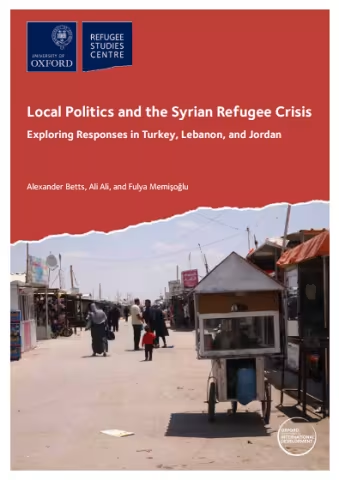
This working paper seeks to document and analyse collaboration mechanisms between local authorities and humanitarian actors in addressing the Syrian refugee crisis in urban and peri-urban settings in Lebanon.
The population shift from Syria, as a result of the Syrian Crisis, is causing enormous pressure on host communities and exacerbating instability factors.
Disability & Vulnerability Focal Point (DVFP) have been developed based on the observation that one of the greatest difficulties following a crisis is not only to identify and to access to vulnerable people including people with disabilities, but also to accompany them wit
The overall objective of the assessment was to identify emergency WASH needs and gaps of most vulnerable Syrian refugees and host families in five geographical areas, 4 collective centres and Bab al-Tebbaneh, Tripoli in North Lebanon.
UNHCR, coordinating the operations in the North along side with the HRC (High Relief Commission) and DRC as its main implementing partner, requested from DRC to conduct a first rapid assessment in the Bekaa with the following objectives: a) To identify existing areas of displa