Swiss Solidar undertook a multi-sectoral needs assessment in August 2013 to assess the humanitarian needs of Syrian refugees residing in Nabatieh and Jezzine Districts in Southern Lebanon.
The average number of assisted families during the a/m period is 46% of the overall number of families reportedly arrived to DRC North Lebanon operational area (Akkar region).
The average number of assisted families during the a/m period is 35% of the overall number of families reportedly arrived to DRC Bekaa operational area.
The objective of the project is to improve the housing conditions of the most vulnerable people affected by the Syrian crisis and to reduce their vulnerability to face the winter season.
This report is the result of 4 weeks’ field work from April 22 to May 17 carried out in the two districts of Zgharta and Minieh-Dennieh by SOLIDARITÉS INTERNATIONAL’s (SI) outreach workers.
The PDM consisted of conducting household surveys with beneficiaries who received Non-Food Items (NFIs in the form of hygiene kits) and food vouchers as part of WVL's Syrian refugee response in the Bekaa.
This mission was undertaken from 19 March to 5 April 2012 to assess the shelter options for displaced Syrians in West and Middle Bakaa. The shelter needs must be evaluated with respect to the current situation.
This issue of SIF looks briefly at the population and housing characteristics in Lebanon using key indicators and figures available from a number of surveys conducted by the Central Administration of Statistics (CAS) in Lebanon in recent years.
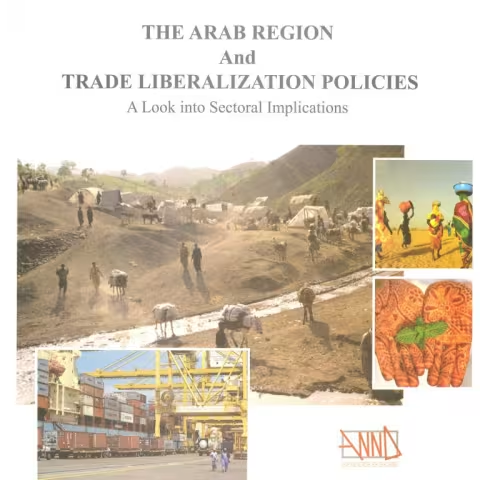
It contains 8 chapters: 1) an introduction to the general debate on trade and development, 2) an overview of the situation In the Arab region, 3) the engagement of Arab countries with the WTO, 4) Arab countries and the Euro-Mediterranean partnership, 5) Arab countries and free
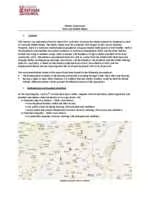
This mission was undertaken between the 2nd and 18thof July 2011 to assess the shelter options for the Syrians displaced in Northern Lebanon (the Akkar region).
This national survey provides a vital statistical database on the demographic and the educational status in Lebanon; the residential fact and the economic activity of the individuals; the health insurance, the migration, the family’s income and the aid received during the war
History shows that different rates of poverty reduction over the past 40 years have been closely related to differences in agricultural performance – particularly the rate of growth of agricultural productivity.
The activities, presented in this brochure, are illustrative of UNDP – European Commission Humanitarian Aid Department (ECHO) funded interventions and support in restoring and preserving livelihoods in the Lebanese most damaged regions.