"An Education for Future: The Schooling Experience of Syrian Refugee Children in Lebanon and Germany" is a comparative study conducted by the Centre for Lebanse Studies. The study examines the future prospects of Syrian refugee children who dropped-out of Lebanese public schools and the German schools. The study compared Germany’s and Lebanon education provisions for inclusion of Syrian refugee children in public schools, as well as dropout rates of Syrian refugees. This comparison sought to highlight examples of best practices from Lebanon and Germany to reduce the dropout rates, to...
“الجهل بالقانون لا يُنهض عُذراً لأحد”
يشير هذا المبدأ الجوهري في الممارسة المواطنية إلى ضرورة توعية المواطنين على قوانينهم وأهميتها وسبل التمتع بما توفره من حماية لهم ولحقوقهم. والمعرفة بالقانون تستدعي أيضا معرفة بالنظام المخوّل بتطبيقه وتنفيذه.
التوعية القانونية عملية معقدة وواسعة وتتطلب تفاعل العديد من المؤسسات الوطنية كالمدرسة والجامعة ووسائل الإعلام ومنظمات المجتمع المدني… ولا نكشف سرّاً إذ نقول إن هذه التوعية لا تمارَس إلا بحدّها الأدنى في بلادنا، في حين يُمارس التعسف في تطبيق القانون، بل ويُنتهك القانون طولاً وعرضاً، بدون ضابط أو قيد.
يحاول هذا الكتاب أن يساهم في عملية التوعية هذه،...
The report examines how economic and financial policies of the EU affect the economies of Southern Mediterranean countries. It’s interesting to note the shortcomings of these policies with regard to civil and political rights.
The Arab region lacks sustainable natural resource management, mostly in the areas of energy efficiency and its overwhelming reliance on fossil fuels for virtually all its energy needs.
The second report is an evaluation of civil society initiatives on economic and social rights, including a series of civil society initiatives focusing on
This report aims to acquire a comprehensive understanding of the barriers to education faced by Syrian youth, using both qualitative and quantitative data-collection methods.
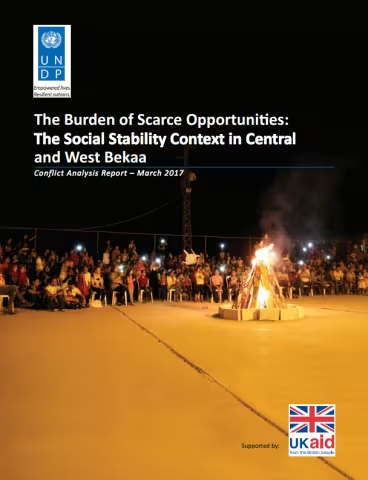
This report introduces the conflict context in the Central Bekaa region. The area is of geostrategic importance as it contains the main border crossing to Syria and the Damascus highway, the international route from Beirut to Damascus.
“We Can Never Go Back to How Things were Before”* is a qualitative study carried out as a partner study to the International Men and Gender Equality Survey – Middle East and North Africa (IMAGES MENA).
The report entitled challenges for civil society and the promotion of economic and social rights, brings together recommendations from civil society actors and academics to strengthen Euro-Mediterra
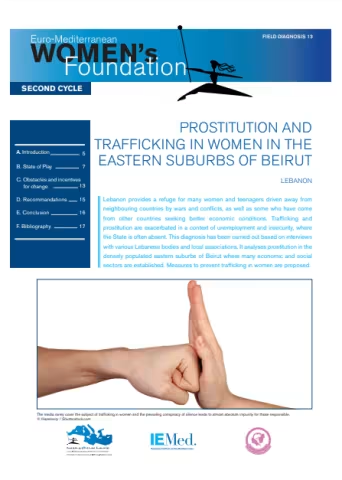
Lebanon provides a refuge for many women and teenagers driven away from neighbouring countries by wars and conflicts, as well as some who have come from other countries seeking better economic conditions.
The Governance and Community Action Programme (GCAP) aims to empower vulnerable municipalities and communities to mitigate conflict caused by resource tensions exacerbated by the Syrian refugee crisis.
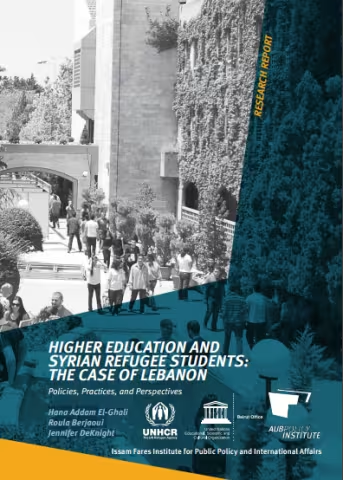
This report presents issues within tertiary education for young Syrian refugees in Lebanon. It is part of a broader regional study commissioned by UNESCO.
Only a handful of studies in Lebanon have shed light on the changing gendered dynamics within the refugee families by comparing gender roles, expectations, and practices before and after displacement (as result of armed conflict).
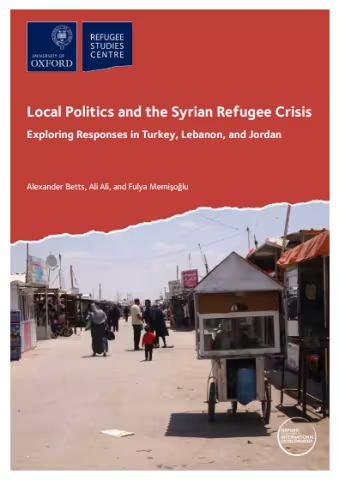
Refugee protection is inherently political. While international law and values inevitably influence governments’ decisions about how to respond to refugees, so too do power and interests.
Today, women in Lebanon are fighting for equal access to opportunities and rights without prejudice against their gender, their expectations and their careers.
This report presents findings from a survey conducted from 3-11 July, 2017 with three distinct refugee groups in Lebanon: Syrian refugees; Palestine refugees from Syria; and Palestine refugees from Lebanon.
The “Roadmap to Reconciliation in Tripoli,” (RRT) project is a grassroots initiative that aims at launching a transitional justice route through understanding the public perceptions in Tripoli about reconciliation as well as people’s readiness and willingness to engage in a co