The human rights situation in the Syrian Arab Republic has deteriorated significantly since November 2011, causing further suffering to the Syrian people. Widespread violence and increasingly aggravated socio-economic conditions have left many communities in a perilous state.
As of the end of April 2012, the number of Syrian families displaced in the Bekaa has increased to 2,800 households. Families registered with local partners receive kits of dry food, but they have requested more variety and choice in food items.
The report looks at different technologies related to the power, transport, agriculture and water sectors in Lebanon and assess their potential to reduce greenhouse gas emissions and increase resilience to climate change.
Titled “Let The Resolution Begin…. Live Gender Equity”, this resource is the annual report of ABAAD Resource Center for Gender Equity, which lists the accomplishments of the organization for the period between June 2011 and June 2012.
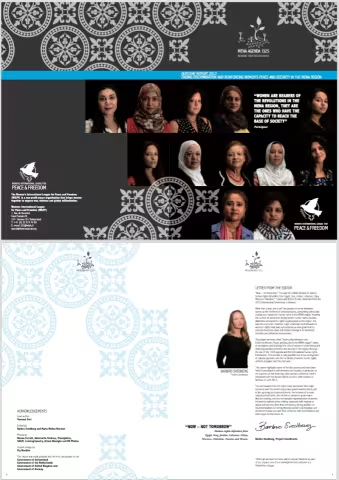
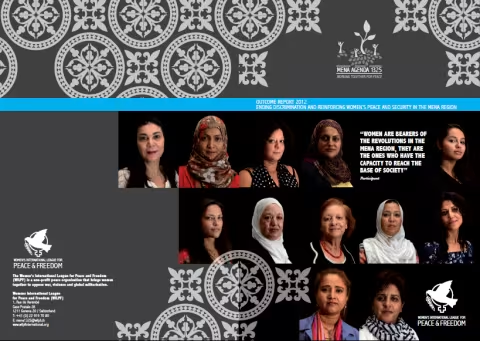
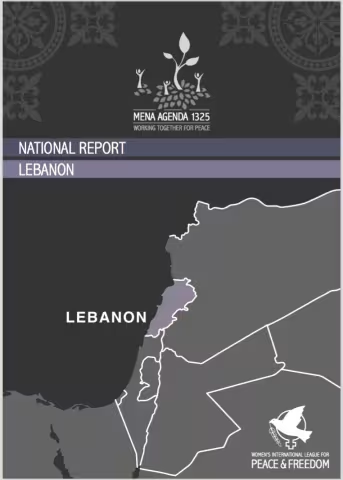
In late 2011, WILPF began to develop a programme to enhance the collective capacities of women’s rights organisations to respond to the unprecedented political events in the Middle East and North Africa (MENA).
28 refugee households were surveyed, which represented a total of 501 refugees, 48% male and 52% female, which is approximately 11% of the Syrian refugee population in North Bekaa.
Over 57,000 displaced Syrians are receiving protection and assistance in Lebanon through the efforts of the Government of Lebanon and UN and NGO partners.
The National Report for the United Nations Conference on Sustainable Development (Rio + 20) presents the current situation as is and highlights the achievements and failures, strengths and weaknesses, opportunities and risks.
ABAAD-Resource Center for Gender Equality, in partnership with Women's League for International Peace and Freedom (WILPF) and in collaboration with the United Nations Interim Forces (UNFIL) in South Lebanon, organized the National Consultation Meeting on May 10th, 2012 at Holi
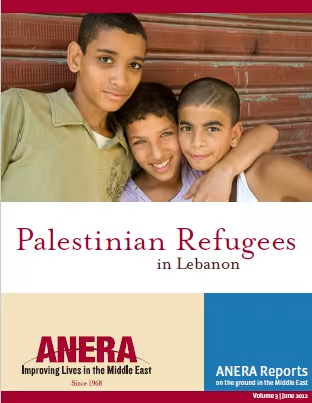
The list of challenges Palestinian refugee families living in Lebanon face is long and overwhelming. They live in overcrowded camps and have to deal with discrimination, isolation and social exclusion.
The PDM consisted of conducting household surveys with beneficiaries who received Non-Food Items (NFIs in the form of hygiene kits) and food vouchers as part of WVL's Syrian refugee response in the Bekaa.
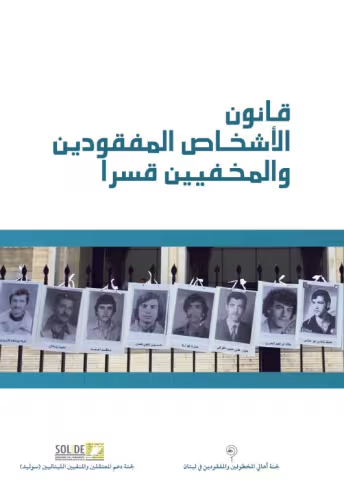
قانون الأشخاص المفقودين والمخفيين قسراًوضعت منظّمات المجتمع المدني، وعلى رأسها جمعيّّات الأهالي، مشروع قانون للأشخاص المفقودين والمخفيين قسرًا، بهدف اعتماده من قبل السلطات اللبنانيّة.
الأسباب الموجبةمع انتهاء الحرب (١٩٧٥ - ١٩٩٩) ، لم يتمكن لبنان من ايجاد حل مرض لضحايا الحرب وقضاياهم، وتحديدا لقضايا المفقودين والمخفيين قسرًا وذويهم.وحتّى الآن، لا زال أهالي الضحايا يناضلون في سبيل حقّهم بمعرفة ما جرى لهؤلاء الّذين أخذوا منهم، إن كانوا لا يزالون على قيد الحياة- وباسترداد رفاتهم إذا تبيّن أنّهم توفّوا، لكنهميناضلون أيضًا في سبيل حقّهم بالحصول على اعتراف مّمن نجوا من الحرب، أي الدولة...
It is well known that the cultural norms and the patriarchal society in Lebanon contribute to encouraging discrimination and any form of violence against women and children.
This mission was undertaken from 19 March to 5 April 2012 to assess the shelter options for displaced Syrians in West and Middle Bakaa. The shelter needs must be evaluated with respect to the current situation.
This issue of SIF looks briefly at Education in Lebanon using key indicators and figures available from a number of surveys conducted by the Central Administration of Statistics (CAS) in Lebanon in recent years.