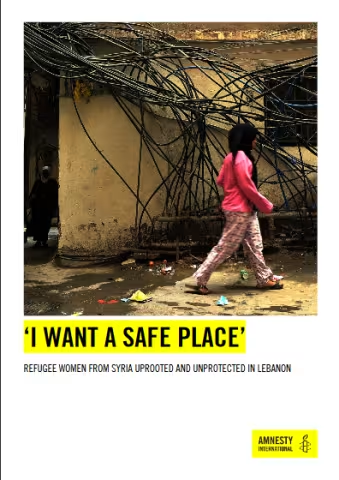
Syrian refugee women and Palestinian refugee women from Syria face risks of serious human rights violations and abuses in Lebanon, including gender-based violence and exploitation. Those who are heads of their households are at particular risk.
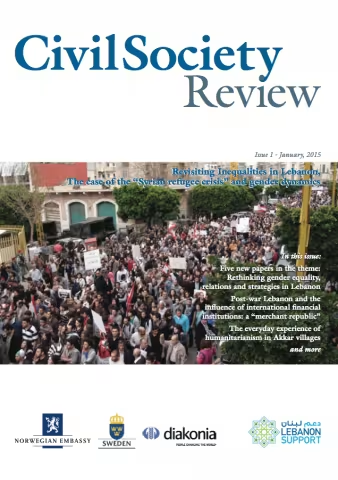
The objective of the Civil Society Review is to bring civil society practitioners, experts, activists, and researchers together to develop knowledge, as well as to innovate new tools and practices so as to strengthen Lebanon’s civil society and its voice. The Civil Society Review produces evidence-based research and analysis and disseminates findings and recommendations to promote civic engagement, shape policies, and stimulate debate within civil society spheres in Lebanon.
Integrity’s research highlights that women’s networks and organisations in Syria are active across a range of service delivery sectors. In many cases these groups are either responding to gaps in services provided by other NGOs, civil society organisations (CSO), or other service delivery actors, or they are providing understanding and access to the specific needs of women and children beneficiaries that other groups cannot.
Women’s groups interviewed by Integrity are most active (62 per cent) in the education, skills training, and livelihoods sectors. These areas both help meet immediate...
In most Arab countries, family matters including Domestic Violence continue to be handled by religious courts as civil legislation does not criminalise acts of violence within the family.
The following study is a first attempt to explore and better understand the demand side in Lebanon where little has been written on this critical component of the prostitution in
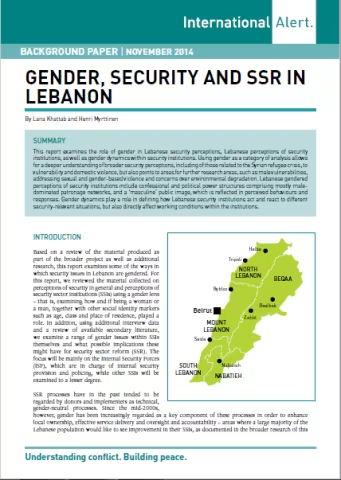
This report examines the role of gender in Lebanese security perceptions, Lebanese perceptions of security institutions, as well as gender dynamics within security institut
This report constitutes the final publication of the outcomes of the program "Development in Lebanon: Poverty Eradication, Gender Equity and Youth Participation; the Role of NGOs Civil Society and Other Actors".
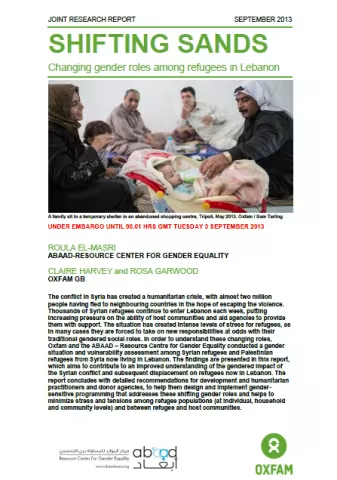
The conflict in Syria has created a humanitarian crisis, with almost two million people having fled to neighbouring countries in the hope of escaping the violence.
Disability & Vulnerability Focal Point (DVFP) have been developed based on the observation that one of the greatest difficulties following a crisis is not only to identify and to access to vulnerable people including people with disabilities, but also to accompany them wit
The research will provide better understanding on the legislations and laws that authorities are using to control or oppress any movement or any type of activism on gender and sexuality issues in JORDAN.
Since the unrest in Syria began in March 2011, the Bekaa Valley in Lebanon has hosted varying numbers of displaced Syrian families. Local actors such as municipalities and NGOs registered families for assistance received through regional and international donors.
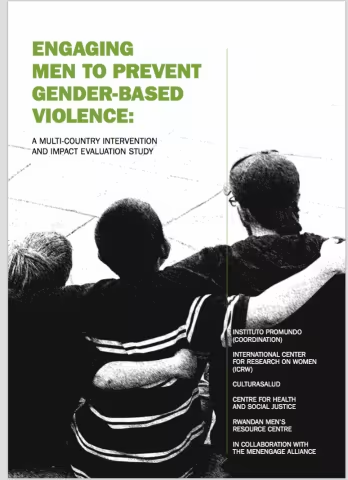
Over the span of three years, Instituto Promundo, with support from the United Nations Trust Fund to End Violence Against Women, implemented a multi-country project to engage men and boys in preventing violence against women and promote gender equality.
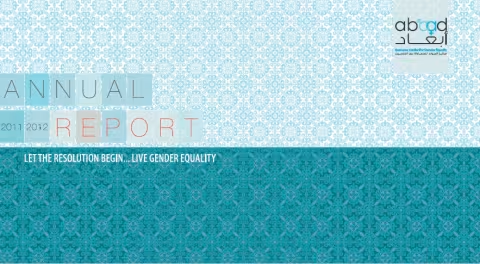
Titled “Let The Resolution Begin…. Live Gender Equity”, this resource is the annual report of ABAAD Resource Center for Gender Equity, which lists the accomplishments of the organization for the period between June 2011 and June 2012.
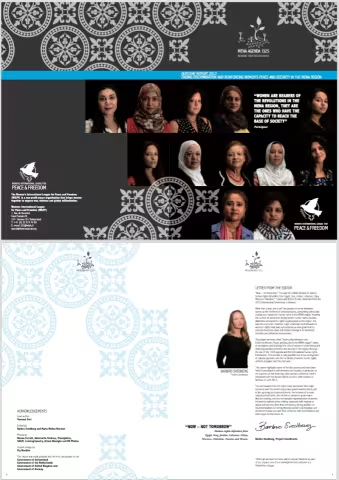
In late 2011, WILPF began to develop a programme to enhance the collective capacities of women’s rights organisations to respond to the unprecedented political events in the Middle East and North Africa (MENA).
ABAAD-Resource Center for Gender Equality, in partnership with Women's League for International Peace and Freedom (WILPF) and in collaboration with the United Nations Interim Forces (UNFIL) in South Lebanon, organized the National Consultation Meeting on May 10th, 2012 at Holi
It is well known that the cultural norms and the patriarchal society in Lebanon contribute to encouraging discrimination and any form of violence against women and children.
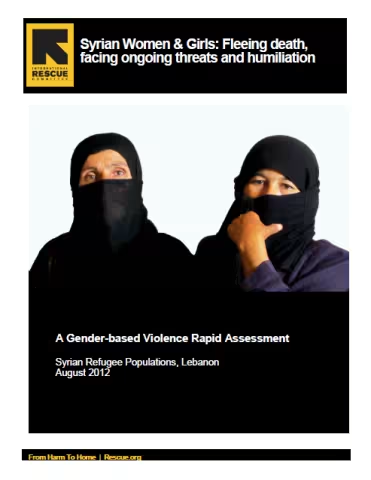
This Gender-based Violence Rapid Assessment conducted by International Rescue Committee in 2012 focuses on risks and violence faced by women and girls among the Syrian refugee population within Lebanon.