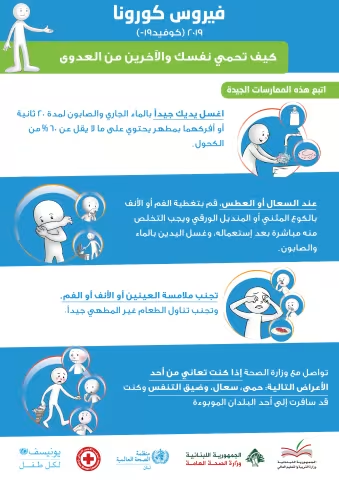
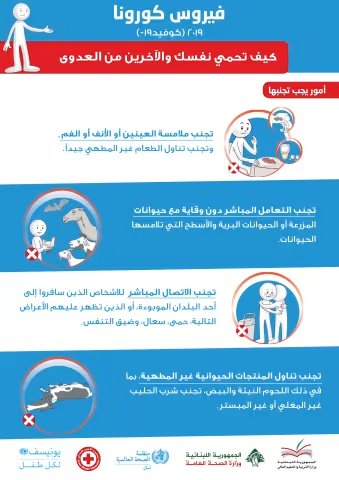
As the Novel Coronavirus (COVID-19) continues to spread in an unpredictable manner it presents a growing risk to all stakeholders involved in food assistance, particularly during food distributions.
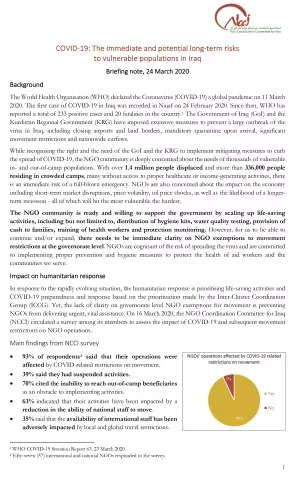
The World Health Organisation (WHO) declared the Coronavirus (COVID-19) a global pandemic on 11 March 2020. The first case of COVID-19 in Iraq was recorded in Najaf on 24 February 2020. Since then, WHO has reported a total of 233 positive cases and 20 fatalities in the country.1 The Government of Iraq (GoI) and the Kurdistan Regional Government (KRG) have imposed extensive measures to prevent a large outbreak of the virus in Iraq, including closing airports and land borders, mandatory quarantine upon arrival, significant movement restrictions and nationwide curfews.
This briefing note summarizes key mental health and psychosocial support (MHPSS) considerations in relation to the
2019 novel coronavirus (COVID-19) outbreak. The brief was last updated February 2020.
People affected by humanitarian crises, particularly those displaced and/or living in camps and camp-like settings,
are often faced with specific challenges and vulnerabilities that must be taken into consideration when planning for
readiness and response operations for the COVID-19 outbreak ..
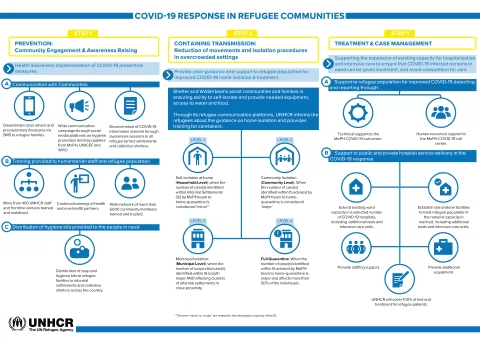
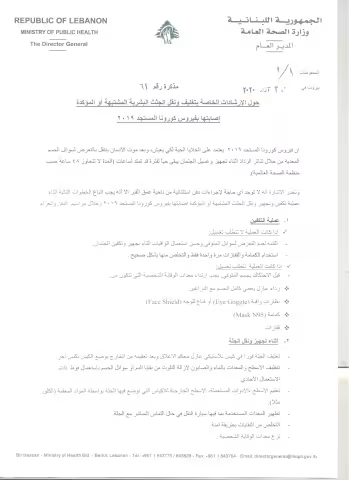
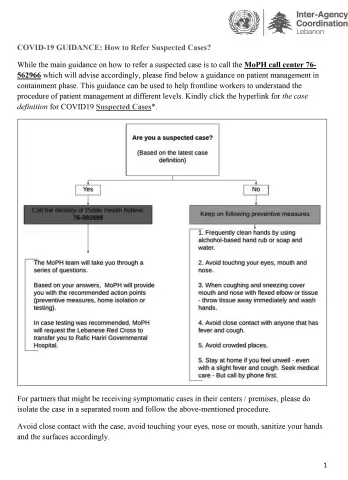
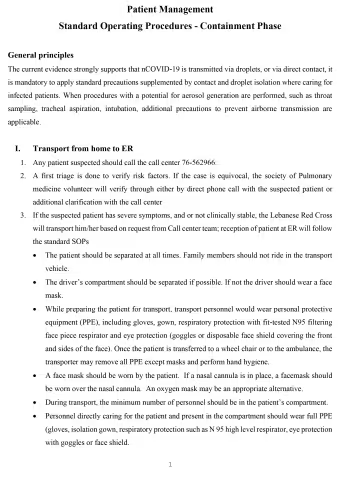
While the main guidance on how to refer a suspected case is to call the MoPH call center 76-562966 which will advise accordingly, please find below a guidance on patient management in containment phase.
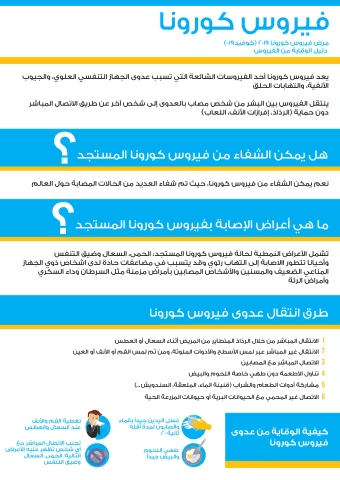
Coronaviruses are a large family of respiratory viruses that cause diseases ranging from the common cold to the more
severe diseases such as Severe Acute Respiratory Syndrome (SARS).
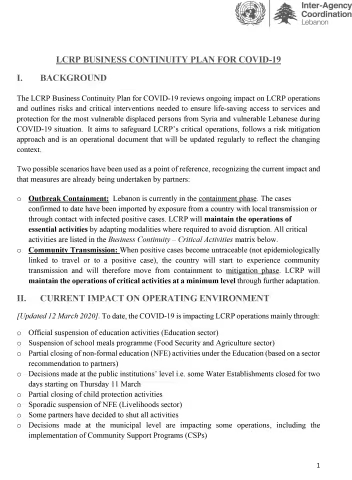
The LCRP Business Continuity Plan for COVID-19 reviews ongoing impact on LCRP operations and outlines risks and critical interventions needed to ensure life-saving access to services and protection for the most vulnerable displaced persons from Syria and vulnerable Lebanese during COVID-19 situation.
The current evidence strongly supports that nCOVID-19 is transmitted via droplets, or via direct contact, it
is mandatory to apply standard precautions supplemented by contact and droplet isolation where caring for
infected patients.
The toolbox is intended as an open learning resource for youth workers that are engaged in community work with young refugees, asylum seekers and young people with migration background. Specifically: project managers, community leaders, educators, facilitators, social workers, intercultural mediators that are interested to improve their ability in the social inclusion of excluded groups.
The toolbox could also be used in formal settings such as schools, colleges and universities addressing
development challenges as well as for project managers and experts engaged in the design and...
TrustLaw is the Thomson Reuters Foundation’s global pro bono legal programme, connecting the best law firms and
corporate legal teams around the world with high-impact NGOs and social enterprises working to create social and
environmental change. We produce groundbreaking legal research, and offer innovative training courses worldwide.
Through TrustLaw, over 100,000 lawyers offer their time and knowledge to help organisations achieve their social
mission for free. This means NGOs and social enterprises can focus on their impact instead of spending vital resources
on legal support.