A Call to Join Forces: Coordination and complementarity of services for an efficient and cost-effective emergency response in Lebanon
In the face of escalating needs in Lebanon due to the regional armed conflict, ABAAD is reaching out to actors currently working on the ground, particularly those operating in or around collective shelters, to ensure that services are complementary, resources are used efficiently, and conflict-affected communities receive timely and effective support.
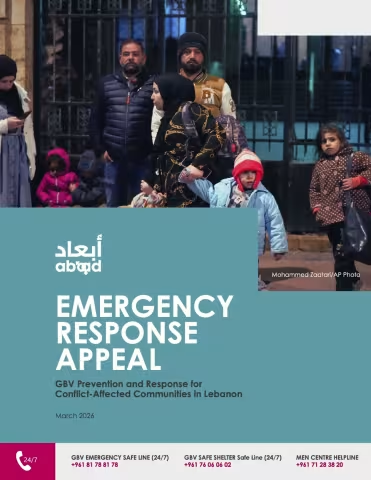
Lebanon is facing the direct consequences of a regional armed conflict that escalated sharply on February 28, 2026. As the conflict spread, strikes on Lebanon resumed and intensified, triggering mass displacement across the country. Civilian casualties are rising, social safety nets are breaking down, and communities are being uprooted in a country where nearly half the population was already living in poverty before this escalation began. ABAAD is launching this emergency appeal to mobilize the resources required to sustain and scale life-saving GBV prevention and response services, ensuring...
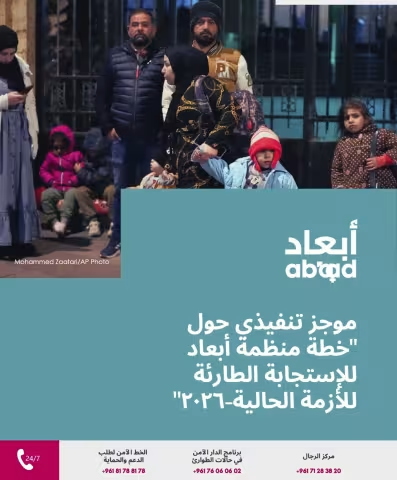
يواجه لبنان تصعيدًا خطيرًا في النزاع الإقليمي منذ 28 شباط 2026، ما أدى إلى تجدّد الضربات واتّساع موجات النزوح وارتفاع أعداد الضحايا، في ظل أوضاع اقتصادية ومعيشيّة هشّة.
وفي ظل الاكتظاظ وتراجع الموارد، تتزايد مخاطر العنف القائم على قسمة الأدوار الاجتماعية، فيما تتقلص خدمات الحماية، ما يترك العديد من الناجيات والناجين من دون دعم كافٍ.
لذلك، تُطلق أبعاد خطة استجابة طارئة لضمان استمرار وتوسيع خدمات الوقاية والاستجابة، بما يضمن وصول الأسر المتضررة، وخصوصًا النساء والفتيات والفئات الأكثر عرضة للمخاطر، إلى خدمات حماية ودعم آمنة وسريعة ومنقذة للحياة
This document provides elements of discussion and pragmatic solutions to challenges in addressing GBV in the context of resistance. It does not provide clear cut answers to all questions, but intends to bring together evidence from UNRWA and results from other agencies.
This paper was prepared by the Economic and Social Commission for Western Asia (ESCWA) as a background paper contributing to the Arab Sustainable Development Report. It focuses on gender equality as a core element to achieve sustainable development.
This thesis investigates transnational campaigns from the international and state level to consider the existence of transnational activism in Lebanon’s women’s movement.
This document is the outcome of a workshop organised by UNRWA on the 31st of March 2010 on “Community of Practice in Building Referral Systems for Women Victims of Violence”.
This paper seeks to explain why women remain marginal in the Lebanese economy. It conducts a thorough review of literature to shed light on the economic, social and legal context to identify barriers to their full participation.
This essay proposes to re-orient feminist debates on epistemology towards the care-security nexus as a pathway that can plausibly provide an integral understanding of a human-centred and eco-minded security.
This paper explores some faces of globalization by using a gender perspective, in order to consider reproduction (psychological and emotional as well as biological) and the activities and attitudes of care that give moral resources for response to systemic tragedy, not only fo
Using time-diary data from 25 countries, the authors demonstrate that there is a negative relationship between real GDP per capita and the female-male difference in total work time per day -- the sum of work for pay and work at home.
This resourse, assembled by Women for Women's Human Rights (WWHR) - New Ways, is a compilation of texts written by Evelyne Accad, Pinar Ilkkaracan, Nadera Shalhoub-Kevorkian, Dina Siddiqi and Zeina Zaatiri.
This study, prepared by Dr. Ray Jureidini, identifies practices and patterns that are the key causes for women domestic migrant workers' vulnerability in Bahrain and provide alternative approaches for effective means for action.
To help expand the focus of the social protection debate to include the informal sector, particularly women workers, the ILO global programme STEP, "Strategies and Tools against Social Exclusion and Poverty" and the global network called Women in Informal Employment: Globalizi