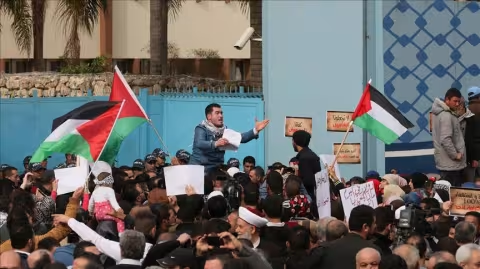
ككل عام تطلق المؤسسة الفلسطينية لحقوق الانسان (شاهد) تقريرها السنوي للعام 2023 حول واقع اللاجئين الفلسطينيين في لبنان، تطرح فيه الأرقام والوقائع الموثقة وتضعها بين يدي صانع القرار المحلي والدولي.
هذا التقرير هو خلاصة للجهود البحثية والمتابعات الميدانية لفريق عمل مؤسسة (شاهد) خلال عام كامل.
“More than 60% of Syrian refugees households comprise a person with disabilities and 1/5 Syrian refugees has a disability in Lebanon and Jordan”, shows a large study conducted by Humanity & Inclusion (HI) and iMMAP.
This regional Guidebook explores the different approaches in design, implementation and analysis of disability data collection in the Arab countries, in view of improving the standardization and implementation of the Washington Group Short Set on Functioning and related indica
This report is based on answers to two surveys carried out in Lebanon in 2018 as part of a project to understand how refugees and humanitarian staff perceive the impact of the reforms enshrined in the Grand Bargain.
Only a handful of studies in Lebanon have shed light on the changing gendered dynamics within the refugee families by comparing gender roles, expectations, and practices before and after displacement (as result of armed conflict).
This study maps the current state of gender justice in the Arab region, documenting barriers as well as opportunities. Its primary research aim is to determine how to develop an environment, at the legal, policy, and social levels that is conducive to gender justice.
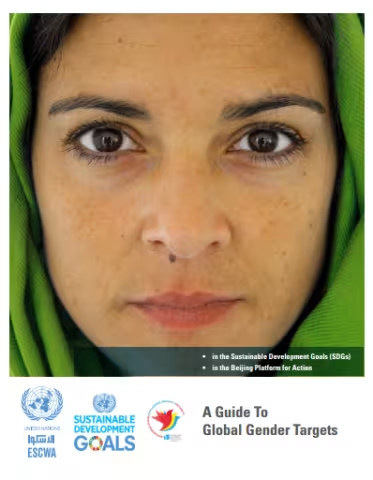
The present guide proposes to reconcile the gender-related targets in the Sustainable Development Goals with the objectives of the Beijing Platform according to various sub-topics. It is organized in two sections.
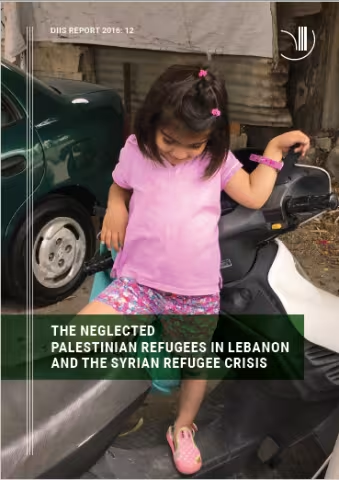
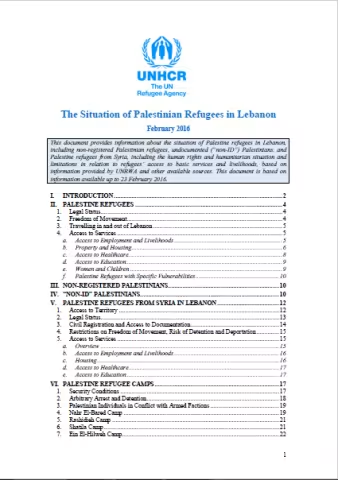
This document provides information about the situation of Palestine refugees in Lebanon, including non-registered Palestinian refugees, undocumented (“non-ID”) Palestinians, and Palestine refugees from Syria.
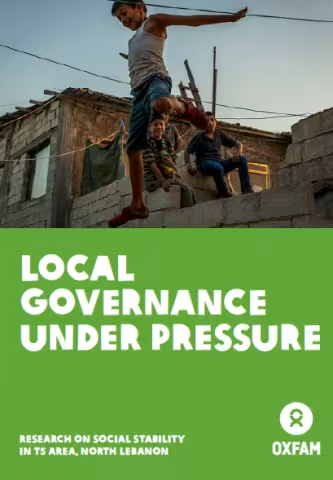
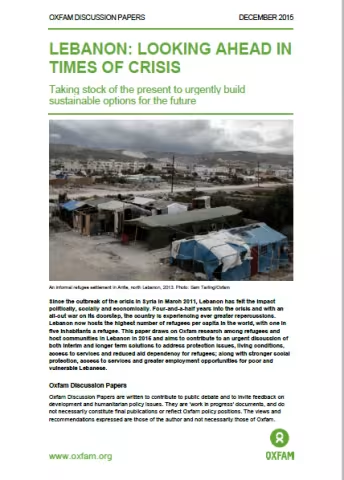
This paper draws on Oxfam research among refugees and host communities in Lebanon in 2015 and aims to contribute to an urgent discussion of both interim and longer term solutions to address protection issues, living conditions, access to services and reduced aid dependency for refugees; along with stronger social protection, access to services and greater employment opportunities for poor and vulnerable Lebanese.