"An Education for Future: The Schooling Experience of Syrian Refugee Children in Lebanon and Germany" is a comparative study conducted by the Centre for Lebanse Studies. The study examines the future prospects of Syrian refugee children who dropped-out of Lebanese public schools and the German schools. The study compared Germany’s and Lebanon education provisions for inclusion of Syrian refugee children in public schools, as well as dropout rates of Syrian refugees. This comparison sought to highlight examples of best practices from Lebanon and Germany to reduce the dropout rates, to...
“الجهل بالقانون لا يُنهض عُذراً لأحد”
يشير هذا المبدأ الجوهري في الممارسة المواطنية إلى ضرورة توعية المواطنين على قوانينهم وأهميتها وسبل التمتع بما توفره من حماية لهم ولحقوقهم. والمعرفة بالقانون تستدعي أيضا معرفة بالنظام المخوّل بتطبيقه وتنفيذه.
التوعية القانونية عملية معقدة وواسعة وتتطلب تفاعل العديد من المؤسسات الوطنية كالمدرسة والجامعة ووسائل الإعلام ومنظمات المجتمع المدني… ولا نكشف سرّاً إذ نقول إن هذه التوعية لا تمارَس إلا بحدّها الأدنى في بلادنا، في حين يُمارس التعسف في تطبيق القانون، بل ويُنتهك القانون طولاً وعرضاً، بدون ضابط أو قيد.
يحاول هذا الكتاب أن يساهم في عملية التوعية هذه،...
This report aims to acquire a comprehensive understanding of the barriers to education faced by Syrian youth, using both qualitative and quantitative data-collection methods.
This Policy Brief is based on research that explored the process of establishing and implementing Law 293, and on a policy dialogue that took place at the Institute on March 8, 2017 t
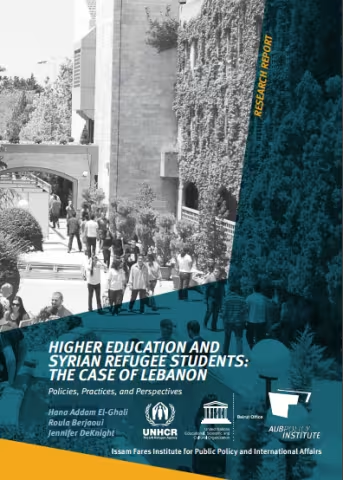
This report presents issues within tertiary education for young Syrian refugees in Lebanon. It is part of a broader regional study commissioned by UNESCO.
The Building a Better Response project, together with the UN Office for the Coordination of Humanitarian Affairs (OCHA) and the International Humanitarian City, launched the Building a Better Response (BBR) e-learning course in Arabic with a panel discussion in Dubai on the role of local non-governmental organizations (NGOs) in humanitarian response. The event came in advance of the World Humanitarian Summit, set to take place in Istanbul in May 2016, where much of the conversation is expected to focus on placing local actors at the center of humanitarian response.
Our work cannot be as...
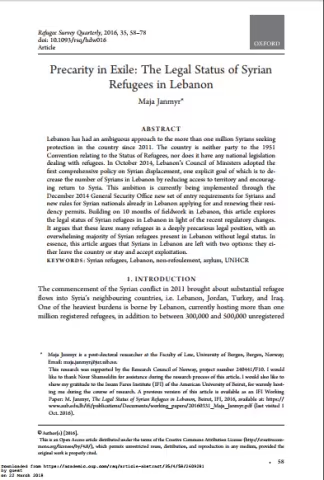
Lebanon has had an ambiguous approach to the more than one million Syrians seeking protection in the country since 2011. The country is neither party to the 1951 Convention relating to the Status of Refugees, nor does it have any national legislation dealing with refugees.
This is an analytical report based on data and statistics collected from public schools and aiming at detecting the effect of the Syrian refugees crisis on the public education sector and the priorities and needs for the public schools in the best interest of the Lebanese and refugees students.
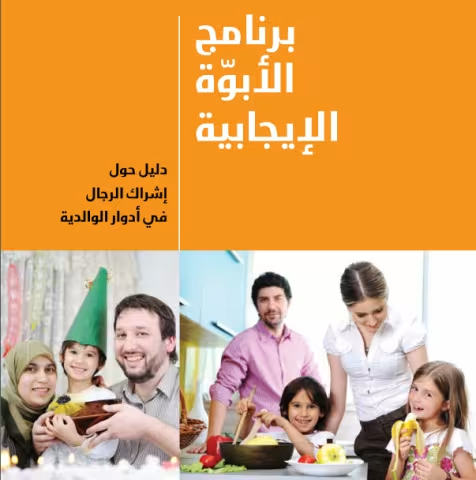
The adapted version of the Global "Program P" manual provides concrete strategies and activities to engage men in active positive fatherhood, from their partner’s pregnancies through their children’s early years. It identifies best practices on engaging men in maternal and child health, care-giving, and preventing violence against women and children on basis of equality and non-violence.
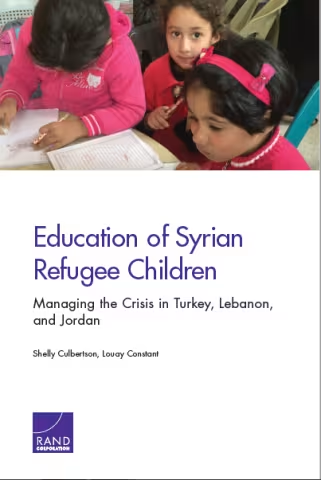
This scoping study is intended to contribute to the ongoing policy discussions among governments, donors, and United Nations agencies about the education of Syrian refugees in Lebanon, Turkey, and Jordan (the three countries with the largest populations of Syrian refugees),
In May 2015, the Lebanese authorities instructed UNHCR to temporarily suspend registration of Syrian refugees, including individuals already in the country and new arrivals.
Widening Access to Quality Education for Syrian Refugees: The role of private and
NGO Sectors in Lebanon
Authors
Maha Shuayb, Nisrine Makkouk and Suha Tuttunji
September 2014
This report is this first of a three-part series focusing on the current status and lessons learned relating to transitional justice and policing initiatives in opposition-controlled Syria. • Part I focuses on the effects of the departure of judicial and security elements of the Syrian state has had on conditions on the ground currently and on the nascent justice institutions that have emerged in this void (including levels of institutionalisation, Islamic law, and the legal systems currently being debated and trialed in some areas). • Part II examines the variety of institutions and...
The crisis in Syria continues to have a devastating impact on professors, university students, and the education sector, not only in Syria but also in the neighboring countries that are hosting so many displaced Syrians. In this report, the Institute of International Education (IIE) and its Syria Consortium for Higher Education in Crisis looks at the conditions and educational needs of Syrians university students and scholars in Lebanon. “The War Follows Them: Syrian University Students and Scholars in Lebanon,” is based on first-hand research and interviews conducted in Lebanon in March 2014...
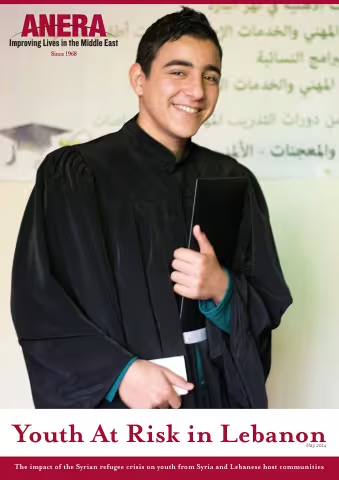
The Syrian conflict, now in its fourth year, has taken a heavy toll on Lebanon’s society.
Among those most affected are young men and women in refugee camps and marginalized communities. Young people are increasingly confronting violence and discrimination. They are missing out on education and work opportunities. The rising number of unemployed and disenfranchised youth in Lebanon could become a security risk for both Lebanese and refugee communities.
A society’s well-being relies on its youth, who can help revitalize the economy when education, health care and job opportunities are available...
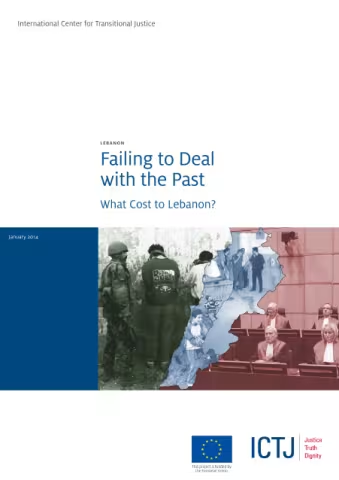
This paper examines the situation of impunity in Lebanon that has persisted since the 1975–1990 war. It highlights the price of the Lebanese authorities’ failure to address the legacy of past conflict.
This study recommends a holistic approach to crafting a comprehensive and victim-centered transitional justice process in Lebanon. An incremental approach to reform would be of value, given the likely challenges to pursuing accountability in the country. Programming must involve state and nonstate actors—political and community leaders, civil society, and the broader public. In addition, human...
Global civil society alliance, CIVICUS, has released a revised version of what is probably the world’s most comprehensive compilation of commitments made by governments on civil society rights.
Originally released in 2008, and now fully updated, the compendium consolidates various international standards and commitments made by governments at the regional and global levels to protect civil society and ensure participation in public processes.
In addition to collating relevant portions of major UN documents, the compendium also includes commitments made by regional bodies such as the Arab...