تجاوز إلى المحتوى الرئيسي

موارد

Theme
Displaying 121 - 140 of 286
National
Publishing Date
Integrity’s research highlights that women’s networks and organisations in Syria are active across a range of service delivery sectors. In many cases these groups are either responding to gaps in services provided by other NGOs, civil society organisations (CSO), or other service delivery actors, or they are providing understanding and access to the specific needs of women and children beneficiaries that other groups cannot. Women’s groups interviewed by Integrity are most active (62 per cent) in the education, skills training, and livelihoods sectors. These areas both help meet immediate...
National
Publishing Date

موجز السياسات | حزيران 2014
 الانسجام الاجتماعي والعلاقات بين المجموعات: اللاجئون السوريون و المواطنون اللبنانيون في البقاع وعكار من إعداد شارل حرب و ريم صعب
 

National
Publishing Date
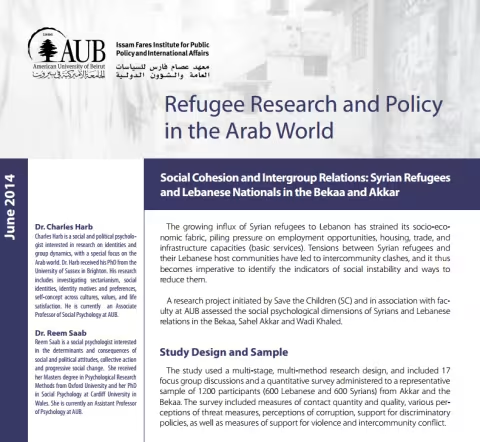
The growing influx of Syrian refugees to Lebanon has strained its socio-economic fabric, piling pressure on employment opportunities, housing, trade, and infrastructure capacities (basic services). Tensions between Syrian refugees and their Lebanese host communities have led to intercommunity clashes, and it thus becomes imperative to identify the indicators of social instability and ways to reduce them. A research project initiated by Save the Children (SC) and in association with faculty at AUB assessed the social psychological dimensions of Syrians and Lebanese relations in the Bekaa, Sahel...
National
Publishing Date

Policy Memo | June 2014
Social Cohesion and Intergroup Relations: Syrian Refugees and Lebanese Nationals in the Bekaa and Akkar by Charles Harb and Reem Saab
The growing influx of Syrian refugees to Lebanon has strained its socio-economic fabric, piling pressure on employment opportunities, housing, trade, and infrastructure capacities (basic services). Tensions between Syrian refugees and their Lebanese host communities have led to intercommunity clashes, and it thus becomes imperative to identify the indicators of social instability and ways to reduce them. A research project initiated by...

National
Publishing Date
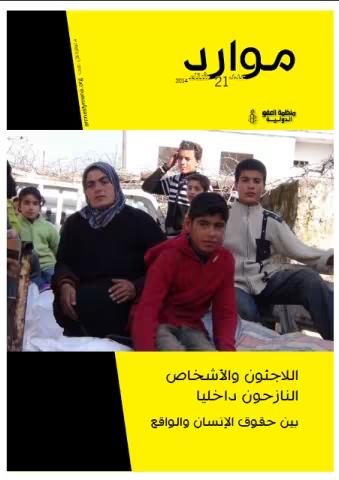
هذا هو العدد 21 من "موارد"، المجلة المتخصصة بالتربية على حقوق الانسان، التي يصدرها المكتب الإقليمي للشرق الأوسط و شمال أفريقيا بمنظمة العفو الدولية في بيروت. نخصص هذا العدد لموضوع اللاجئين والأشخاص النازحين داخليا، ويوفر العدد في هذا السياق مجموعة واسعة من الموارد.
National
Publishing Date

Research Report | February 2014
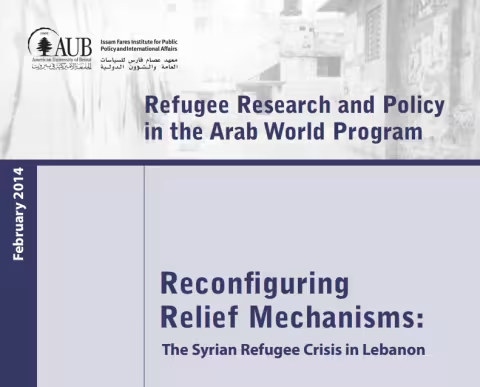
Reconfiguring Relief Mechanisms: The Syrian Refugee Crisis in Lebanon by Rabih Shibli
The past three years of turmoil and bloodshed in Syria have forced more than 6 million Syrians to flee their homes and seek refuge in perceived safer areas inside and outside Syria. According to the latest reports1 issued by the United Nations High Commissioner for Refugees (UNHCR), more than 868,224 Syrian refugees have settled in Lebanon, with the majority facing severe living conditions. Due to financial and political constraints, the Lebanese government has not yet created...

National
Publishing Date
This paper highlights the specificity of the refugee crisis in the unstable Lebanese landscape and calls for the reconfiguring of current relief mechanisms by enabling decentralized local authorities to lead the process. Crisis Management Teams (CMTs), part of Mohafazat councils, will be responsible of collaborating with national and international agencies, planning and monitoring relief projects. The paper also draws on the experience gained by the Community Projects and Development unit (CDPu) – American University of Beirut (AUB), and recommends engaging refugees in municipal public works...
National
Publishing Date
This report examines the role of gender in Lebanese security perceptions, Lebanese perceptions of security institutions, as well as gender dynamics within security institut
National
Publishing Date
REACH undertook an assessment of host community needs in Akkar Governorate, one of Lebanon’s most underdeveloped regions.
National
Publishing Date
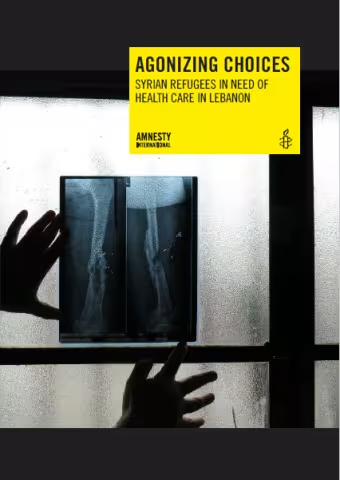
Having limited legal status has direct negative consequences for Syrian refugees’ access to protection and assistance during their stay in Lebanon. Limited legal status also increases the risks of abuse and exploitation. Lebanon is not a signatory to the 1951 Refugee Convention, hence the limited legal protection for refugees and asylum seekers in Lebanon, although it is bound by the customary law principle of non-refoulement and by the obligations of the human rights treaties which it has signed and which are incorporated into its Constitution. International standards under these obligations...