The human rights situation in the Syrian Arab Republic has deteriorated significantly since November 2011, causing further suffering to the Syrian people. Widespread violence and increasingly aggravated socio-economic conditions have left many communities in a perilous state.
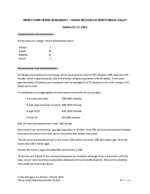
As of the end of April 2012, the number of Syrian families displaced in the Bekaa has increased to 2,800 households. Families registered with local partners receive kits of dry food, but they have requested more variety and choice in food items.
28 refugee households were surveyed, which represented a total of 501 refugees, 48% male and 52% female, which is approximately 11% of the Syrian refugee population in North Bekaa.
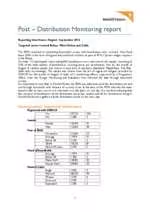
The PDM consisted of conducting household surveys with beneficiaries who received Non-Food Items (NFIs in the form of hygiene kits) and food vouchers as part of WVL's Syrian refugee response in the Bekaa.
UNHCR, coordinating the operations in the North along side with the HRC (High Relief Commission) and DRC as its main implementing partner, requested from DRC to conduct a first rapid assessment in the Bekaa with the following objectives: a) To identify existing areas of displa
Paper Produced as Part of the AUB Tobacco Control Research Group | April 2010
The Economics of Tobacco in Lebanon: An Estimation of the Social Costs of Tobacco Consumption (Full Report)Jad Chaaban, Nadia Naamani, and Nisreen Salti
Tobacco Control is currently being implemented in various countries worldwide. This is a result of the direct effect of tobacco smoking on health. Broadly speaking, Tobacco Control entails a ban on tobacco advertising both below and above the line,1 a ban on smoking in public areas, an increase in the tax on cigarette packs, and the placement of health warnings on...
Summary of Paper Produced as Part of the AUB Tobacco Control Research Group - April 2010
The Economics of Tobacco in Lebanon: An Estimation of the Social Costs of Tobacco Consumption (Executive Summary) Jad Chaaban, Nadia Naamani, and Nisreen Salti
Tobacco Control is currently being implemented in various countries worldwide, as a result of the direct effect of tobacco smoking on health. Lebanon has several pending laws for tobacco control however none is yet ratified and implemented. This paper aims to understand the Lebanese tobacco market and assess whether this market creates an overall...
نتائج رئيسية لبحث لفريق البحث للحد من التدخين في الجامعة الأميركية في بيروت | أب 2009
(كلفة التدخين على لبنان: أرقام تقديرية للآثار الأقتصادية لإستهلاك التبغ (نتائج رئيسيةجاد شعبانو ناديا نعماني و نسرين سلطي
مذكرات للباحثين وصناع القرار #1 | آب 2009
كيف تعيق شركات صناعة التبغ العالمية سياسات مكافحة التدخين في لبنانريما نقّاش
مازال لبنان يعتبر أحد أضعف البلاد في الملنطقة فيما يتعلق بالحد من التدخين، على الرغم من تصديقه على إتفاقية ”منظمة الصحة العاملية“ بشأن "مكافحة التبغ" في عام 2005
.وقد فشل لبنان في محاولاته العديدة بتقديم سياسة وطنية لمكافحة التدخين في الأماكن العامة. وحظر الاعلان والرعاية. ووضع تحذيرات تصويرية صحية قوية على منتاجات التبغ
.بشكل تدخل شركات صناعة التبغ الحاجز الأكبر في عملية وضع حسياسة للحد من التدخين
لمحة موجزة عن بحث لفريق البحث للحد من التدخين في الجامعة الأميركية في بيروت | آب 2009
لمحة موجزة عن سوق التبغ اللبنانيجاد شعبانو ناديا نعماني و نسرين سلطي
يجري حاليا تنفيذ مكافحة التدخين في مختلف بلدان العالم، وذلك نتيجة للتأثير المباشر لتدخين التبغ على الصحة. وفي لبنان عدد من القوانين المعلّقة المرتبطة بمكافحة التدخين ولكن لم يتم تصديق وتنفيذ أي منها بعد. تهدف هذه الورقة إلى فهم سوق التبغ اللبنانية وتقييم ما إذا كانت هذه السوق تخلق إيرادات أو تكاليف للإقتصاد اللبناني. وهذا من شأنه أن يقدّم معلومات قيمة للمناظرة التشريعية القائمة حول إقرار قانون جديد لمكافحة التدخين، كما انه يطلع صانعي...
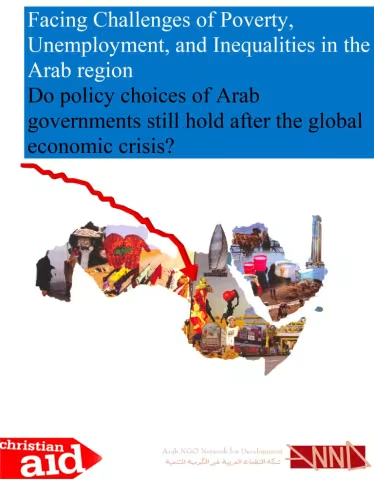
This paper was produced by ANND and Christian Aid and contains five main sections: “Executive Summary: a crisis of multiple dimensions; the threat of explosive vulnerabilities and increasing insecurities”, “Vulnerability to poverty: the key challenges faced by the Arab region”
The report assesses the progress made in the achievement of the Millennium Development Goals (MDGs) based on new national data which was formulated after the first MDGR that was published in 2003.
The activities, presented in this brochure, are illustrative of UNDP – European Commission Humanitarian Aid Department (ECHO) funded interventions and support in restoring and preserving livelihoods in the Lebanese most damaged regions.