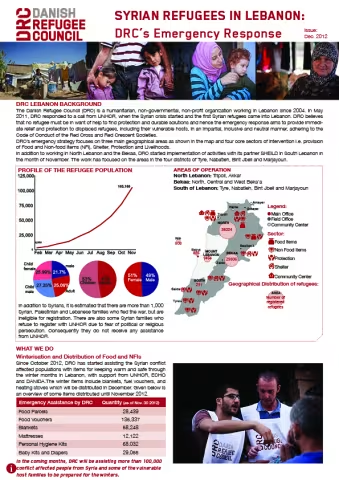
DRC LEBANON BACKGROUNDThe Danish Refugee Council (DRC) is a humanitarian, non-governmental, non-profit organization working in Lebanon since 2004. In May 2011, DRC responded to a call from UNHCR, when the Syrian crisis started and the first Syrian refugees came into Lebanon. DRC believes that no refugee must be in want of help to find protection and durable solutions and hence the emergency response aims to provide immediate relief and protection to displaced refugees, including their vulnerable hosts, in an impartial, inclusive and neutral manner, adhering to the Code of Conduct of the Red...
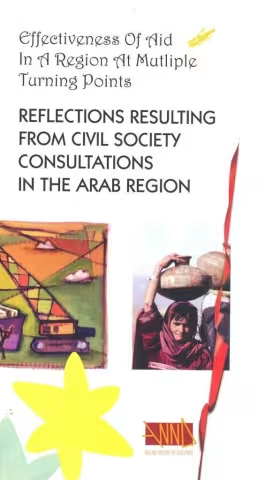
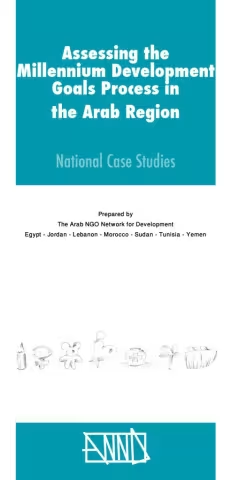
This book tackles key Issues of concern within the aid discussion. It outlines issues of particular importance for civil society in the Arab region and highlights the difference of prospectives between government representatives and CSOs.
The report looks at different technologies related to the power, transport, agriculture and water sectors in Lebanon and assess their potential to reduce greenhouse gas emissions and increase resilience to climate change.
The State and Trends of the Lebanese Environment report provides an overview of the current condition of natural resources and environmental management in the country. Furthermore, it gives an analysis of past and future developments across multiple different sectors.
This paper examines the impact of a rise in the Value Added Tax (VAT) on poverty and inequality in Lebanon. It develops an empirical model based on consumer demand theory and uses only household survey data on expenditures and spatial price indexes.
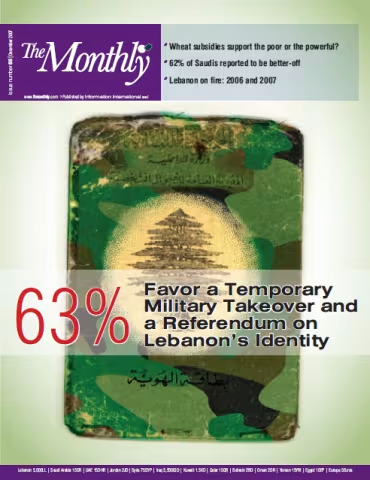
The Lebanese people are divided behind their zu'ama (leaders), who always disagree over national and critical matters in order to protect their status and interests.
“Moukhtar” booklet provides guidelines for municipality leaders and mayors, on how to effectively implement practices and procedures that would benefit the local community, whether in regular daily activities or in conflict situations.
In the framework of “Towards a National Dialogue on Corruption in Lebanon”, the United Nations Development Programme and the Lebanese Transparency Association were able to lay down the foundation of anti-corruption modules as translated into the document entitled “Towards a Na
إن الجمعيات هي العمود الفقري للمجتمع المدني في جميع الدول التي تتمتع بنظام ديمقراطي، وهي بأعدادها الكبيرة ووفرة نشاطاتها، تساهم في لعب أدوار "[محورية] بالتكامل مع مؤسسات الدولة وسلطاتها المختلفة، في عدد كبير من الوظائف والميادين، أبرزها: التطور والتنمية البشرية المستدامة؛ تنمية اهتمام المواطن بالشأن العام، تفعيل طاقة أفرادها وصقلها وتوجيهها وتأمين الديمومة المؤسساتية لها واستقلالها، تعزيز الديمقراطية وثقافتها وتقوية المجتمع المدني."
لكن الجمعيات في لبنان تواجه وضع قانوني مؤسف، بحيث أنها، وبالرغم من الدور الأساسي الذي ما فتئت تلعبه في ظل نظام دستوري وقانوني يتفق إلى حد كبير مع مبدأ حرية...