The general objective of the project is to contribute to mitigate the impact of the Syrian Crisis on the most vulnerable persons and their families - including Syrian injured refugees and other vulnerable groups - by responding to their basic and specific needs.
UNHCR’s Policy Development and Evaluation Service (PDES) is committed to the systematic examination and assessment of UNHCR policies, programmes, projects and practices.
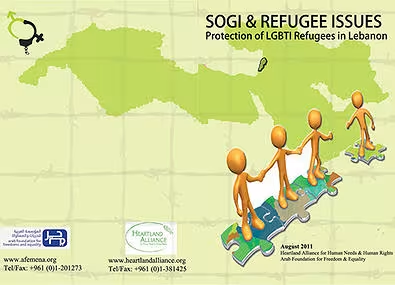
The research will provide better understanding on the legislations and laws that authorities are using to control or oppress any movement or any type of activism on gender and sexuality issues in JORDAN.
Titled “Let The Resolution Begin…. Live Gender Equity”, this resource is the annual report of ABAAD Resource Center for Gender Equity, which lists the accomplishments of the organization for the period between June 2011 and June 2012.
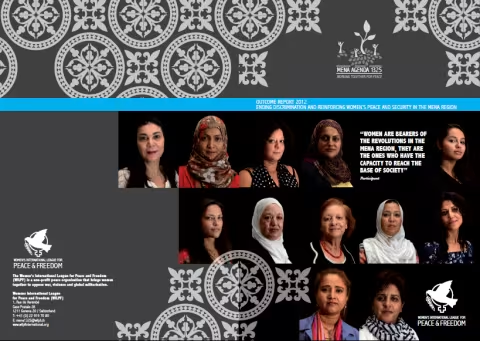
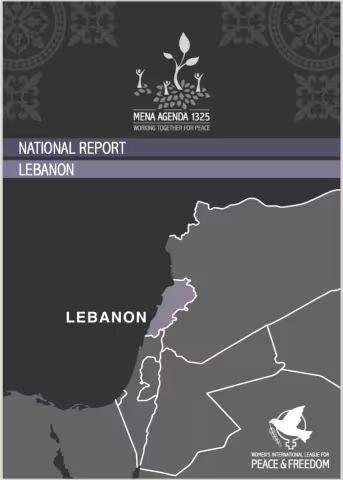
In late 2011, WILPF began to develop a programme to enhance the collective capacities of women’s rights organisations to respond to the unprecedented political events in the Middle East and North Africa (MENA).
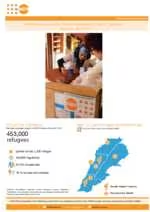
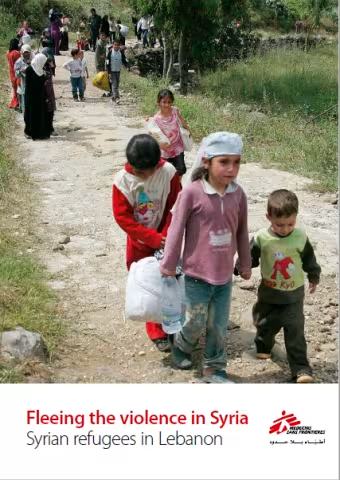
Over 57,000 displaced Syrians are receiving protection and assistance in Lebanon through the efforts of the Government of Lebanon and UN and NGO partners.
ABAAD-Resource Center for Gender Equality, in partnership with Women's League for International Peace and Freedom (WILPF) and in collaboration with the United Nations Interim Forces (UNFIL) in South Lebanon, organized the National Consultation Meeting on May 10th, 2012 at Holi
Research and Policy Memo #10 | May 2011
Climate Change and Health Research in the Eastern Mediterranean Region (EMR)Rima R. Habib
Climate change is likely to aggravate the burden of disease in the Arab region currently suffering from political instability, natural disasters and humanitarian crises. The prevailing arid environment and the reliance on rain-fed food production exacerbate the situation. Therefore, governments and key stakeholders are encouraged to make further outlays to counteract new and increasing challenges to population health.
UNHCR, coordinating the operations in the North along side with the HRC (High Relief Commission) and DRC as its main implementing partner, requested from DRC to conduct a first rapid assessment in the Bekaa with the following objectives: a) To identify existing areas of displa
IFI Research and Policy Memo #1 | April 2010
The Transnational Tobacco Industry Effectively Hampers Tobacco Control Policy-Making in LebanonRima Nakkash
Lebanon is still considered one of the weakest countries in the region with regards to regulating tobacco use, despite having ratified the World Health Organisation’s Framework convention on Tobacco Control in 2005. Lebanon has failed numerous attempts to introduce a national tobacco control policy, including banning smoking in closed public areas, banning advertising and sponsorship, and placing large pictorial health warnings on tobacco...
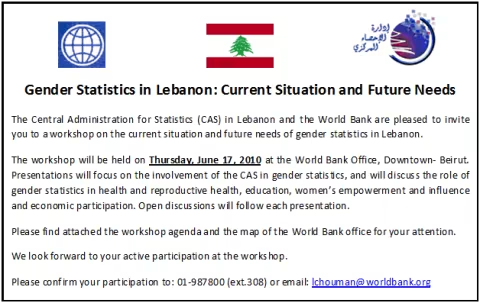
The Central Administration of Statistics (CAS) and the World Bank organized a workshop entitled "Gender Statistics in Lebanon: Current Situation and Future Needs," which took place on June 17, 2010.