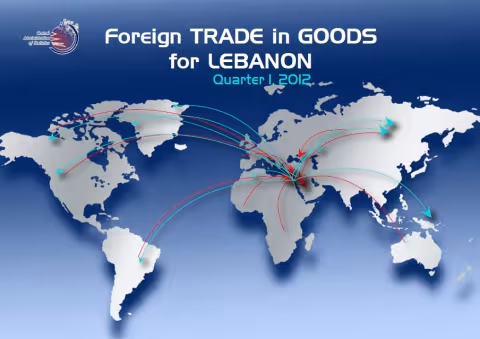
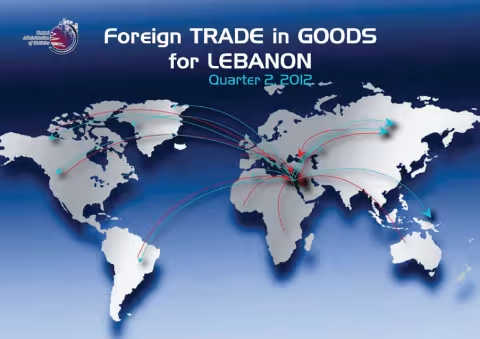
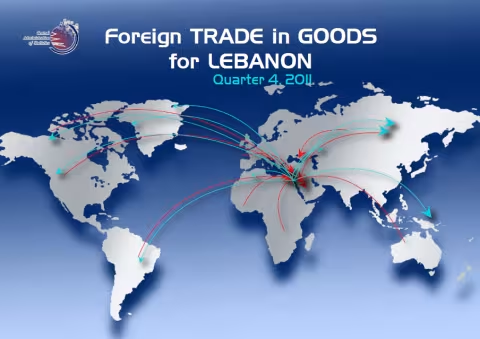
The value of Lebanese imports of goods in Quarter Q1 year 2012 was 9346 billion LBP. This was 518 billion LBP, 5.9% higher than imports in Q4 of previous year 2011, and 2162 billion LBP, i.e. 30% increase comparing to the same Quarter Q1 of year 2011.
The European Bank for Reconstruction and Development (EBRD) was established in 1991, in response to the major changes in the political and economic context in Central and Eastern European countries.1 Today it has 65 shareholders, of which 63 are countries, and the other two ar
The EIB is the European Union’s bank. It is the financing institution of the EU founded in 1958 by the Treaty of Rome and owned by the 27 EU member states. The EIB is headquartered in Luxembourg and has a network of local and regional offices in Europe and beyond.
Over 57,000 displaced Syrians are receiving protection and assistance in Lebanon through the efforts of the Government of Lebanon and UN and NGO partners.
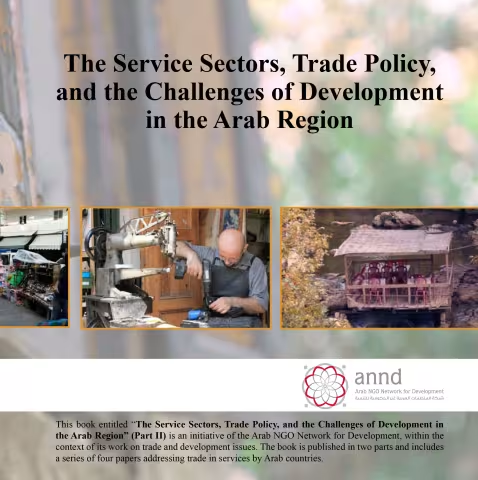
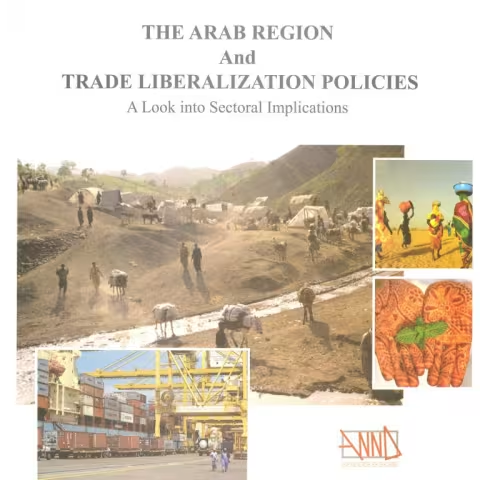
This book entitled “The Service Sectors, Trade Policy, and the Challenges of Development in the Arab Region” (Part II) is an initiative of the Arab NGO Network for Development, within the context of its work on trade and development issues.
Research and Policy Memo #10 | May 2011
Climate Change and Health Research in the Eastern Mediterranean Region (EMR)Rima R. Habib
Climate change is likely to aggravate the burden of disease in the Arab region currently suffering from political instability, natural disasters and humanitarian crises. The prevailing arid environment and the reliance on rain-fed food production exacerbate the situation. Therefore, governments and key stakeholders are encouraged to make further outlays to counteract new and increasing challenges to population health.
It contains 8 chapters: 1) an introduction to the general debate on trade and development, 2) an overview of the situation In the Arab region, 3) the engagement of Arab countries with the WTO, 4) Arab countries and the Euro-Mediterranean partnership, 5) Arab countries and free
The value of exports from Lebanon in Quarter 4 2011, was LBP 2,052 billion. This was LBP 72 billion, 3.4%, lower than exports in Q3 2011 and LBP 148 billion, 6.7%, lower than exports in the same quarter last year.
UNHCR, coordinating the operations in the North along side with the HRC (High Relief Commission) and DRC as its main implementing partner, requested from DRC to conduct a first rapid assessment in the Bekaa with the following objectives: a) To identify existing areas of displa
IFI Research and Policy Memo #1 | April 2010
The Transnational Tobacco Industry Effectively Hampers Tobacco Control Policy-Making in LebanonRima Nakkash
Lebanon is still considered one of the weakest countries in the region with regards to regulating tobacco use, despite having ratified the World Health Organisation’s Framework convention on Tobacco Control in 2005. Lebanon has failed numerous attempts to introduce a national tobacco control policy, including banning smoking in closed public areas, banning advertising and sponsorship, and placing large pictorial health warnings on tobacco...
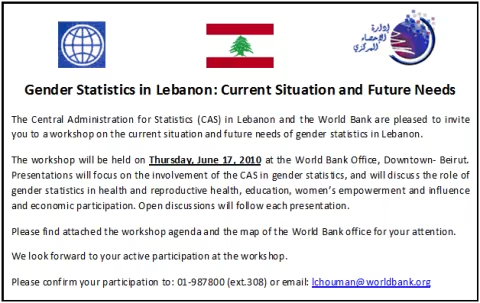
The Central Administration of Statistics (CAS) and the World Bank organized a workshop entitled "Gender Statistics in Lebanon: Current Situation and Future Needs," which took place on June 17, 2010.
Information on the health service in Lebanon including availability of access and availability of drugs and treatment. Information on treatment of mental health issues such as anxiety, depression, post traumatic syndrome, including psychiatric treatment.
في 21 كانون الثاني/يناير 2009 اعتمد المجلس التنفيذي لمنظمة الصحة العالمية القرار م ت124 ق 4 الذي طلب إلى المديرة العامة لمنظمة الصحة العالمية أن توفد بعثة صحية متخصصة إلى غزة للوقوف على الاحتياجات الصحية و الإنسانية العاجلة بعد 22 يوماً من العمليات العسكرية الإسرائلية التي بدأ
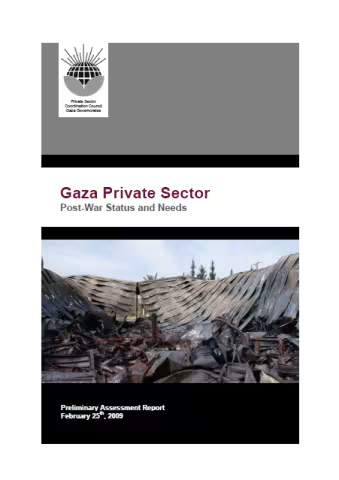
Israeli forces conducted a major combined military operation in the Gaza Strip for a period of 22 days (December 27, 2008 – January 18, 2009), where “Israeli forces used aerial bombing, tank shelling and armored bulldozers to eliminate the productive capacity of some of Gaza's
June 14, 2009 marks the second year of closure of the Gaza Strip for movement of both people and goods. The large majority of these movements are classified under the humanitarian functions with only limited quantities of exports mainly cash crops.