Region-Specific Study | August 2009
Current Status of Climate Change Research and Policy in the Levant; The Jordan Case English SummaryManar Fayyad
A closed workshop on climate change, water, and the policy making process in the Levant and North Africa region was held by the Issam Fares Institute for Public Policy and International Affairs at the American University of Beirut, in August 2009.
Attending the workshop were leading experts on water and sanitation, and several countries were highlighted as case studies. This particular summary focuses on the case of Jordan, which was put together...
Region-Specific Study | August 2009
Knowledge Mapping of Climate Change Issues and Stakeholders in LebanonNadim Farajalla
Human activities have now been proven to be the main cause for changes in the Earth’s climate. Climate change has become the central issue of global concern; no country, large or small, rich or poor, will be immune from its ramifications. According to the United Nations’ Intergovernmental Panel on Climate Change (IPCC) Fourth Assessment Report (FAR) published in 2007 projects that the temperature in the Middle East will increase 1- 2°C by 2030-2050. In a more focused...
Region-Specific Study | August 2009
Syria: Climate Change, Water and the Policy-Making Process in the Levant and North Africa (Full Text)Abdallah Droubi
The Intergovernmental Panel on Climate Changes (IPCC) is one of the most renowned publishers of internationally acclaimed research on global climate change. Its recent Technical Paper on Climate Change and Water (IPCC Working Group II, 2008) outlines some general statements that are relevant for the Middle East region – such as, “many semi-arid and arid areas (for example, the Mediterranean basin) are particularly exposed to the impacts of...
نبذة مختصرة عن دراسة | آب 2009
(تغير المناخ: التأثيرات والتكيف وعملية صنع السياسات: فلسطين كحالة دراسية (نبذة مختصرة بالعربيةزياد أ. ميمي و مايكل مايسونو مارك زيتون
إن تغير المناخ العالمي الناتج عن العمليات الطبيعية والأنشطة البشرية هو موضوع مثير للقلق والاهتمام في جميع أنحاء العالم. ويتوقع أن تؤثّر ظاهرة "الاحتباس الحراري" بشكل كبير على الموارد المائية. وهكذا، يبدو أن تأثير تغير المناخ يأتي كعنصر إضافي على رأس عدد كبير من المشاكل القائمة المتصلة بالمياه. ستقوم هذه الورقة بتحديد الجهات الفاعلة الرئيسية المعنية بتغير المناخ وتقييم الآثار المحتملة لتغير المناخ واستعراض المعلومات المتاحة بشأن...
نبذة عن دراسة | آب 2009
(تغير المناخ في منطقة المشرق العربي وشمال أفريقيا: تقييم الآثار المترتبة على الموارد المائية وحالة الوعي و الـتأهب الاقليمية و الطريق الى الأمام (نبذة مختصرة بالعربيةحامد عساف
أصبح تغير المناخ اليوم حقيقة موثّقة مسلم بها من قبل العلماء والحكومات في جميع أنحاء العالم. لقد بدأ تغير المناخ يصبح ظاهراً بالفعل. تعتبر منطقة المشرق العربي وشمال أفريقيا واحدة من أكثر المناطق تأثراًوعرضة لتغير المناخ. لذلك، لا بد من طرح الأسئلة التالية: هل نحن مستعدون؟ ماذا نعرف حالياً عن القضايا المتعلقة بتغير المناخ وآثارها المحتملة على موارد المياه؟ كم من المعلومات تملكها القطاعات...
نبذة عن دراسة | آب 2009
تغير المناخ والموارد المائية وعملية صنع السياسات في منطقة المشرق العربي وشمال أفريقيا: حال سورياعبد الله دروبي
في ورشة عمل مغلقة عقدها معهد عصام فارس للسياسات العامة والشؤون الدولية في آب / أغسطس 2009 ، قام كبار الخبراء في مجال المياه بالبحث في قضية تغير المناخ مع إيلاء مراعاة خاصة لسوريا
تعتبر منطقة الشرق الأوسط أكثر المناطق التي تشهد إجهاداً مائياًفي العالم حيث ارتفع متوسط درجة الحرارة في دول البحر المتوسط من 1.5 إلى 4 درجات مئوية في السنوات ال 100 الماضية، كما يتوقع أن تزداد ظواهر الجفاف بنسبة عشرة أضعاف على مدى السنوات ال 100 المقبلة. وستتأثر سوريا على وجه تغير...
Research and Policy Memo #5 | June 2009
Carbon Trading: A Potential for Arab Countries to Abate Climate ChangeJad Chaaban,and Souheil Abboud
Carbon emissions trading provides a financial incentive for Arab countries to mitigate the effects of climate change, but they still need to reduce carbon emissions and follow the Kyoto Protocol in an international effort to fend off global warming.
This was the view from academia and the private sector on carbon trading as a climate change mitigation strategy for the Arab world, presented during a recent lecture at the American University of Beirut (AUB)...
Research and Policy Memo #5 | June 2009
Carbon Trading: A Potential for Arab Countries to Abate Climate ChangeJad Chaaban,and Souheil Abboud
Carbon emissions trading provides a financial incentive for Arab countries to mitigate the effects of climate change, but they still need to reduce carbon emissions and follow the Kyoto Protocol in an international effort to fend off global warming.
This was the view from academia and the private sector on carbon trading as a climate change mitigation strategy for the Arab world, presented during a recent lecture at the American University of Beirut (AUB)...
مذكرات للباحثين وصناع القرار #5 | حزيران 2009
تجارة الكربون: إمكانية أمام الدول العربية للحد من تغير المناخجاد شعبان
.يوفر الاتجار في انبعاثات الكربون حافزاً مالياً للدول العربية للتخفيف من آثار تغير المناخ، لكنها لا تزال بحاجة إلى خفض انبعاثات الكربون ومتابعة بروتوكول كيوتو في جهد دولي لدرء ظاهرة الاحتباس الحراري
.وكان هذا رأي الاوساط الاكادميية والقطاع الخاص حول تجارة الكربون كاستراتيجية للتخفيف من حدة تغير المناخ في العالم العربي الذي تم عرضه خلال محاضرة جرت مؤخرا في الجامعة الاميركية في بيروت
Research and Policy Memo #4 | May 2009
Water Mismanagement Responsible for High Levels of Saline and Chloride in Greater Beirut GroundwaterMark Saadeh
Intrusion in the coastal aquifers of Greater Beirut has largely been a direct consequence of decades of water mismanagement – exacerbated by a civil war lasting more than fifteen years, according to Dr Mark Saadeh, consultant to the Litani River Authority. Concurrent urban growth and repeated natural drought conditions have also amplified this phenomenon.
Dr. Saadeh presented two lectures at AUB, as part of the Research and Policy Forum on...
Research and Policy Memo #4 | May 2009
Water Mismanagement Responsible for High Levels of Saline and Chloride in Greater Beirut GroundwaterMark Saadeh
Intrusion in the coastal aquifers of Greater Beirut has largely been a direct consequence of decades of water mismanagement – exacerbated by a civil war lasting more than fifteen years, according to Dr Mark Saadeh, consultant to the Litani River Authority. Concurrent urban growth and repeated natural drought conditions have also amplified this phenomenon.
Dr. Saadeh presented two lectures at AUB, as part of the Research and Policy Forum on...
Research and Policy Memo #3 | February 2009
Multi-Faceted Mitigation Can Reduce Risk of Complete Collapse of Arab World’s Water, Food, and Land SystemsGeorge J. Nasr
Shifts in trade and transport patterns due to global warming may cut off Arab countries from food and water, affecting them more than developed countries. This is only one of many urgent implications of climate change on food, water, and land in the Arab world - as outlined by George Nasr during a lecture at the American University of Beirut.
“Cross-border mobilization and immediate investment in research and development would...
IFI Research and Policy Memo #2 | January 2009
Governments Should Practice 'Water Demand Management' to Rescue Region's Water ResourcesHamed Assaf
Surging populations and increasing living standards in the Middle East are exacerbating the region’s water problem as countries begin to expect more of scarce and poorly managed water, warned Dr. Hamed Assaf, a professor of water resources engineering at the American University of Beirut. High water demand, negligence of water quality, and over-pumping are more serious threats to the region’s water supply than are the potential impacts of climate...
2009 مذكرات للباحثين وصناع القرار #2 | كانون الثاني
على الحكومات أن تمارس "إدارة الطلب على المياه" كي تنقذ الموارد المائية للمنطقة من التغير المناخيحامد عساف
حذر البروفيسور حامد عساف من تفاقم مشكلة المياه في الشرق الاوسط يوماً بعد يوم، في ظل الزيادات السكانية وازدياد المتطلبات والمستوى المعيشي، مما يعني أنه على دول المنطقة توقع المزيد من الشح وتبعات سوء الإدارة في مواردها المائيةّ
وجاء كلام عساف، الدكتور برتبة بروفيسور في هندسة الموارد المائية في الجامعة الاميركية في بيروت، خلال محاضرته التي نظمها معهد عصام فارس للسياسات العامة والشؤون الدولية
IFI Paper | January 2009
UNIFIL II: Emerging and Evolving European Engagement in Lebanon and the Middle EastKarim Makdisi, Timur Göksel, Hans Bastian Hauck, and Stuart Reigeluth
There has been a long-standing debate on the merits and drawbacks of UNIFIL, the UN “interim” peacekeeping operation established by UN Security Council (UNSC) Resolutions 425 and 426 in the aftermath of Israel’s 1978 invasion of Lebanon. Following the 2006 Israel-Lebanon War, this debate intensified as UNIFIL’s original mandate was made more “robust” by UNSC Resolution 1701, which marked a new phase of UN peacekeeping...
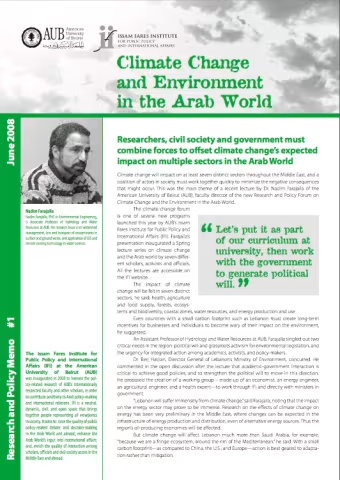
Research and Policy Memo by Nadim Farajalla, PhD in Environmental Engineering, who is an Associate Professor of Hydrology and Water Resources at AUB. The policy adresses climate change and environment in the Arab world, where Dr. Nadim Farajalla talked about in his lecture.
Climate change will impact on at least seven distinct sectors throughout the Middle East, and a coalition of actors in society must work together quickly to minimize the negative consequences that might occur.
Research and Policy Memo #1 | June 2008
Researchers, Civil Society and Government Must Combine Forces to Offset Climate Change’s Expected Impact on Multiple Sectors in the Arab World Nadim Farajalla
Climate change will impact on at least seven distinct sectors throughout the Middle East, and a coalition of actors in society must work together quickly to minimize the negative consequences that might occur. This was the main theme of a recent lecture by Dr. Nadim Farajalla of the American University of Beirut (AUB), faculty director of the new Research and Policy Forum on Climate Change and the...
Dans le cadre du Projet MEDSTAT Environnement, l’Administration Centrale de la Statistique (ACS) – le point focal des statistiques en général et des statistiques environnementales en particulier – élabore le présent compendium.
A booklet highlighting UNDP's prompt response to the environmental disaster that hit the Lebanese coastline resulting from the air strike on the fuel storage tanks of the Jiyeh power plant.
The objectives of this assessment are to identify and prioritize environmental impacts caused by the July 2006 war, to propose measures to alleviate those impacts rated as significant, and to recommend opportunities for greening the recovery, reconstruction, and reform process