دليل.فيلم هو مصدر مفتوح من تصميم بيروت دي سي وشركائها، يهدف إلى مساعدة صنّاع الأفلام العرب على إنتاج أفلام تصل إلى الجماهير على امتداد المدن العربية والعالم وتكون مراعية لمعايير الحفاظ على البيئة
daleel.film is the guide of guides: an open resource made by Beirut DC and partners to help Arab filmmakers make great socially and environmentally engaged films that reach audiences in every Arab city and the world
This report aims to provide statistical and analytical tools for the recovery community working in North Lebanon, specifically those working with the Nahr el-Bared displaced and returnee population. The information will allow for better assessment of current needs and gaps, which will eventually support the development of appropriate strategies of intervention on both the short and long term.
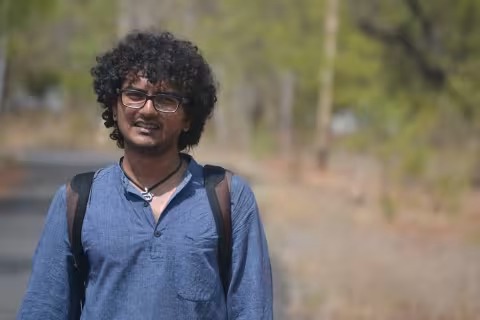
MOSAIC had the pleasure and privilege to speak with activist Gopi Shankar Madurai moments after the Supreme Court in India decriminalized Section 377 of the Penal Code.
Analyzing the Impact on the Personal and Professional Development
of Young Participants at Erasmus Plus/Youth in Action/Euromed projects through “Chabibeh Sporting Club” From 2008 till 2017
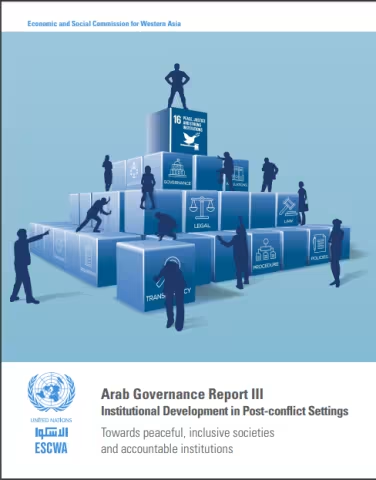
The third edition of the Arab Governance Report introduces post-war best practices from international and regional experiences. It suggests strategies and policies for Libya and Yemen that focus on the immediate aftermath once combat ceases and a future political settlement.
More than a decade after the United Nations’ adoption of the Convention on the Elimination of All Forms of Discrimination against Women, which is adopted by many countries including Lebanon, these countries returned in 2015 to commit themselves to achieve gender equality and t
UNFPA on behalf of UNDP and UN Women organized a national workshop on gender-related laws, policies and practices in Lebanon, which was held in Beirut on the 7th and 8th of August, 2018.
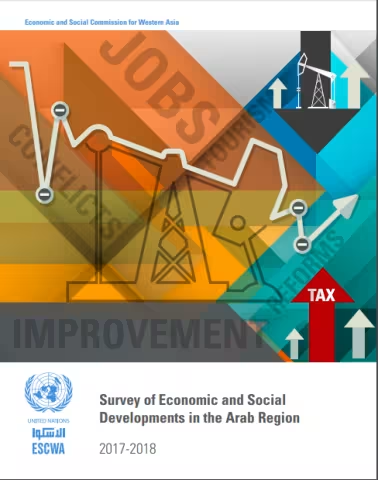
The Arab region continues to manage uncertainties on its path towards an inclusive and sustainable growth trajectory: geopolitical tensions persist, and global interest rates have soared.
The July war 2006, lasted 34 days, and led to the displacement of 915,762 (almost 25% of the Lebanese population) persons, relocating into public and private schools all over the country. With the coming into force of the cease fire in August 14th 2006, there was a rapid return of the displaced to the south.
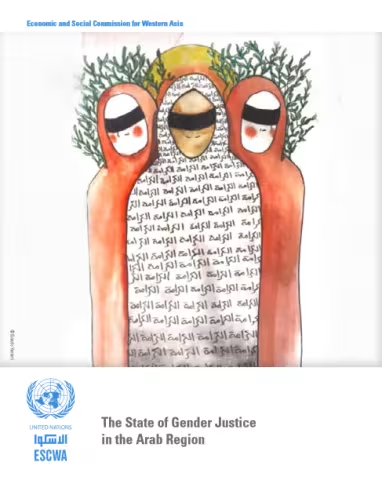
This study maps the current state of gender justice in the Arab region, documenting barriers as well as opportunities. Its primary research aim is to determine how to develop an environment, at the legal, policy, and social levels that is conducive to gender justice.
The Gender Dictionary, published by Lebanon Support, is a practical bilingual tool, based on multidisciplinary research and consultations with local gender actors (academics, experts, activists, practitioners).
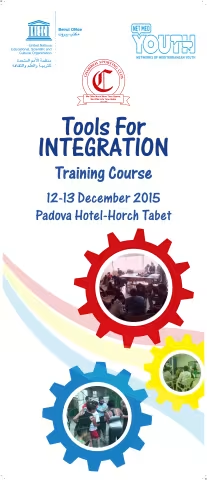
In December 2015, Chabibeh Sporting Club organized the
TOOLS FOR INTEGRATION project, funded by UNESCO, which was divided into 2 phases:
A 2 days training course (12-13 Dec 2015) that gathered 24 youth workers and leaders from different Leba-nese regions. Over these 2 days the topics of social cohesion and integration were discussed and participants reflected on traditional games they played when they were kids in order to develop together new tools and games under the themes of integration and cohesion
A 1 day camp (21 December 2015) for Lebanese, Syrian and Palestinian youth during which...
The concept of resilience offers a framework that facilitates cross-institutional and cross-disciplinary dialogue and pushes us to examine systems that influence complex situations.
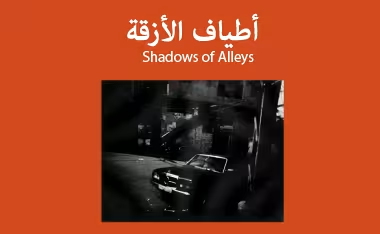
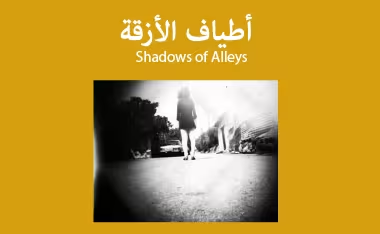
About the bookletThis booklet is one of a serie of 3 booklets enclosing a collection of 180 photos, captured by young Palestinian girls and boys in Burj Chemali Camp, South Lebanon. Through using the ‘Pinhole Camera’ technique, these girls and boys captured some challenging sides of the lives of Palestinian youth through aspects of discrimination, violence and gender-based violence affecting their communities. Throughout these photos, the 3 booklets tell 3 personal stories narrated by the participants that implicate deep personal sufferings caused by community-imposed norms, traditions and...
About the bookletThis booklet is one of a serie of 3 booklets enclosing a collection of 180 photos, captured by young Palestinian girls and boys in Burj Chemali Camp, South Lebanon. Through using the ‘Pinhole Camera’ technique, these girls and boys captured some challenging sides of the lives of Palestinian youth through aspects of discrimination, violence and gender-based violence affecting their communities. Throughout these photos, the 3 booklets tell 3 personal stories narrated by the participants that implicate deep personal sufferings caused by community-imposed norms, traditions and...
This report examines variations in wartime experiences and the attitudes of residents in Greater Beirut regarding measures to confront Lebanon’s legacy of political violence.