The starting point for the present Report is that, since the publication of the first volume in the series, the region’s human development fault lines have grown more complex, and in some cases deepened.
أنجزت الدكتورة فهميّة شرف الدين هذه الدراسة الميدانية التحليليّة، بالتعاون مع برنامج اللأمم المتحدة الإنمائي(مشروع حقوق المر أة اللبنانية وقانون الجنسية) واللجنة الاهلية لمتابعة قضايا المرأة، في 2009.
مذكرات للباحثين و صناع القرار#2 | كانون الثاني 2009
بإمكان القطاع العام أن يخفف من العوامل التي تسبب هجرة الشبابجاد شعبان
يفضل الشباب، ذكوراً وإناثاً، مغادرة لبنان بشكل مؤقت أو نهائي للعمل خارجاً ّ ، مما يقلص من الثروة البشرية والمجتمعية للبلد. وبما أن العوامل الخارجية التي تجذب الشباب للهجرة لا يمكن تغييرها، فإن الحمل يبقى على ّ كاهل المؤسسات الرسمية لتحد من العوامل الداخلية التي تدفع بالشباب للهجرة.
ويضيق الهرم السكاني في لبنان عند فئة الشباب من عمر 20-35، بحسب الباحث والخبير الاقتصادي جاد شعبان، المهتم أيضا بقضايا الشباب فيالعالم العربي.
كما أن معظم من يهاجرون من الشباب إلى أميركا...
Review of marginalisation of people with disabilities in Lebanon, Syria and Jordan. Using a social exclusion conceptual framework, this paper identifies several causes of marginalization of people with disabilities in the context of the MENA region.
Research and Policy Memo #2 | January 2009
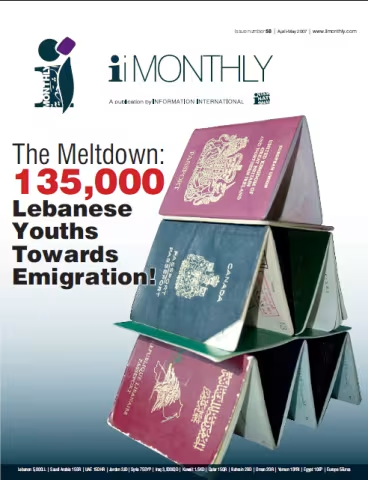
Public Sector Can Reduce Push Factors that Drive Youth Emigration Jad Chaaban
Young men and women prefer to leave Lebanon either temporarily or permanently to work abroad, leading to a decline in the country’s human capital and welfare. While the factors that attract youth abroad cannot be altered, the onus rests on public institutions in Lebanon to reduce the internal “push” factors that drive youth away.
“The Lebanese population’s age pyramid shows a shrinking trend in the 20-35 age categories,” said Jad Chaaban, a leading economist and researcher...
This brochure highlights UNDP’s contribution in the Early Recovery process of the Palestinian and Lebanese populations who were affected by the Nahr El Bared crisis.
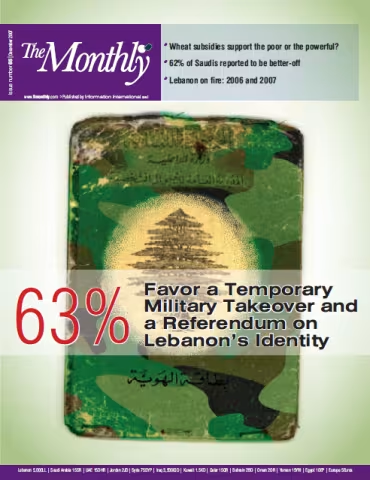
Events and experiences over the past years have confirmed that Lebanon is not a "country" in the legal and political context of the term but an "agreement" between 18 confessions to live on one land and find an appropriate framework (the state) to deal with their differences.
The Lebanese people are divided behind their zu'ama (leaders), who always disagree over national and critical matters in order to protect their status and interests.
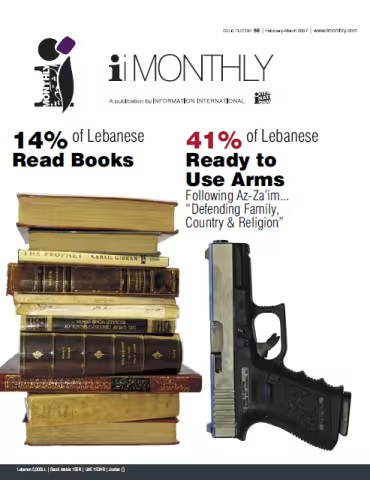
In the previous issue, Information International surveyed the opinion of the Lebanes on various issues, namely their political belonging, their position toward Hizbullah's arms and rearmament of political parties, their most preferred candidates for presidency and premiership,
A detailed report on ANND’s participation in this forum that covered the issues of neoliberal globalization and human development, women’s rights, geopolitical changes, democracy and public freedoms, cultural dimensions, environment and sustainable development, migration and t
The popularity of the women’s rights cause and its obvious intrinsic merit have unfortunately generated many facile assumptions and much confusion about the conditions of women in the Middle East and the problems they face
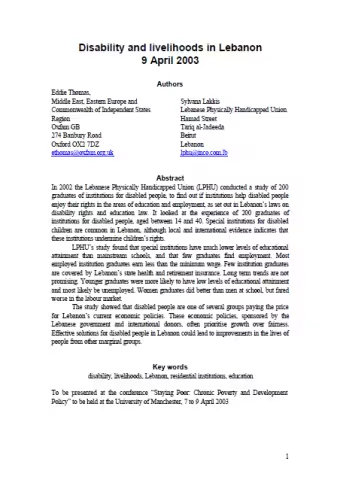
In 2002 the Lebanese Physically Handicapped Union (LPHU) conducted a study of 200 graduates of institutions for disabled people, to find out if institutions help disabled people enjoy their rights in the areas of education and employment, as set out in Lebanon’s laws on disabi
The study upon which this article is based analyzes the status of Arab women in general, gender relations in the Middle East, and the situation of Arab women with disabilities, based on available disability statistics from a few selected countries and the author's observations