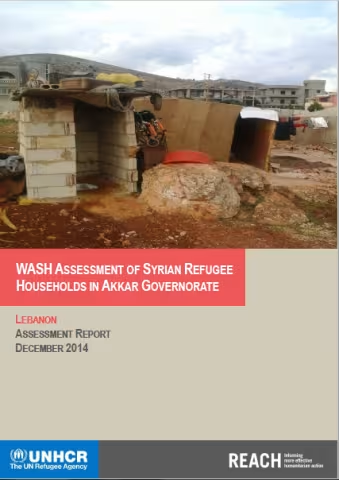
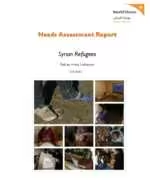
As the Syrian Crisis enters its fourth year, numerous water, sanitation, and hygiene (WASH) needs remain to be filled among Syrian refugees living in Lebanon, who now number more than 1.1 million.
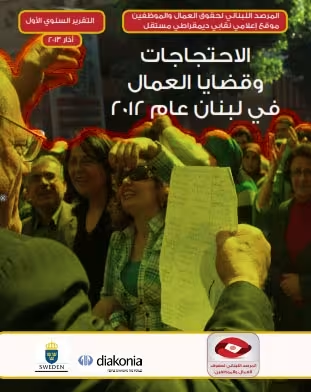
يقدم المرصد اللبناني لحقوق العمال والموظفين، تقريره السنوي الأول "الاحتجاجات وقضايا العمال في لبنان عام 2012: عام نهوض القطاع العام وتعرية الاتحاد العمالي العام." ويأتي التقرير بدعم من منظمة "دياكونيا"، باعتباره الإصدار الأول من سلسلة تقارير مرتقبة.
وبالإضافة إلى رصد التحركات العمالية في مختلف القطاعات، يفرد التقرير مساحة لبعض النقابيين وبعض مؤسسات المجتمع المدني الفاعلة في وسط العمال لتقديم مساهمات حول قضاياهم التي نحن أيضا معنيون في متابعتها بالمرصد العمالي، ومنها قضايا متعلقة بحقوق العمال المعوقين، والعمال الفلسطينين وعاملات المنازل المهاجرات. كما أفرد التقرير مساحة إضافية لأعضاء في هيئة...
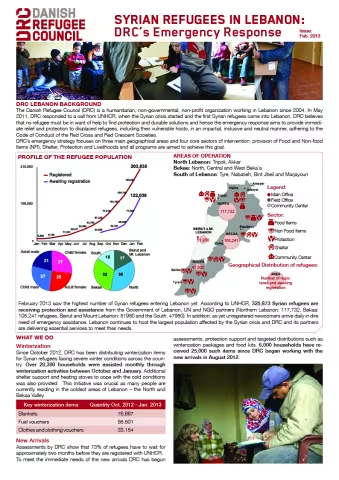
The Danish Refugee Council (DRC) is a humanitarian, non-governmental, non-profit organization working in Lebanon since 2004. In May 2011, DRC responded to a call from UNHCR, when the Syrian crisis started and the first Syrian refugees came into Lebanon. DRC believes that no refugee must be in want of help to find protection and durable solutions and hence the emergency response aims to provide immediate relief and protection to displaced refugees, including their vulnerable hosts, in an impartial, inclusive and neutral manner, adhering to the Code of Conduct of the Red Cross and Red Crescent...
The continuing unrest in Syria is resulting in a growing influx of Syrian refugees to Lebanon. The United Nations High Commissioner for Refugees has registered over 57,000 Syrian refugees in Lebanon (September 7, 2012) while many refugees are awaiting registration.
As part of the assessment support mission, capacity assessment requested by the WASH partners to be carried out, the assessment team developed a Capacity Assessment Tool designed to collect information covering aspects, such as, profile, WASH response, WASH activities, transpo
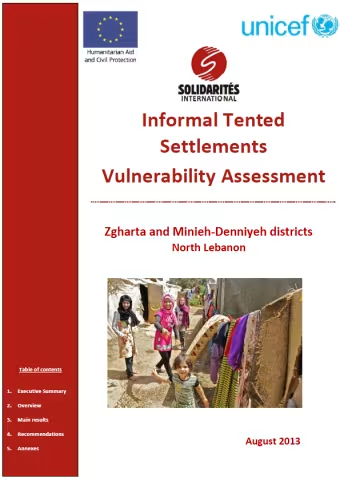
This report is the result of 4 months of field data collection from April to August 2013 carried out in the Informal Tented Settlements (ITS) of the two districts of Zgharta and Minieh-Dennieh by SOLIDARITÉS INTERNATIONAL’s (SI) outreach workers.
This report is the result of 4 months of field data collection from April to August 2013 carried out in the Informal Tented Settlements (ITS) of the two districts of Zgharta and Minieh-Dennieh by SOLIDARITÉS INTERNATIONAL’s (SI) outreach workers.
The number of Syrian refugees registered in Lebanon has more than quadrupled over the past six months. On January 1, 2013 Lebanon was hosting some 130,000 refugees; today that figure stands at more than 600,000.
This thematic report provides an overview of available lessons identified from assessments undertaken concerning the humanitarian situation in Syria as well as the situation for Syrian refugees in host-countries.
The purpose of the needs assessment conducted in the Bekaa area is to identify the needs of Syrian refugees (SR), in terms of food, non food items (NFIs), shelter, water and education.
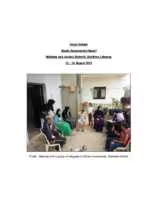
Swiss Solidar undertook a multi-sectoral needs assessment in August 2013 to assess the humanitarian needs of Syrian refugees residing in Nabatieh and Jezzine Districts in Southern Lebanon.1 Prior to undertaking its field assessment, Solidar undertook a detailed documentation r
Swiss Solidar undertook a multi-sectoral needs assessment in August 2013 to assess the humanitarian needs of Syrian refugees residing in Nabatieh and Jezzine Districts in Southern Lebanon.
Since March 2011 and the continuously escalating crisis in Syria, Lebanon (along with Jordan, Iraq and Turkey) has been a refuge area for Syrian families fleeing the instability and violence in their country.