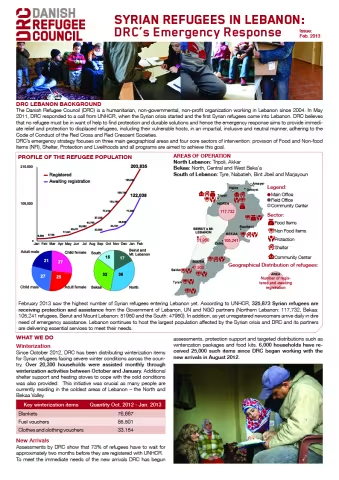
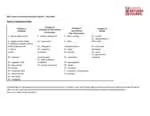
The Danish Refugee Council (DRC) is a humanitarian, non-governmental, non-profit organization working in Lebanon since 2004. In May 2011, DRC responded to a call from UNHCR, when the Syrian crisis started and the first Syrian refugees came into Lebanon. DRC believes that no refugee must be in want of help to find protection and durable solutions and hence the emergency response aims to provide immediate relief and protection to displaced refugees, including their vulnerable hosts, in an impartial, inclusive and neutral manner, adhering to the Code of Conduct of the Red Cross and Red Crescent...
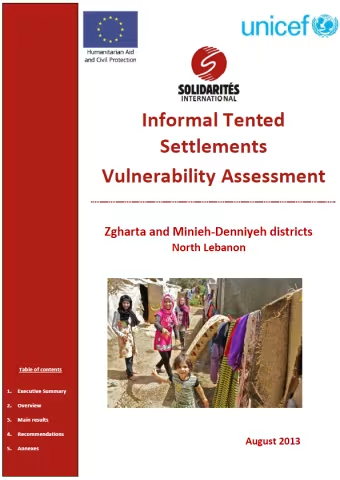
This report is the result of 4 months of field data collection from April to August 2013 carried out in the Informal Tented Settlements (ITS) of the two districts of Zgharta and Minieh-Dennieh by SOLIDARITÉS INTERNATIONAL’s (SI) outreach workers.
Swiss Solidar undertook a multi-sectoral needs assessment in August 2013 to assess the humanitarian needs of Syrian refugees residing in Nabatieh and Jezzine Districts in Southern Lebanon.
Since March 2011 and the continuously escalating crisis in Syria, Lebanon (along with Jordan, Iraq and Turkey) has been a refuge area for Syrian families fleeing the instability and violence in their country.
Shedding the lights on UNDP's recovery efforts in South Lebanon and the Southern Suburb of Beirut in the aftermath of the July 2006 aggression, the booklet tackles the recovery initiatives undertaken by UNDP from rubble removal activities to other quick impact initiatives.
This "Thirty Questions Guide" is the first guide that addresses the various stages of work and employment based on the principles of the CRPD and its relevant detailed provisions.
This report is the result of 4 weeks’ field work from April 22 to May 17 carried out in the two districts of Zgharta and Minieh-Dennieh by SOLIDARITÉS INTERNATIONAL’s (SI) outreach workers.
Since the unrest in Syria began in March 2011, the Bekaa Valley in Lebanon has hosted varying numbers of displaced Syrian families. Local actors such as municipalities and NGOs registered families for assistance received through regional and international donors.
28 refugee households were surveyed, which represented a total of 501 refugees, 48% male and 52% female, which is approximately 11% of the Syrian refugee population in North Bekaa.