يقدم هذا الكتاب، بالنص والصورة، شهادة صادقة عن الكارثة السورية.
في روايات الأمهات المتضمنة في الكتاب ينضح الألم من بين السطور. ومن صورهن تلمع بارقة الأمل بالسلام رغم الحزن المقيم.
ويأتي هذا الكتاب تتويجاً لمشروع استمر لأكثر من سنة قام خلاله عدد من أعضاء الرابطة وأصدقائها بلقاء عشرات الأمهات السوريات على اتساع رقعة تواجدهن في سورية، وفي مخيمات اللاجئين في لبنان، فجمعوا شهاداتهن عن مآسيهن وعذاباتهن خلال سنوات الجحيم الخمس الماضية. كما قاموا بتصوير الأمهات، إلا من اعتذرت عن ذلك لسبب أو آخر.
”أمهات سوريات“، شهادة عن الذاكرة الكليمة والأمل المتسامي على الموت.
Analyzing the Impact on the Personal and Professional Development
of Young Participants at Erasmus Plus/Youth in Action/Euromed projects through “Chabibeh Sporting Club” From 2008 till 2017
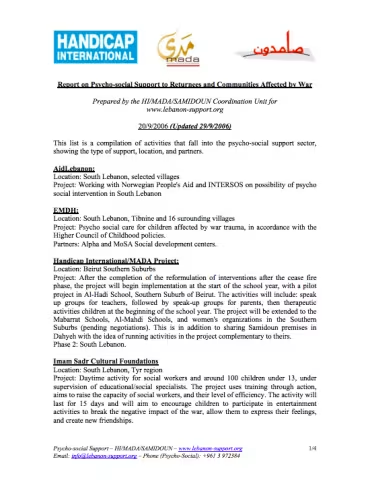
The July war 2006, lasted 34 days, and led to the displacement of 915,762 (almost 25% of the Lebanese population) persons, relocating into public and private schools all over the country. With the coming into force of the cease fire in August 14th 2006, there was a rapid return of the displaced to the south.
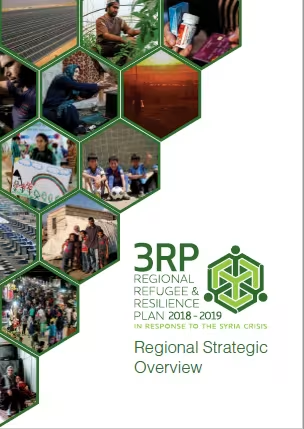
The conflict in Syria continues to drive the largest refugee crisis in the world. Over 5.3 million Syrians are registered as refugees in neighbouring countries as of 1 December 2017.
The United Nations Secretary-General has called for the first ever World Humanitarian Summit: to reaffirm our commitment to humanity and chart a course for change. The Secretary-General’s Agenda for Humanity calls on global leaders to commit to five core responsibilities in the name of our shared humanity:
Global leadership to prevent and end conflict
Uphold the norms that safeguard humanity
Leave no one behind
Change people's lives – from delivering aid to ending need
Invest in humanity
The objective of the report is to identify the psychosocial impact and needs of humanitarian actors working with refugees in Syria, Lebanon, Jordan, Egypt, North Iraq and Palestine.
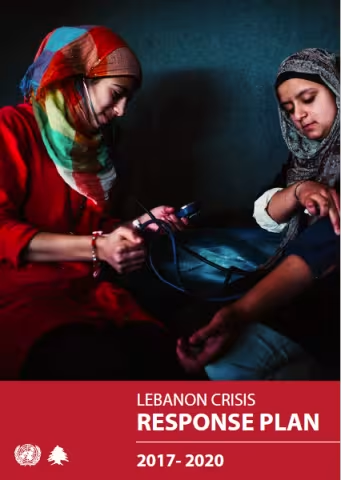
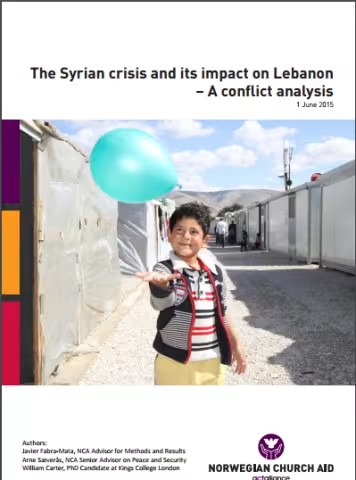
The present report analyses the impact of the Syrian conflict and refugee crisis on Lebanon and Lebanese host communities. This brief analysis presents the main conflict issues and trends, and the network of interaction between local and national level conflict dynamics.
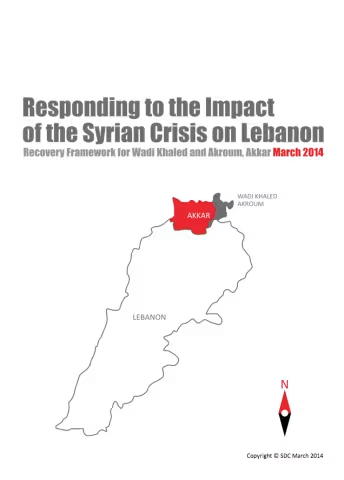
The Swiss Agency for Development and Cooperation (SDC) is pleased to share with you the report:
“Responding to the Impact of the Syrian Crisis on Lebanon: Recovery Framework for Wadi Khaled and Akroum, Akkar”, March 2014.
SDC facilitated a process to shed light on the impact of the Syria crisis at the national level but also on the local level. The formulation of a recovery framework for Wadi Khaled and Akroum is a process that can be replicated for other affected regions of Lebanon.
The findings and recommendations are based on consultations (between October 2013 and January 2014) with...
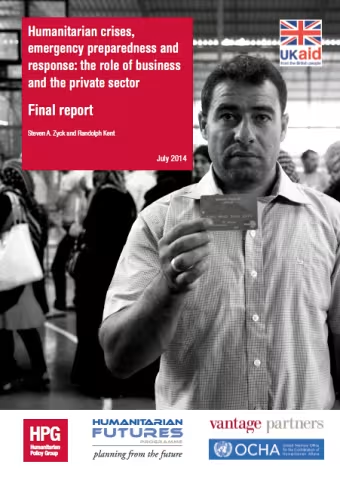
The private sector has long been a major contributor to humanitarian action. At the community level, businesses frequently use their materials and resources to aid people affected by crises. As local markets recover and supply chains are repaired, crisis-affected people are once again able to access basic goods and, in some cases, resume livelihoods. Large national, regional and multinational firms are also closely involved in supporting humanitarian objectives, whether indirectly, by resuming operations in crisis affected areas, or directly, by providing cash and in kind donations of goods or...
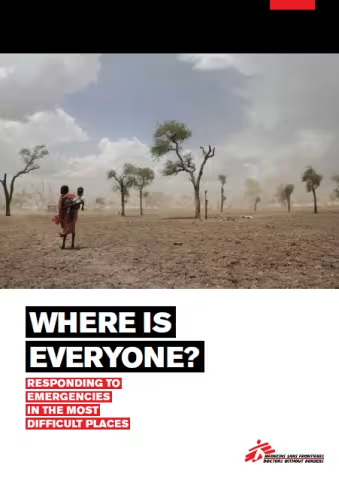
The humanitarian aid system is growing and expanding, and so surely its capacity to meet these challenges should also be growing.
Yet despite the enormous resources, in the more complex, less high-profile and difficult contexts, MSF teams in the field have seen that humanitarian responses to displacement emergencies have not occurred in a timely and effective way. This is especially the case in conflict areas.
These observations have prompted MSF to conduct this review, to better understand how the humanitarian system is responding to acute displacement emergencies. The review is based on...
This paper highlights the specificity of the refugee crisis in the unstable Lebanese landscape and calls for the reconfiguring of current relief mechanisms by enabling decentrali
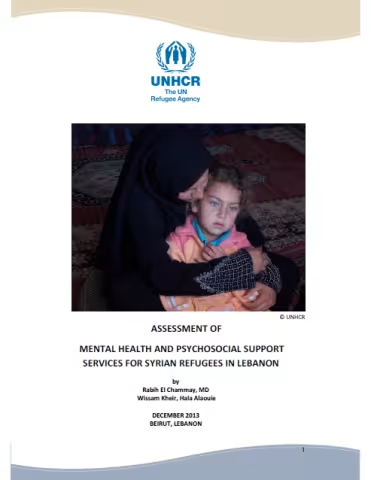
Syria's third year of civil war has caused a rapid acceleration in influx of the refugees to Lebanon with the intensification of clashes in recent months. In fall 2013 more than 2000 Syrian refugees are fleeing to Lebanon on daily basis. The mental health needs of Syrian refugees in Lebanon have not received thorough assessment. Information about the nature, the quality, and coverage of these services for the Syrian refugees is lacking.
Methodology
The Syrian refugee assessment for Mental Health and Psychosocial Support (MHPSS) took place in August and September 2013. The assessment had two...
The continuing unrest in Syria is resulting in a growing influx of Syrian refugees to Lebanon. The United Nations High Commissioner for Refugees has registered over 57,000 Syrian refugees in Lebanon (September 7, 2012) while many refugees are awaiting registration.