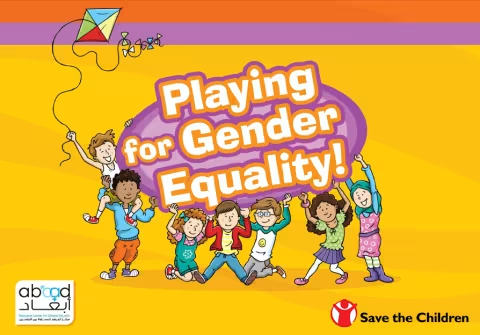
The manual is composed of fun and interactive games for children aged 8 to 12 years old. The games will facilitatethe learning of important concepts and terminology pertaining to Gender Equality. More importantly, during/afterthe games have been played, it allows the trainer the freedom to begin important discussions about the conceptsthat the children learned during the games.
This resource, published by Oxfam in 2013, aims to present standards that were originally developed for Oxfam staff to ensure a consistent approach to promoting gender equality in humanitarian preparedness and response programming.
Shedding the lights on UNDP's recovery efforts in South Lebanon and the Southern Suburb of Beirut in the aftermath of the July 2006 aggression, the booklet tackles the recovery initiatives undertaken by UNDP from rubble removal activities to other quick impact initiatives.
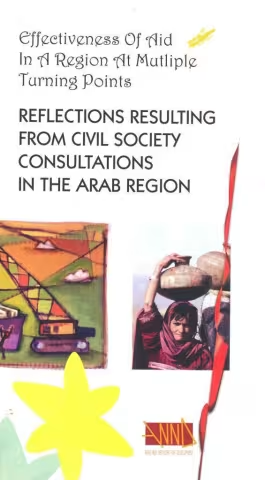
This book tackles key Issues of concern within the aid discussion. It outlines issues of particular importance for civil society in the Arab region and highlights the difference of prospectives between government representatives and CSOs.
The Strategic Planning is based on the findings of fieldwork carried out in several villages in Dinnieh, which aimed at identifying the major characteristics of the region in different fields.
This report will provide a description of the assessment conducted by IMC’s Mental Health and Psychosocial team in the region of Wadi Khaled following the displacement of Syrians into the northern villages between the Lebanese-Syrian borders as a result of the internal conflic
The Manual on the Internal Management of the Non Governmental Organizations (NGOs) in Lebanon aims at providing a practical tool to develop and build the capacities of the NGOs in Lebanon.
This paper seeks to explain why women remain marginal in the Lebanese economy. It conducts a thorough review of literature to shed light on the economic, social and legal context to identify barriers to their full participation.
Israeli forces conducted a major combined military operation in the Gaza Strip for a period of 22 days (December 27, 2008 – January 18, 2009), where “Israeli forces used aerial bombing, tank shelling and armored bulldozers to eliminate the productive capacity of some of Gaza's
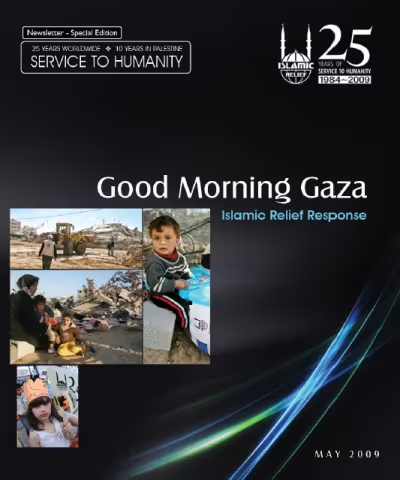
Months after the war, the Gaza Strip remains a disaster zone. Families are in despair, as hundresds of them had their homes totally destroyed and do not have proper shelter to endure Gaza's conditions.
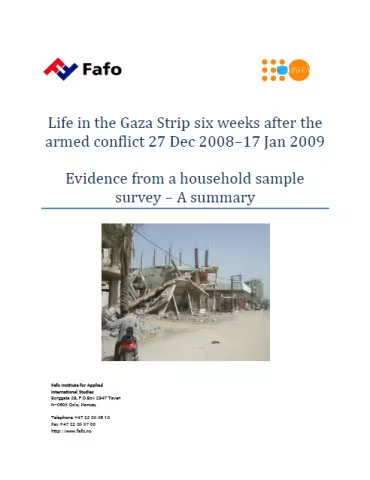
This multi-topic household sample survey was implemented to collect data to document the living conditions in the Gaza Strip in the wake of Israel’s assault on 27 December and the ensuing armed conflict.
Following the Nahr EL Bared War, LPDC launched in 2008 a workshop mapping the recovery and development initiatives in the camp's area. They followed up in 2009 with another workshop reviewing the development projects that took place in the NBC area.
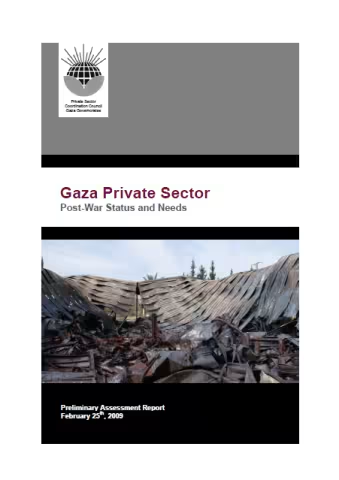
This report highlights the post war status of private sector businesses represented in the Palestinian Federation of Industries (PFI) in the Gaza Strip.
The Israeli July 2006 war exposed the Lebanese population to disastrous conditions. It has profoundly affected residents’ livelihoods through bringing down access to services, infrastructure and natural resources. Responding to these emerging problems poses further challenges for the Lebanese government and society. In this respect, different emergency measures have been undertaken to address the arising needs, starting with assessing physical, economic and social damages.
As a contribution to identifying short and medium term intervention needs, the World Bank initiated undertaking a Post...
تقوم الحكومة اللبنانية بمعالجة آثار العدوان الاسرائيلي المدمر من خلال العمل على تعزيز صمود الأهالي، وخلق آلية فعالة لتثبيتهم في قراهم وبلداتهم عبر إعادة بناء ما تهدم.