A Call to Join Forces: Coordination and complementarity of services for an efficient and cost-effective emergency response in Lebanon
In the face of escalating needs in Lebanon due to the regional armed conflict, ABAAD is reaching out to actors currently working on the ground, particularly those operating in or around collective shelters, to ensure that services are complementary, resources are used efficiently, and conflict-affected communities receive timely and effective support.
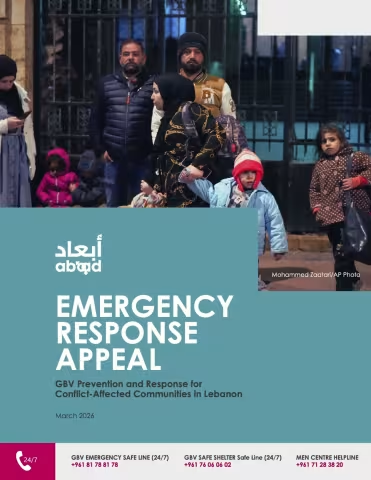
Lebanon is facing the direct consequences of a regional armed conflict that escalated sharply on February 28, 2026. As the conflict spread, strikes on Lebanon resumed and intensified, triggering mass displacement across the country. Civilian casualties are rising, social safety nets are breaking down, and communities are being uprooted in a country where nearly half the population was already living in poverty before this escalation began. ABAAD is launching this emergency appeal to mobilize the resources required to sustain and scale life-saving GBV prevention and response services, ensuring...
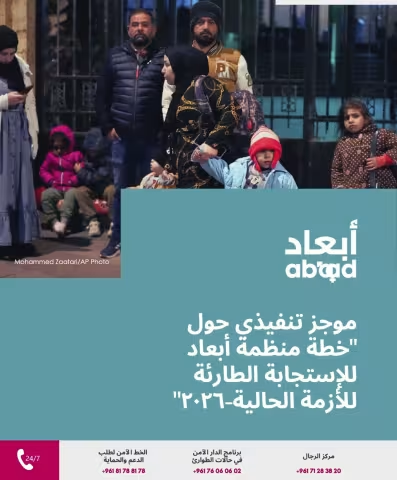
يواجه لبنان تصعيدًا خطيرًا في النزاع الإقليمي منذ 28 شباط 2026، ما أدى إلى تجدّد الضربات واتّساع موجات النزوح وارتفاع أعداد الضحايا، في ظل أوضاع اقتصادية ومعيشيّة هشّة.
وفي ظل الاكتظاظ وتراجع الموارد، تتزايد مخاطر العنف القائم على قسمة الأدوار الاجتماعية، فيما تتقلص خدمات الحماية، ما يترك العديد من الناجيات والناجين من دون دعم كافٍ.
لذلك، تُطلق أبعاد خطة استجابة طارئة لضمان استمرار وتوسيع خدمات الوقاية والاستجابة، بما يضمن وصول الأسر المتضررة، وخصوصًا النساء والفتيات والفئات الأكثر عرضة للمخاطر، إلى خدمات حماية ودعم آمنة وسريعة ومنقذة للحياة
ككل عام تطلق المؤسسة الفلسطينية لحقوق الانسان (شاهد) تقريرها السنوي للعام 2023 حول واقع اللاجئين الفلسطينيين في لبنان، تطرح فيه الأرقام والوقائع الموثقة وتضعها بين يدي صانع القرار المحلي والدولي.
هذا التقرير هو خلاصة للجهود البحثية والمتابعات الميدانية لفريق عمل مؤسسة (شاهد) خلال عام كامل.
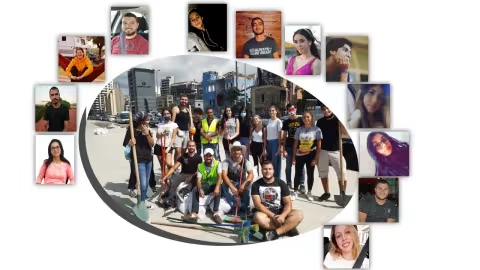
Beirut Explosion: Greatest Tragedies Come With Greatest Acts of Kindness.
Youth from a Sports and Youth Association (Chabibeh Sporting Club) become volunteers and share stories of compassion and pain mixed together to shed light on the darkest hour of their country.
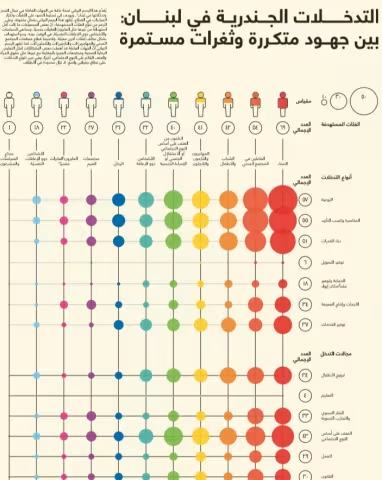
This infographic provides an overview of gender actors and interventions in Lebanon*, and aims to highlight gaps and duplications in the sector.
.يُقدِّم هذا الرسم البياني لمحةً عامّة عن الجهات الفاعلة في مجال الجندر وتدخّلاتها في لبنان*. ويهدف إلى تسليط الضوء على الثغرات وتكرار المبادرات في القطاع
This report attempts to answer current gaps in the literature analysing WPE and WPP donor-funded initiatives in Lebanon, and asks the following question: what explains the current gap between donor-funded WPE and WPP initiatives, and the continued low rates of women’s political participation and overall low political empowerment in Lebanon?
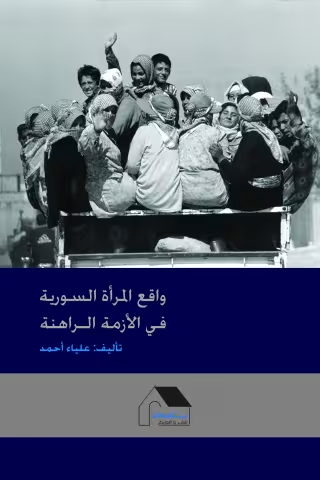
هل تغيّرت، أو تخلخلت، الصورة النمطية للمرأة في الواقع الراهن في سورية؟ هذا هو
السؤال المؤسس لهذه الدراسة التي تسعى فيها الباحثة لرصد تحولات المكانة الاجتماعية
للمرأة من خلال متابعتها لمدى المشاركة النسوية في الحياة العامة، في سورية.
تركز الباحثة على فترة الأزمة الحالية متسائلة «هل يمكن أن يشكل انخراط المرأة السورية
في الأزمة، موالاةً أو معارضة، معبراً إلى إنجاز بقية حقوقها... أم يزيد من معاناتها؟
The 2019 CPDE Monitoring Report’s Key Messages and Recommendations aim to inform and augment dialogue in the Global Partnership for Effective Development Cooperation (henceforth the Global Partnership). CPDE is committed to dialogue on outstanding development effectiveness challenges, including ‘unfinished business’ for many key commitments and indicators agreed in Paris (2005) and Busan (2011).
The Report focuses on the centrality of democratic country ownership by examining in more depth issues of inclusion in development policy and practices, in the context of a human rights-based approach...
“More than 60% of Syrian refugees households comprise a person with disabilities and 1/5 Syrian refugees has a disability in Lebanon and Jordan”, shows a large study conducted by Humanity & Inclusion (HI) and iMMAP.
This report aims to provide statistical and analytical tools for the recovery community working in North Lebanon, specifically those working with the Nahr el-Bared displaced and returnee population. The information will allow for better assessment of current needs and gaps, which will eventually support the development of appropriate strategies of intervention on both the short and long term.