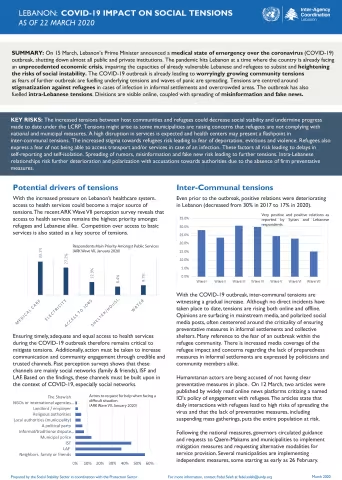
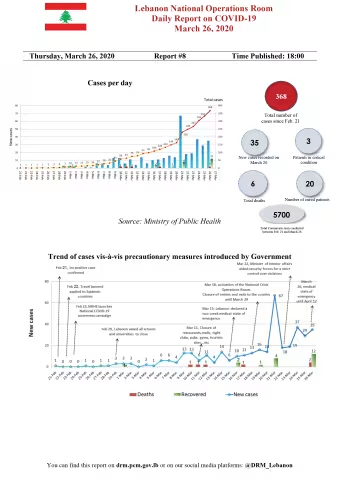
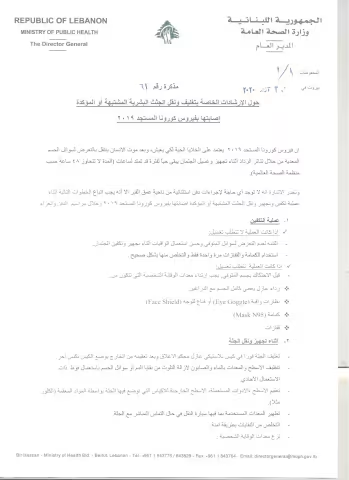
On 15 March, Lebanon’s Prime Minister announced a medical state of emergency over the coronavirus (COVID-19) outbreak, shutting down almost all public and private institutions. The pandemic hits Lebanon at a time where the country is already facing an unprecedented economic crisis, impairing the capacities of already vulnerable Lebanese and refugees to subsist and heightening the risks of social instability. The COVID-19 outbreak is already leading to worryingly growing community tensions as fears of further outbreak are fuelling underlying tensions and waves of panic are spreading. Tensions...
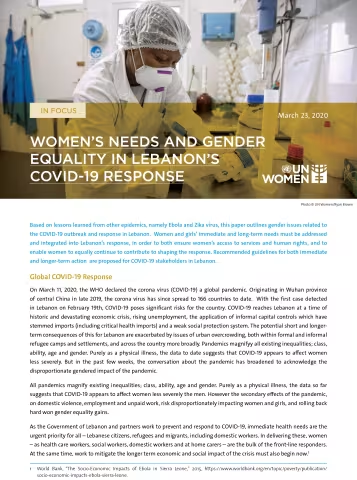
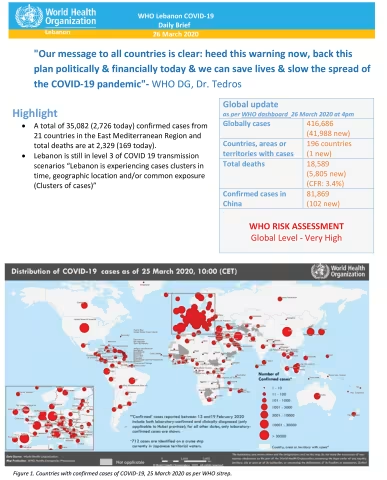
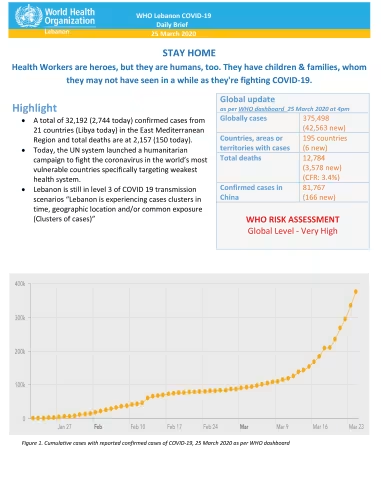
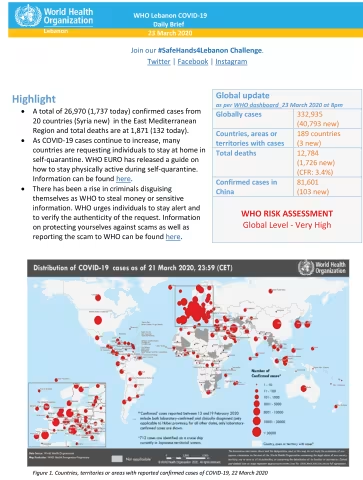
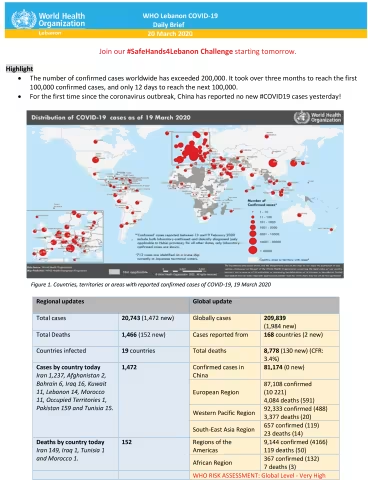
On March 11, 2020, the WHO declared the corona virus (COVID-19) a global pandemic. Originating in Wuhan province
of central China in late 2019, the corona virus has since spread to 166 countries to date.
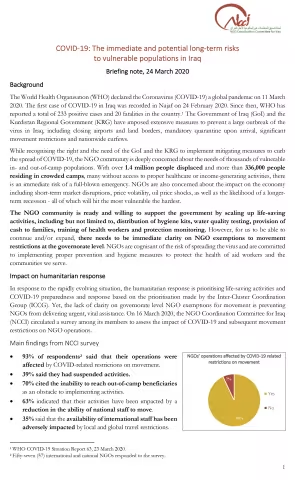
The World Health Organisation (WHO) declared the Coronavirus (COVID-19) a global pandemic on 11 March 2020. The first case of COVID-19 in Iraq was recorded in Najaf on 24 February 2020. Since then, WHO has reported a total of 233 positive cases and 20 fatalities in the country.1 The Government of Iraq (GoI) and the Kurdistan Regional Government (KRG) have imposed extensive measures to prevent a large outbreak of the virus in Iraq, including closing airports and land borders, mandatory quarantine upon arrival, significant movement restrictions and nationwide curfews.
This briefing note summarizes key mental health and psychosocial support (MHPSS) considerations in relation to the
2019 novel coronavirus (COVID-19) outbreak. The brief was last updated February 2020.
This regional Guidebook explores the different approaches in design, implementation and analysis of disability data collection in the Arab countries, in view of improving the standardization and implementation of the Washington Group Short Set on Functioning and related indica
GVC and YAB have implemented a pilot initiative in 6 public schools in order to provide directors, teachers, special educators and social workers with technical tools and expertise to encourage the inclusion of children with special needs. Almost 60 children have been included in regular classes all along the implementation (2012-2015). At the same time, the project involved parents and communities where the 6 schools are located to raise culture of diversity and respect and to enhance participation of children with special needs at all levels of social and cultural life.
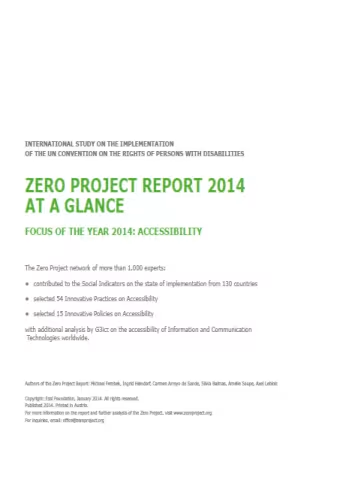
About the Zero Project: For a World without Barriers
The Zero Project was initiated by the Essl Foundation in 2010. It has been run in partnership with the World Future Council (WFC) since 2011 and the European Foundation Centre (EFC) since 2013. The mission of the Zero Project is to work for a world without barriers, according to the principles and Articles of the UN CRPD.
This "Thirty Questions Guide" is the first guide that addresses the various stages of work and employment based on the principles of the CRPD and its relevant detailed provisions.
Disability & Vulnerability Focal Point (DVFP) have been developed based on the observation that one of the greatest difficulties following a crisis is not only to identify and to access to vulnerable people including people with disabilities, but also to accompany them wit
This "Thirty Questions Guide" is the first guide that addresses the various stages of work and employment based on the principles of the CRPD and its relevant detailed provisions.