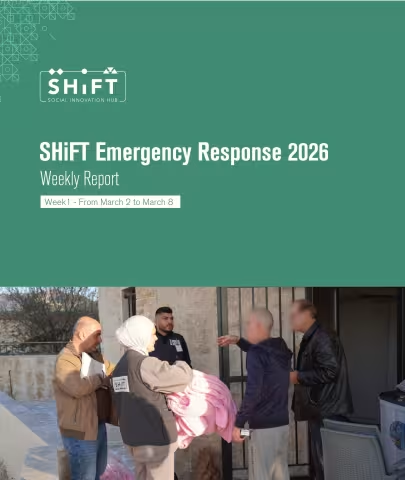
SHiFT launched its emergency response on March 2, 2026, to support families displaced by the escalation of violence in Lebanon. Thousands of people fled their homes with minimal belongings and are now sheltering in public schools and collective shelters across the country. Over 700,000 internally displaced people (IDPs) have been registered, including 119,700 staying in collective shelters, highlighting the scale of humanitarian needs.
The first toolbox: Conflict Sensitive Cash
Assistance in Lebanon aims to support
partners to ensure that cash-based
assistance does not inadvertently do
harm and is conflict sensitive. The toolbox
is complementary to the Guidance Note:
Getting Started with Conflict Sensitivity in
Lebanon which introduces basic conflict
sensitivity elements and practical tips for
getting started with conflict sensitivity.
within the unique context of Lebanon.
We Rise through Art is a handbook produced under the project with the same title in response to Beirut's explosion, highlighting activities and tools that can be adopted by trainers, coaches and facilitators with pre-adolescents and children under arts, sports and recreation.
We Play for Peace is a handbook produced under the project with the same title highlighting activities and tools that can be adopted by trainers, coaches and facilitators with pre-adolescents and children under arts, sports and recreation.
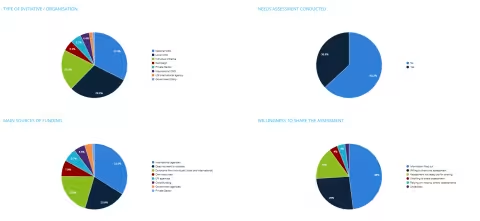
The mapping below documents organisational and individual solidarity initiatives and interventions in the aftermath of the Beirut blast on August 4th, 2020.
Each initiative is mapped according to a set of categories, including type of initiative, area of intervention, geographic area covered, needs assessment conducted, and identified priorities. The below data aims to enhance transparency and collaboration among civil society actors, but also strengthen coordination, in order to reduce duplication and identify priorities for action.
Data was collected by Lebanon Support (through Daleel...
The toolbox is intended as an open learning resource for youth workers that are engaged in community work with young refugees, asylum seekers and young people with migration background. Specifically: project managers, community leaders, educators, facilitators, social workers, intercultural mediators that are interested to improve their ability in the social inclusion of excluded groups.
The toolbox could also be used in formal settings such as schools, colleges and universities addressing
development challenges as well as for project managers and experts engaged in the design and...
This document is the outcome of a workshop done during the Erasmus Plus training "Influence Youth".
The workshop was about the topic of teamwork, specifically the challenges faced when working with a team of volunteers and how to overcome it.
The participants of the workshop talked about their challenges and possible interventions were shared also by participants based on their experience working in this field.
The document includes the information shared by the participants in this workshop.