About NARA
نَرى (NARA) – Nurture, Access, Relief – is a youth-led initiative based in South Lebanon that empowers youth of all nationalities, including refugees, through education, protection, mental health support, and community peacebuilding.
مساعدة ذوي الإعاقة العقلیّة (الإخوة) في جمیع مجالات حیاتھم من خلال توفیر الدعم العملي والعاطفي بتوجیه من مسؤول البيت، والمساعدة في تطویر مقدراتھم بخلق بیئة محفزة ورعایة مناسبة.
This project aims to (1) bring statistical transparency to youth’s opinions, attitudes, feelings, and perceptions about social, cultural, political, and familial freedom of speech barriers within our society, and find what activities facilitate youth’s freedom of speech; (2) create discussion and widespread accountability by engaging the online and offline community, institutional stakeholders, and youth though an advocacy Call to Action based on our research findings, and (3) provide evidence that creative civic spaces are an integral part of our community and change negative attitudes...
“More than 60% of Syrian refugees households comprise a person with disabilities and 1/5 Syrian refugees has a disability in Lebanon and Jordan”, shows a large study conducted by Humanity & Inclusion (HI) and iMMAP.
More than a decade after the United Nations’ adoption of the Convention on the Elimination of All Forms of Discrimination against Women, which is adopted by many countries including Lebanon, these countries returned in 2015 to commit themselves to achieve gender equality and t
UNFPA on behalf of UNDP and UN Women organized a national workshop on gender-related laws, policies and practices in Lebanon, which was held in Beirut on the 7th and 8th of August, 2018.
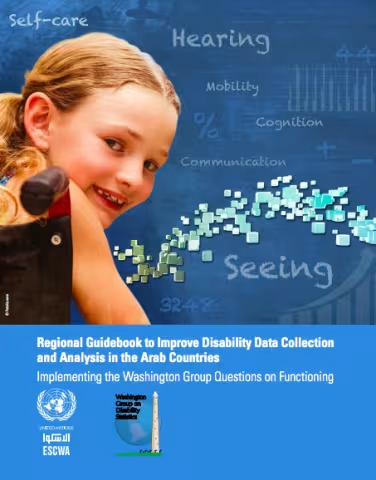
This regional Guidebook explores the different approaches in design, implementation and analysis of disability data collection in the Arab countries, in view of improving the standardization and implementation of the Washington Group Short Set on Functioning and related indica
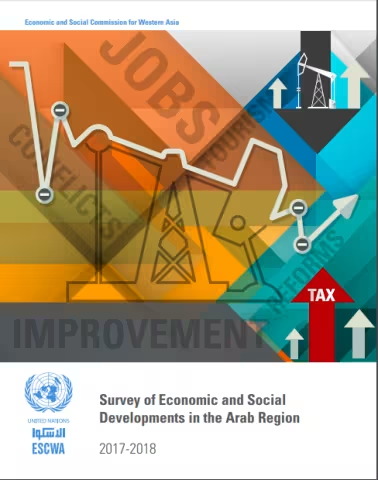
The Arab region continues to manage uncertainties on its path towards an inclusive and sustainable growth trajectory: geopolitical tensions persist, and global interest rates have soared.
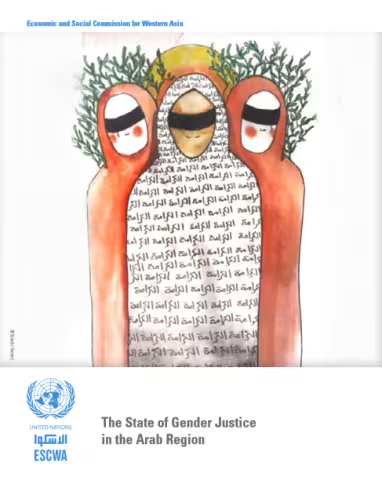
This study maps the current state of gender justice in the Arab region, documenting barriers as well as opportunities. Its primary research aim is to determine how to develop an environment, at the legal, policy, and social levels that is conducive to gender justice.
This study explores the role of community-based organizations in preparing for and responding to crisis in Lebanon. While there has been considerable work conducted on preparedness, responsiveness and recovery to crisis in Lebanon, there has been little work so far that focuses on measuring and assessing the capacities, expertise, strengths and weaknesses of local CBOS in preparing and responding to crises. Managers and decisions makers from nine different organizations were interviewed on the overall expertise gained in past conflicts since the civil war as well as their current level of...
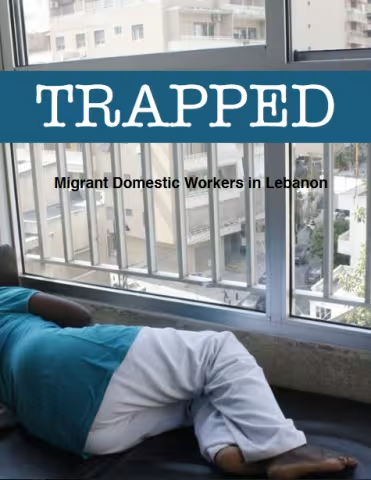
Over 250,000 migrant women are employed by private households in Lebanon to carry out household tasks such as cleaning, cooking, and caring for children and the elderly.
The right to freedom of movement forms one of the cornerstones of the international human rights regime and the Lebanese legal system. It is a right that everyone ought to enjoy regardless of race, national origin, residence status, religion or any other criteria.
GVC and YAB have implemented a pilot initiative in 6 public schools in order to provide directors, teachers, special educators and social workers with technical tools and expertise to encourage the inclusion of children with special needs. Almost 60 children have been included in regular classes all along the implementation (2012-2015). At the same time, the project involved parents and communities where the 6 schools are located to raise culture of diversity and respect and to enhance participation of children with special needs at all levels of social and cultural life.
This paper is inspired by examples of domestic workers organizing themselves in different parts of the world through social and solidarity economy enterprises and organizations which have become more evident since the advent of the ILO Domestic Workers Convention 2011, (No.189