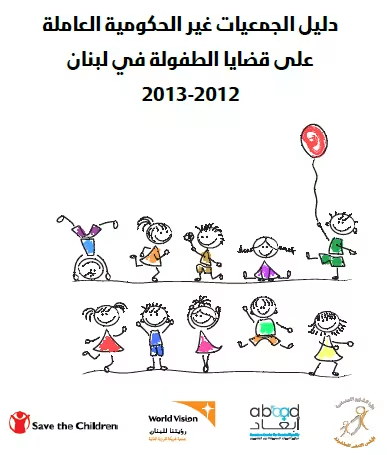
دليل الجمعيات غير الحكوميّة العاملة على قضايا الطفولة في لبنان « يشكّل مورداً ريادياً في سياق العمل بإتجاه ضمان تحقيق المصلحة »2013-2012 الفضلى للأطفال في لبنان وتكريس حقوقهم/هن بحسب الإتفاقية الدولية لحقوق الطفل، كونه يسهّل وصول الأطفال إلى الخدمات المختصّة والمتوفّرة في مختلف المحافظات وبحسب الحاجات ونوعية البرامج والخدمات الموجودة والتي تقدمها الجمعيات والهيئات الأهلية والمدنية المختصة في مجال الطفولة وحقوق الطفل.
يرمي هذا المورد إلى تعزيز التواصل وتنسيق الجهود بين مختلف الفاعلين/ات والناشطين/ات في مجال حقوق الأطفال كونه يوفّر معلومات حول أماكن تواجدهم/هن جغرافياً ونوعية البرامج والخدمات...
This report was prepared by ANND in cooperation with its member from 10 Arab countries. It is considered a result of the new direction that was followed after the revolution outbreak in the region. It is the first report of the Arab Watch for social and economic rights.
This report constitutes the final publication of the outcomes of the program "Development in Lebanon: Poverty Eradication, Gender Equity and Youth Participation; the Role of NGOs Civil Society and Other Actors".
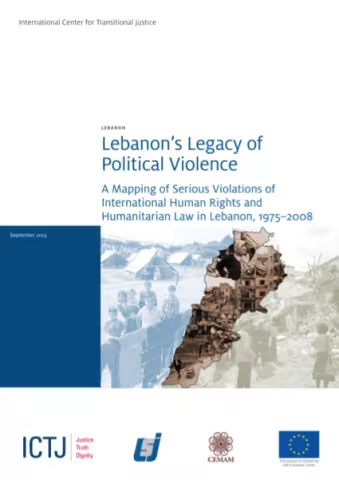
This report compiles information on hundreds of incidents of serious human rights violations that occurred in Lebanon from 1975 to 2008, including mass killings, enforced disappearances, assassinations, forced displacement, and the shelling of civilian areas.
A brochure that highlights the work of the “transfer of knowledge through expatriates nationals” (TOKTEN) project in cooperation with several ministries in Lebanon.
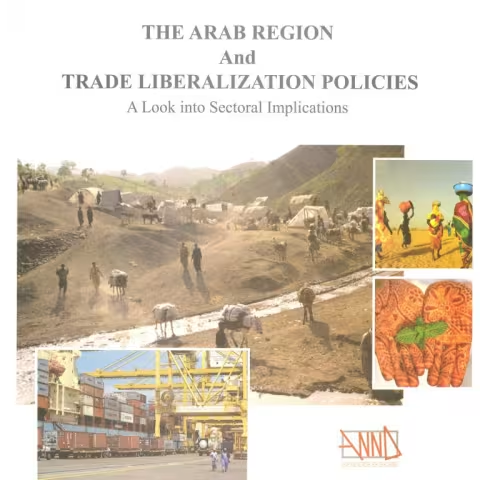
This report is a summary of the presentations given during the regional workshop on free trade agreements in the Arab region. The meeting was part of the two-year project on the “socio-economic impact of trade liberalization policies on the Arab region”.
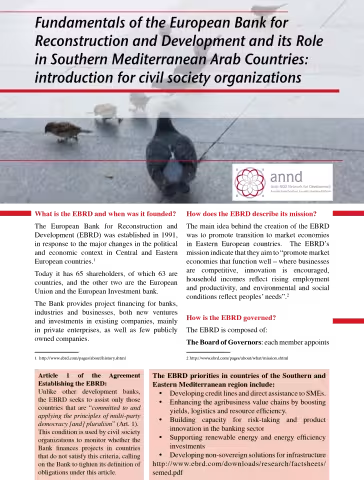
The European Bank for Reconstruction and Development (EBRD) was established in 1991, in response to the major changes in the political and economic context in Central and Eastern European countries.1 Today it has 65 shareholders, of which 63 are countries, and the other two ar
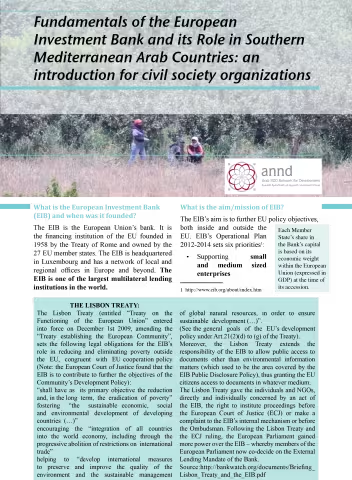
The EIB is the European Union’s bank. It is the financing institution of the EU founded in 1958 by the Treaty of Rome and owned by the 27 EU member states. The EIB is headquartered in Luxembourg and has a network of local and regional offices in Europe and beyond.
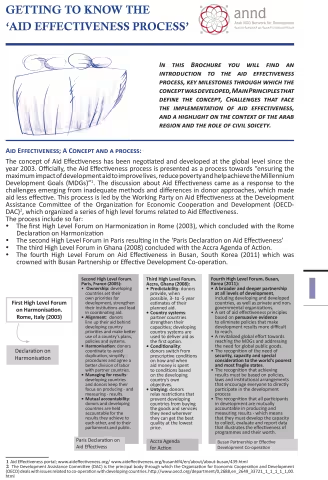
In this Brochure you will find an introduction to the aid effectiveness process, key milestones through which the concept was developed, Main Principles that define the concept, Challenges that face the implementation of aid effectiveness, and a highlight on the context of the
The National Report for the United Nations Conference on Sustainable Development (Rio + 20) presents the current situation as is and highlights the achievements and failures, strengths and weaknesses, opportunities and risks.
It contains 8 chapters: 1) an introduction to the general debate on trade and development, 2) an overview of the situation In the Arab region, 3) the engagement of Arab countries with the WTO, 4) Arab countries and the Euro-Mediterranean partnership, 5) Arab countries and free
UNDP, through the CEDRO project, and the Ministry of Energy & Water published the first version of the "National Wind Atlas of Lebanon" which will create a growing momentum in Lebanon towards strengthening and developing the renewable energy sector in the country.
Conflicts, abuses, repression, and human rights violations always leave a bitter taste when proper mourning to achieve personal or communal healing is cutoff by indifference, and politics of amnesia.
Accountability has many meanings. Traditionally, it was understood as the was in which those who authorised others to act on their behalf made sure that authority was being used as agreed.
The Manual on the Internal Management of the Non Governmental Organizations (NGOs) in Lebanon aims at providing a practical tool to develop and build the capacities of the NGOs in Lebanon.