This essay proposes to re-orient feminist debates on epistemology towards the care-security nexus as a pathway that can plausibly provide an integral understanding of a human-centred and eco-minded security.
مذكرات للباحثين و صناع القرار #1 | تشرين الثاني 2008
شباب مصريون يعيدون اكتشاف المشاركة المدنية، ويؤسسون لأشكال جديدة من الخدمة العامبربارة إبراهيم
يمثل جيل الحركات الشبابية المصرية الحالي أكبر المجموعات الشبابية التي تخوض معركة اثبات الوجود في العالم العربي. أدواتهم تتراوح بين الخدمات الاجتماعية التقليدية، و تقنيات الاتصال الجديدة في سبيل مواجهة الحظر المفروض عليهم من قبل الأنظمة السياسية والعائلية. وهذه الحركات هي التجربة التي سلطت الضوء عليها الدكتورة بربارة ابراهيم ومجموعة أخرى من الباحثين في مصر
ويسود في عالمنا ”اجتاه لمعاملة الشباب وقضايا الشباب بطريقة جد موعظية، ومبسطة،“ بحسب إبراهيم،...
Research and Policy Memo #1 | November 2008
Young Egyptians reinvent civic engagement, leading to new forms of public serviceBarbara Ibrahim
As the largest ever cohort of young people in the Arab World struggles to find its place in society, youth are forging arenas for public participation that draw upon new media and traditional social service. Initiated by young people, this movement responds to the exclusion they feel from family and state structures that block their public participation. It is a new brand of youth movements that Dr. Barbara Ibrahim and other researchers have identified in...
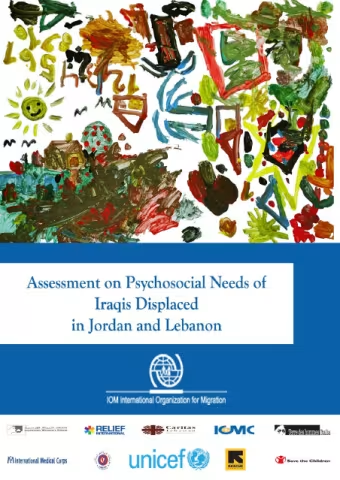
The Assessment of Psychosocial Needs of Iraqis Displaced in Jordan and Lebanon was conducted between November 2007 and January 2008, with the aim to assess the mental health and psychosocial needs of Iraqis displaced in Jordan and Lebanon, to investigate the provision of servi
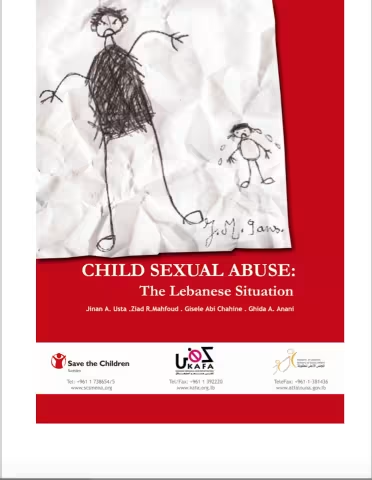
This study was envisioned by KAFA in partnership with Save the Children Sweden following the encounter with several child sexual abuse victims at the end of the July 2006 war.
This brochure highlights UNDP’s contribution in the Early Recovery process of the Palestinian and Lebanese populations who were affected by the Nahr El Bared crisis.
This paper explores some faces of globalization by using a gender perspective, in order to consider reproduction (psychological and emotional as well as biological) and the activities and attitudes of care that give moral resources for response to systemic tragedy, not only fo
Events and experiences over the past years have confirmed that Lebanon is not a "country" in the legal and political context of the term but an "agreement" between 18 confessions to live on one land and find an appropriate framework (the state) to deal with their differences.
A committee constituted of stakeholders in both KRC and EL-NADIM visited some villages in south Lebanon between September 4th & 7th, 2006. This post-war exploration tour extended to Marjeyoun, Tyr & Bint Jbeil.
Since the beginning of the crisis in Lebanon on July 12, 2006, it has been reported as of August 24, 2006 that 1,1841 of people were killed and more than 4,0591 were wounded.
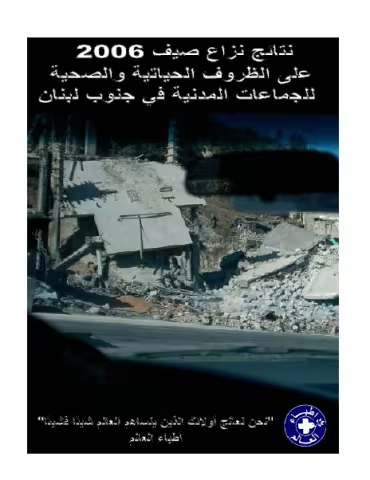
نتائج نزاع صيف 2006 على الظروف الحياتية والصحية للجماعات المدنية في جنوب لبنان تجري "أطباء العالم" (Médecins du Monde) منذ ايلول/سبتمبر 2004 مهمة طويلة الامد في لبنان.
This Psychological First Aid Field Operations Guide has been under development by the Terrorism Disaster Branch of the National Child Traumatic Stress Network and the National Center for PTSD.
In the coming decades, the world’s rapid urbanization will be one of the greatest challenges to ensuring human welfare and a viable global environment.
In 2002 the Lebanese Physically Handicapped Union (LPHU) conducted a study of 200 graduates of institutions for disabled people, to find out if institutions help disabled people enjoy their rights in the areas of education and employment, as set out in Lebanon’s laws on disabi
The study upon which this article is based analyzes the status of Arab women in general, gender relations in the Middle East, and the situation of Arab women with disabilities, based on available disability statistics from a few selected countries and the author's observations
The activities, presented in this brochure, are illustrative of UNDP – European Commission Humanitarian Aid Department (ECHO) funded interventions and support in restoring and preserving livelihoods in the Lebanese most damaged regions.