Resources

Intervention Sectors
Displaying 21 - 40 of 41
National
Publishing Date
In December 2015, Chabibeh Sporting Club organized the TOOLS FOR INTEGRATION project, funded by UNESCO, which was divided into 2 phases: A 2 days training course (12-13 Dec 2015) that gathered 24 youth workers and leaders from different Leba-nese regions. Over these 2 days the topics of social cohesion and integration were discussed and participants reflected on traditional games they played when they were kids in order to develop together new tools and games under the themes of integration and cohesion A 1 day camp (21 December 2015) for Lebanese, Syrian and Palestinian youth during which...
National
Publishing Date
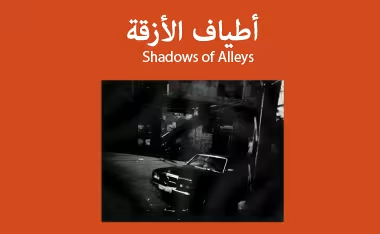
About the bookletThis booklet is one of a serie of 3 booklets enclosing a collection of 180 photos, captured by young Palestinian girls and boys in Burj Chemali Camp, South Lebanon. Through using the ‘Pinhole Camera’ technique, these girls and boys captured some challenging sides of the lives of Palestinian youth through aspects of discrimination, violence and gender-based violence affecting their communities. Throughout these photos, the 3 booklets tell 3 personal stories narrated by the participants that implicate deep personal sufferings caused by community-imposed norms, traditions and...
National
Publishing Date
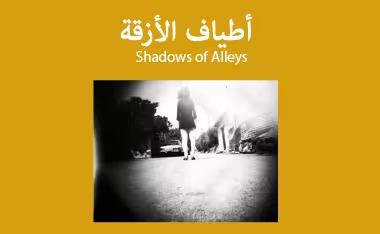
About the bookletThis booklet is one of a serie of 3 booklets enclosing a collection of 180 photos, captured by young Palestinian girls and boys in Burj Chemali Camp, South Lebanon. Through using the ‘Pinhole Camera’ technique, these girls and boys captured some challenging sides of the lives of Palestinian youth through aspects of discrimination, violence and gender-based violence affecting their communities. Throughout these photos, the 3 booklets tell 3 personal stories narrated by the participants that implicate deep personal sufferings caused by community-imposed norms, traditions and...
National
Publishing Date
التراث الثقافي غير المادي في لبنان على ضوء التجربة العالميّة في البحث الذي أعدّه لمرصد التراث الحديث تحت عنوان "التراث الثقافي غير المادي في لبنان على ضوء التجربة العالميّة" ذكر الدكتور شربل نصّار أن التراث الثقافي غير المادي يعدّ "مفهوماً مبهماً نظراً لتعدد التعاريف المنسوبة إليه." من خلال هذا البحث يشرح نصّار هذا المفهوم ويسلّط الضوء على الواقع القانوني والتشريعي الذي يحكمه في لبنان مقارنة بعدّة تجارب عالمية.  
National
Publishing Date
Briefing papers on the preservation of cultural heritageInstitutions and individuals from the Middle East and North Africa experience many shortcomings in legislation, policies and current practices impeding the sustainable preservation of cultural heritage. In order to obtain a systematic overview and a sound basis for engaging in lobby and advocacy work for improved governance of the cultural sector, the Modern Heritage Observatory contracted local lawyers and researchers to analyze and assess current regulations, policies and practices concerning the preservation of cultural heritage in...
National
Publishing Date
In cooperation with Oxfam GB, and with the support of the European Union, Kafa - Enough Violence and Exploitation works since 2009 on developing strategies and interventions with men and boys to end gender-based violence through the white ribbon campaign. On the occasion of the 16 days of activism to end violence against women Kafa considers that men should be involved in limiting and ending gender based violence, as standing against patriarchal society will also reflect positively on men and society in general.  The patriarchal society, which puts men and women in predefined solid identities...
National
Publishing Date

Study | December 2011
Restoring Dignity: The Raison D’etre of the Youth Movements in the Arab Citizen Revolt? by Rima Afifi, Ziyad Mahfoud, Rami Khouri, Sara Bittar, and Ahmad Younis
Dignity (in Arabic: Al Karama) is a slogan that has been chanted regularly during the Arab Citizen Revolt1 and a concept that continues to be a central theme as events unfold. In this paper, we explore the concept of dignity, identify a conceptual framework for thinking about dignity, and connect dignity to youth and the current situation. We then use data from the Gallup World Poll of Arab youth to assess the fit...

National
Publishing Date
IFI Executive Summary | November 2011 A Generation on the Move: Insights into the Conditions, Aspirations, and Activism of Arab Youth Rami G. Khouri, Shahida Azfar, Charles Harb, Nasser Yassin, Moussa Shteiwi, Yazan Doughan, Abla Rouag-Djenidi, Dina Shehata, Barbara Ibrahim, Gregory Gause, Christine Asaad, Muneira Hoballah, Jad Melki, Mark Levine, Waad Ibrahim, Rodda Leage, Ivana Chalmers, Karen Abi Saab, Sarah Tabbara, Joe Khalil, Zina Sawaf, Carine Allaf, Diane Singerman, Nicola Bull, Shereen El Feki, Lucas Nielsen, Ayman Zohry, Mohammad Younis, Ahmed Younis, Leah Pybus, Tim Jacoby, Eileen...
National
Publishing Date
IFI Working Paper Series #4 | July 2010 Media Habits of MENA Youth:  A Three-Country SurveyJad Melki This pilot study surveyed 2,744 university and high school students in Jordan, Lebanon, and the United Arab Emirates. It asked about their media consumption and production habits, and about their attitudes towards certain media. Among the significant findings, the survey found the participants highly adept at using new media. They spent considerable time consuming new and traditional media, but much less time producing media content. For instance, the vast majority of participants indicated...
National
Publishing Date
 ورقة خلفية | حزيران 2010 الشباب البحريني والهويةفاطمة علي في عامنا هذا (2010) يكمل مصطلح ”الهوية“ ستين عامًا منذ بدء المحاولات الاولى لتوظيفه في المجال التداولي كمصطلح يدل على نوع من فهم الخصوصية لدى الفرد عن نفسه أو الجماعة عن نفسها في مقابل خصوصية الآخر (أبيه، 2004،صفحة 65). غير أن اللافت أن كل هذا الوقت لم يكن كفيلا بمعالجة الغموض الذي يشوب مسألة الهوية ومعانيها المختلفة وإذا كان خطاب الهوية قد شغل العالم الغربي منذ انتهاء الحرب العالمية الثانية فإن العالم العربي لم ينشغل بهذا الخطاب إلا حديثا، أو فلنقل فقد غزت خطابات الهوية المكتبة العربية، بدءا من التسعينات وحتى الألفينات غزوا، حيث جرى...
National
Publishing Date
Background Paper | June 2010 Dilemmas of Identity and Cultural Diversity among Ammani YouthYazan Doughan This report is an overview of the research conducted as part of Takween’s project on Identity & Cultural Diversity in the city of Amman. Using the method of discourse analysis, it investigates the politics of identity among Ammani youth, particularly those from marginalized ethnic and cultural backgrounds. Our research focuses on anxieties around issues of ethnic and national identity among this group and detects shifts in identity politics from older to younger generations in the city...
National
Publishing Date
Background Paper | June 2010 Dilemmas of Identity and Cultural Diversity among Ammani YouthYazan Doughan This report is an overview of the research conducted as part of Takween’s project on Identity & Cultural Diversity in the city of Amman. Using the method of discourse analysis, it investigates the politics of identity among Ammani youth, particularly those from marginalized ethnic and cultural backgrounds. Our research focuses on anxieties around issues of ethnic and national identity among this group and detects shifts in identity politics from older to younger generations in the city...
National
Publishing Date
Background Paper | May 2010 “Scratch the Past – This is OUR  Soundtrack: Hip Hop in Lebanon”Angie Nassar In Lebanon’s cultural politics of music, hip hop emerges as an instrument for contesting inherited forms of meaning by socializing alternative discourse - with its own ideological terms, creative yearnings and lexicon of ideas - into the public sphere. Perhaps only a small interruption against the repetitive, exacting beats of the social order, but this is not about volume or even flow. It is about testing the limits and pushing the boundaries of what is considered acceptable. Hip hop in...
National
Publishing Date
Background Paper - May 2010 Youth Mobilization in Egypt: New Trends and OpportunitiesDina Shehata  Civic participation among youth in Egypt is alarmingly low. According to a recent survey, which confirms the findings of various earlier surveys, only 2% of youth are participating in volunteer work, only 5% participate in youth centers and sports clubs, political parties, unions and associations and housing and school boards, and only 16% of all eligible young voters voted in a previous election (The Population Council, 2010). In spite of these grim statistics, there are some indications that...
National
Publishing Date
Key Findings of Research Paper Produced as Part of the  AUB Tobacco Control Research Group | April 2010 The Economics of Tobacco in Lebanon: An Estimation of the Social Costs of Tobacco Consumption (Key Findings)Jad Chaaban, Nadia Naamani, and Nisreen Salti This document presents the key findings of the social costs of tobacco consumption in Lebanon.
National
Publishing Date
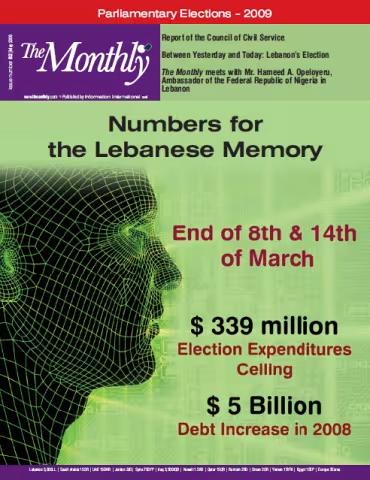
Parliamentary elections of 2009 and the year 2008 in review. The evenings of tuesday and Wednesday, April 7/8 marked the last day to register as a candidate for the Lebanese Parliamentary Elections scheduled on Sunday June 7, 2009.
National
Publishing Date
مذكرات للباحثين و صناع القرار #1 | تشرين الثاني 2008  شباب مصريون يعيدون اكتشاف المشاركة المدنية، ويؤسسون لأشكال جديدة من الخدمة العامبربارة إبراهيم يمثل جيل الحركات الشبابية المصرية الحالي أكبر المجموعات الشبابية التي تخوض معركة اثبات الوجود في العالم العربي. أدواتهم تتراوح بين الخدمات الاجتماعية التقليدية، و تقنيات الاتصال الجديدة في سبيل مواجهة الحظر المفروض عليهم من قبل الأنظمة السياسية والعائلية. وهذه الحركات هي التجربة التي سلطت الضوء عليها الدكتورة بربارة ابراهيم ومجموعة أخرى من الباحثين في مصر ويسود في عالمنا ”اجتاه لمعاملة الشباب وقضايا الشباب بطريقة جد موعظية، ومبسطة،“ بحسب إبراهيم،...
National
Publishing Date
Research and Policy Memo #1 | November 2008 Young Egyptians reinvent civic engagement, leading to new forms of public serviceBarbara Ibrahim As the largest ever cohort of young people in the Arab World struggles to find its place in society, youth are forging arenas for public participation that draw upon new media and traditional social service. Initiated by young people, this movement responds to the exclusion they feel from family and state structures that block their public participation. It is a new brand of youth movements that Dr. Barbara Ibrahim and other researchers have identified in...