The Israeli July 2006 war exposed the Lebanese population to disastrous conditions. It has profoundly affected residents’ livelihoods through bringing down access to services, infrastructure and natural resources. Responding to these emerging problems poses further challenges for the Lebanese government and society. In this respect, different emergency measures have been undertaken to address the arising needs, starting with assessing physical, economic and social damages.
As a contribution to identifying short and medium term intervention needs, the World Bank initiated undertaking a Post...
Events and experiences over the past years have confirmed that Lebanon is not a "country" in the legal and political context of the term but an "agreement" between 18 confessions to live on one land and find an appropriate framework (the state) to deal with their differences.
The Lebanese people are divided behind their zu'ama (leaders), who always disagree over national and critical matters in order to protect their status and interests.
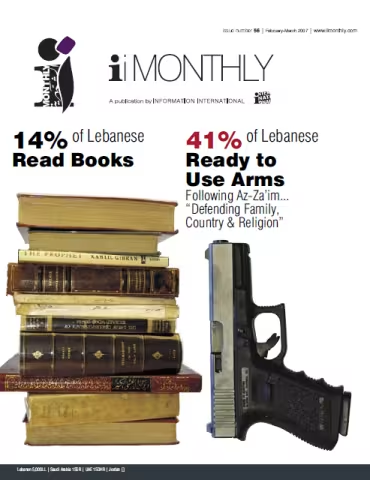
In the previous issue, Information International surveyed the opinion of the Lebanes on various issues, namely their political belonging, their position toward Hizbullah's arms and rearmament of political parties, their most preferred candidates for presidency and premiership,
تقوم الحكومة اللبنانية بمعالجة آثار العدوان الاسرائيلي المدمر من خلال العمل على تعزيز صمود الأهالي، وخلق آلية فعالة لتثبيتهم في قراهم وبلداتهم عبر إعادة بناء ما تهدم.
A booklet highlighting UNDP's prompt response to the environmental disaster that hit the Lebanese coastline resulting from the air strike on the fuel storage tanks of the Jiyeh power plant.
This law is prepared by the National Commission on Parliamentary Electoral Law appointed by the Council of Ministers under Decision no 58 dated 8/8/2005.
The objectives of this assessment are to identify and prioritize environmental impacts caused by the July 2006 war, to propose measures to alleviate those impacts rated as significant, and to recommend opportunities for greening the recovery, reconstruction, and reform process
The proposal is to build a network from existing institutions and bodies already present on the ground with SAMIDOUN, and to build social centers working on various identified issues.
A detailed report on ANND’s participation in this forum that covered the issues of neoliberal globalization and human development, women’s rights, geopolitical changes, democracy and public freedoms, cultural dimensions, environment and sustainable development, migration and t
The popularity of the women’s rights cause and its obvious intrinsic merit have unfortunately generated many facile assumptions and much confusion about the conditions of women in the Middle East and the problems they face