The articles gathered in this dossier offer insights, based on case studies, into the transformation of the “associative sector” in Lebanon, a sector generally seen to be at the core of an increasingly active civil society.
The objective of the Civil Society Review is to bring civil society practitioners, experts, activists, and researchers together to develop knowledge, as well as to innovate new tools and practices so as to strengthen Lebanon’s civil society and its voice. The Civil Society Review produces evidence-based research and analysis and disseminates findings and recommendations to promote civic engagement, shape policies, and stimulate debate within civil society spheres in Lebanon.
Les politiques de coopération au développement des bailleurs étatiques placent de plus en plus le secteur marchand comme un acteur clé du développement, à la fois comme un partenaire financier ou opérationnel mais aussi comme un objectif en soi. Sa croissance dans les pays du Sud, que ce soit dans le domaine productif ou de la fourniture de services, y compris pour de la délégation de services publics ou l’offre de services bancaires, est considérée comme un indicateur positif. Les gouvernements des pays membres de l’UE cherchent ainsi à maximiser son rôle comme catalyseur ou «substitut» de...
This book tackles key Issues of concern within the aid discussion. It outlines issues of particular importance for civil society in the Arab region and highlights the difference of prospectives between government representatives and CSOs.
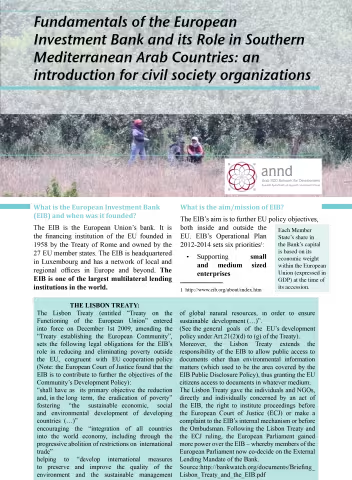
The EIB is the European Union’s bank. It is the financing institution of the EU founded in 1958 by the Treaty of Rome and owned by the 27 EU member states. The EIB is headquartered in Luxembourg and has a network of local and regional offices in Europe and beyond.
The report looks at different technologies related to the power, transport, agriculture and water sectors in Lebanon and assess their potential to reduce greenhouse gas emissions and increase resilience to climate change.
“Moukhtar” booklet provides guidelines for municipality leaders and mayors, on how to effectively implement practices and procedures that would benefit the local community, whether in regular daily activities or in conflict situations.
This reference book includes chapters on resources, legal and integral frameworks, and the constitutional structure of NGOs. It aims at contributing to reinforce the role of civil society in the economic and social development of Lebanon.