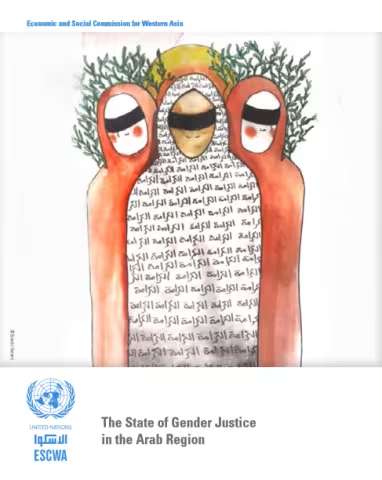
This study maps the current state of gender justice in the Arab region, documenting barriers as well as opportunities. Its primary research aim is to determine how to develop an environment, at the legal, policy, and social levels that is conducive to gender justice.
This paper is inspired by examples of domestic workers organizing themselves in different parts of the world through social and solidarity economy enterprises and organizations which have become more evident since the advent of the ILO Domestic Workers Convention 2011, (No.189
This study aims to shed light on the industry that profits from the recruitment of women from South Asian countries into domestic work employment in the Middle East, with a particular focus on Bangladesh, Jordan and Lebanon.
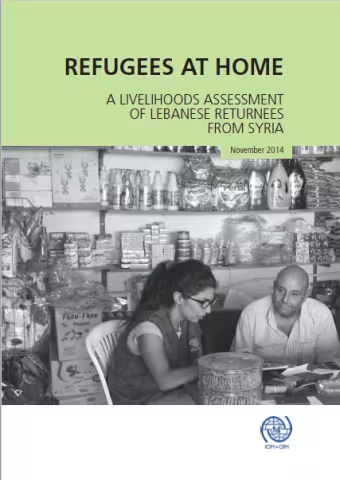
Over three years after it began, the Syria crisis continues to weigh extremely heavily upon Lebanon. Around a quarter of its population is now made up of refugees, whose needs remain dire even as the resources available to address them appear to be shrinking.
This report was presented at the International Labour Conference, 99th Session, 2010. It was intended to facilitate the discussion of domestic work at the Conference and consists of ten chapters, each of which covers issues pertaining to the topic of domestic work.
This brochure highlights UNDP’s contribution in the Early Recovery process of the Palestinian and Lebanese populations who were affected by the Nahr El Bared crisis.