Resources

Intervention Sectors
Displaying 41 - 60 of 180
National
Publishing Date

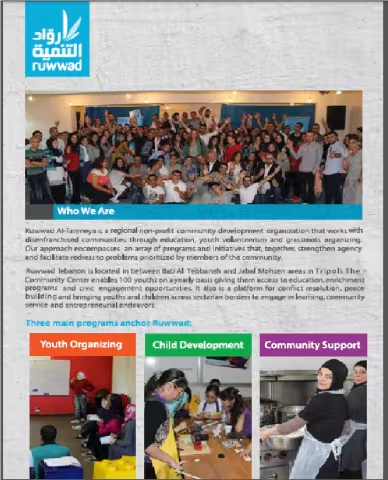
Ruwwad Al-Tanmeya is a regional non-profit community development organization that works with disenfranchised communities through education, youth volunteerism and grassroots organizing. Our approach encompasses an array of programs and projects that, together, strengthen initiative and facilitate redress to problems prioritized by members of the community. We believe in Embracing pluralism, Respecting diversity and Promoting equity wherever we operate.

Ruwwad, which spans today Jordan, Egypt, Lebanon and Palestine, and operates through a strong network of partnerships with civil society and...

International
Publishing Date
This Gender Manual is a practical guide for civil society organisations in Lebanon that wish to enhance gender equity in their practices and policies. Far from being exhaustive, this manual contains practical guidelines that can help to both gain a better understanding of gender-sensitive topics, as well as to integrate and implement them in internal processes, action plans, and organisational structures and policies. It is informed by the findings of a series of meetings and consultations with various stakeholders engaged in gender issues. It is worth noting, however, that the guidelines...
National
Publishing Date

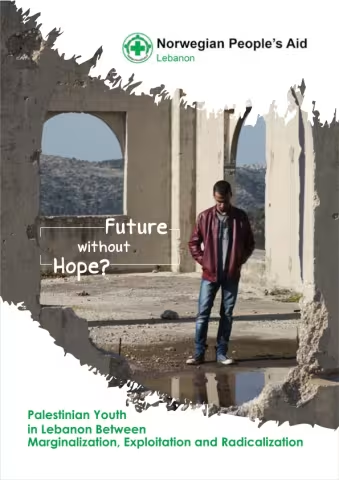
This research study presents the main finding of marginalization and exploitation processes related to Palestinian youth in Lebanon. The study was conducted between 2016-2017 in all over Lebanon including Palestinian camps and gatherings. Quantitative facts about the topic are well documented in the study. The methodology was based on three forms of data collection: desktop review, focus groups and in depth interviews with Palestinian youth and stakeholders.

The research is divided into three main chapters:

‘“No future” for Palestinian youth in Lebanon?’ is the first chapter of the report...

National
Publishing Date
This issue of Tatimma focuses on the question of civil rights and liberties in Lebanon. Whilst it is usually considered that civil freedoms in Lebanon are light-years ahead of other Arab countries. Yet this state of liberties appears to be more a facade for a discriminatory system which limits the liberties of Lebanese citizens, specifically Lebanese women, refugees, foreign workers to name a few.
National
Publishing Date
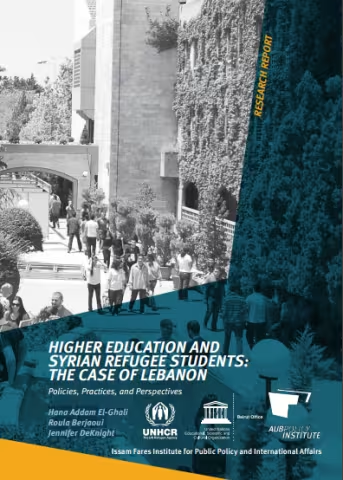
"An Education for Future: The Schooling Experience of Syrian Refugee Children in Lebanon and Germany" is a comparative study conducted by the Centre for Lebanse Studies. The study examines the future prospects of Syrian refugee children who dropped-out of Lebanese public schools and the German schools. The study compared Germany’s and Lebanon education provisions for inclusion of Syrian refugee children in public schools, as well as dropout rates of Syrian refugees. This comparison sought to highlight examples of best practices from Lebanon and Germany to reduce the dropout rates, to...
National
Publishing Date
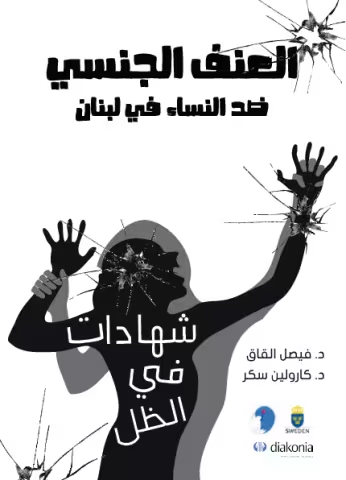
يتطرّق هـذا البحـث إلـى العنـف الجنسـي ضـد النسـاء، مـن خلال تقديـم وتحليـل وقائـع لشـهادات حيـة لــ50 سـيدة عـن العنـف الجنسـي، الـذي مـورس عليهـنّ فـي الظـل بمختلف أشـكاله من طـرف الأفـراد ومـن طـرف المؤسسـات.
National
Publishing Date
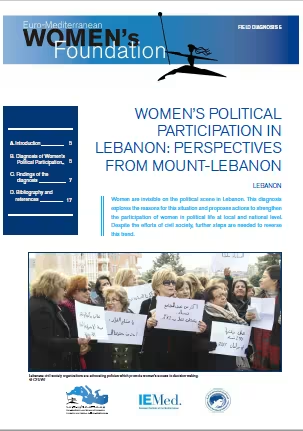
Although Lebanon is sometimes considered as the only democratic country in the Arab region with a free political environment and electoral system, the situation of women has not been strengthened enough for them to have a role on an equal footing with men. Lebanese women form a majority of 53% and they are actively participating in all aspects of Lebanese society. They enjoy equal constitutional rights with men and have the right to vote, hold public office, elect and be elected in municipal councils. Yet, this diagnosis, elaborated by the Committee for the Follow-Up on Women’s Issues (CFUWI)...
National
Publishing Date
While women’s issues and rights have been at the forefront of public and civil society debate, academic, and activist publications, women’s inequalities and the discrimination women face in Lebanon have been notably undermined, whether as citizens, refugees, or migrants. However, if the publicising of the “issue of women in Lebanon” has prompted the production of more “gender-related” information and knowledge, it has oftentimes adopted the rhetoric of denunciation and victimisation. Hence, there is a scarcity of in-depth and sectoral studies on the logics of exclusion and discrimination in...