Resources

Intervention Sectors
Resource Type
Displaying 1 - 20 of 90
National
Publishing Date
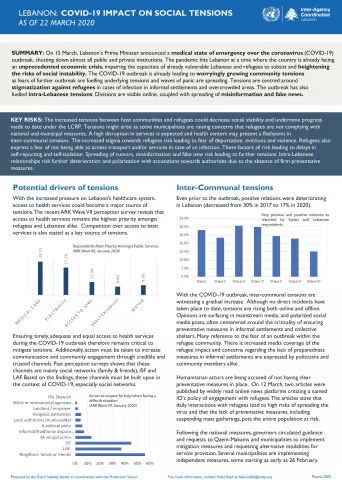
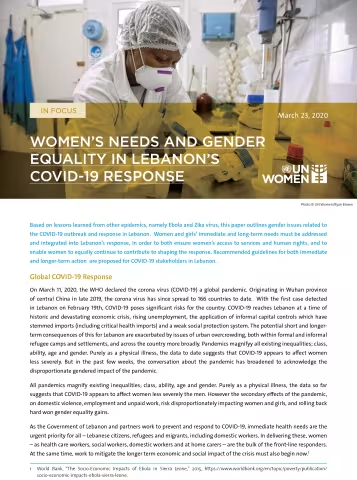
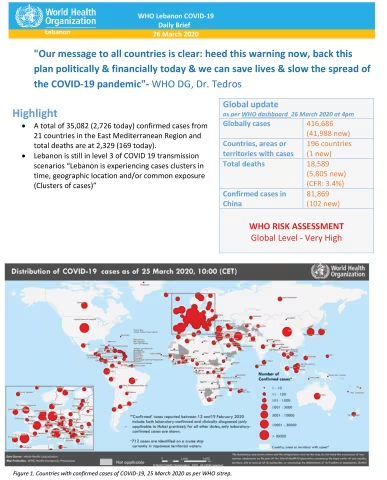
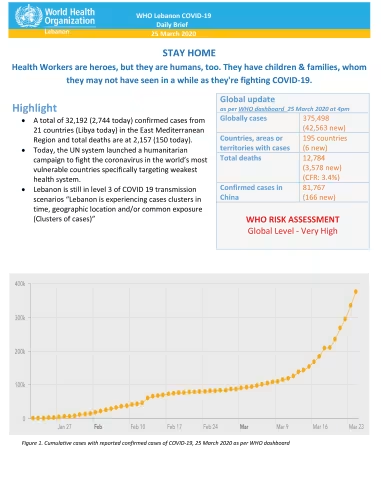
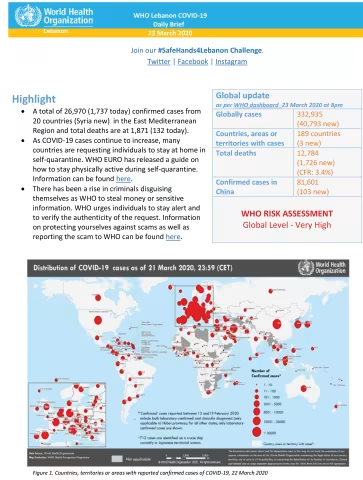
On 15 March, Lebanon’s Prime Minister announced a medical state of emergency over the coronavirus (COVID-19) outbreak, shutting down almost all public and private institutions. The pandemic hits Lebanon at a time where the country is already facing an unprecedented economic crisis, impairing the capacities of already vulnerable Lebanese and refugees to subsist and heightening the risks of social instability. The COVID-19 outbreak is already leading to worryingly growing community tensions as fears of further outbreak are fuelling underlying tensions and waves of panic are spreading. Tensions...
National
Publishing Date

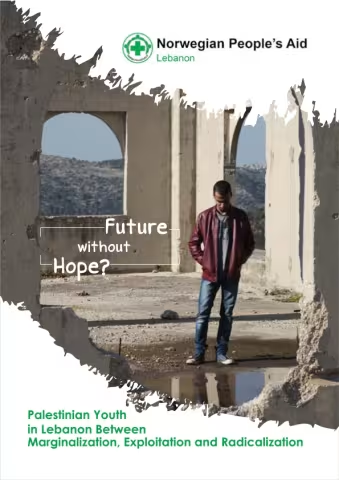
This research study presents the main finding of marginalization and exploitation processes related to Palestinian youth in Lebanon. The study was conducted between 2016-2017 in all over Lebanon including Palestinian camps and gatherings. Quantitative facts about the topic are well documented in the study. The methodology was based on three forms of data collection: desktop review, focus groups and in depth interviews with Palestinian youth and stakeholders.

The research is divided into three main chapters:

‘“No future” for Palestinian youth in Lebanon?’ is the first chapter of the report...

National
Publishing Date
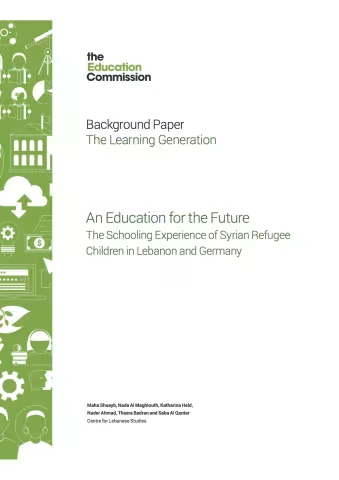
"An Education for Future: The Schooling Experience of Syrian Refugee Children in Lebanon and Germany" is a comparative study conducted by the Centre for Lebanse Studies. The study examines the future prospects of Syrian refugee children who dropped-out of Lebanese public schools and the German schools. The study compared Germany’s and Lebanon education provisions for inclusion of Syrian refugee children in public schools, as well as dropout rates of Syrian refugees. This comparison sought to highlight examples of best practices from Lebanon and Germany to reduce the dropout rates, to...
National
Publishing Date
This report aims to explore the fragmented organisation of healthcare services in Lebanon, for Syrian refugees. Although it is not an assessment of the Lebanese healthcare system, this report does nevertheless reflect on the challenges and underlying dynamics of the current Lebanese system, which are reproduced in the healthcare provision for Syrian refugees. In this sense, the report highlights the privatised, rather ad hoc, and irregular provision of healthcare in Lebanon, notably for Syrian refugees, which tends to take on a more curative rather than preventive approach, resulting in...
National
Publishing Date
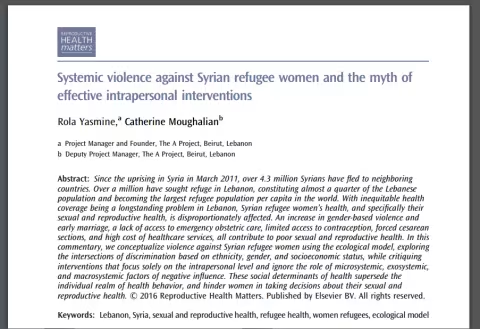
Since the uprising in Syria in March 2011, over 4.3 million Syrians have fled to neighboring countries. Over a million have sought refuge in Lebanon, constituting almost a quarter of the Lebanese population and becoming the largest refugee population per capita in the world. With inequitable health coverage being a longstanding problem in Lebanon, Syrian refugee women’s health, and specifically their sexual and reproductive health, is disproportionately affected. An increase in gender-based violence and early marriage, a lack of access to emergency obstetric care, limited access to...