Resources

Intervention Sectors
Resource Type
Displaying 1 - 20 of 68
National
Publishing Date

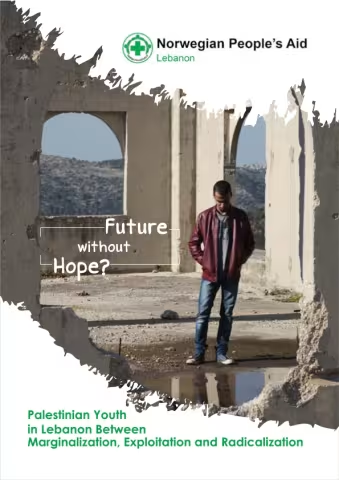
This research study presents the main finding of marginalization and exploitation processes related to Palestinian youth in Lebanon. The study was conducted between 2016-2017 in all over Lebanon including Palestinian camps and gatherings. Quantitative facts about the topic are well documented in the study. The methodology was based on three forms of data collection: desktop review, focus groups and in depth interviews with Palestinian youth and stakeholders.

The research is divided into three main chapters:

‘“No future” for Palestinian youth in Lebanon?’ is the first chapter of the report...

National
Publishing Date
The July war 2006, lasted 34 days, and led to the displacement of 915,762 (almost 25% of the Lebanese population) persons, relocating into public and private schools all over the country. With the coming into force of the cease fire in August 14th 2006, there was a rapid return of the displaced to the south.
National
Publishing Date
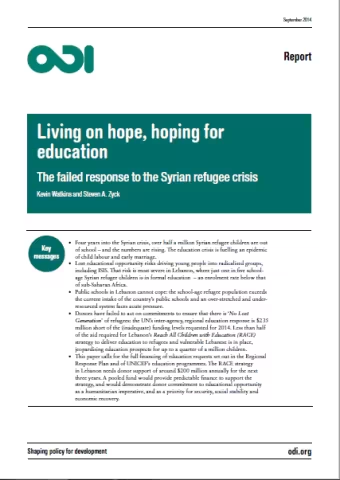
"An Education for Future: The Schooling Experience of Syrian Refugee Children in Lebanon and Germany" is a comparative study conducted by the Centre for Lebanse Studies. The study examines the future prospects of Syrian refugee children who dropped-out of Lebanese public schools and the German schools. The study compared Germany’s and Lebanon education provisions for inclusion of Syrian refugee children in public schools, as well as dropout rates of Syrian refugees. This comparison sought to highlight examples of best practices from Lebanon and Germany to reduce the dropout rates, to...
National
Publishing Date
This is an analytical report based on data and statistics collected from public schools and aiming at detecting the effect of the Syrian refugees crisis on the public education sector and the priorities and needs for the public schools in the best interest of the Lebanese and refugees students.
National
Publishing Date
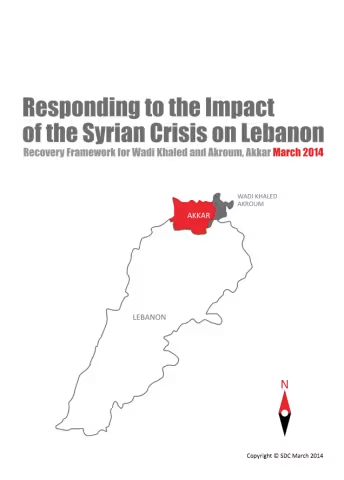
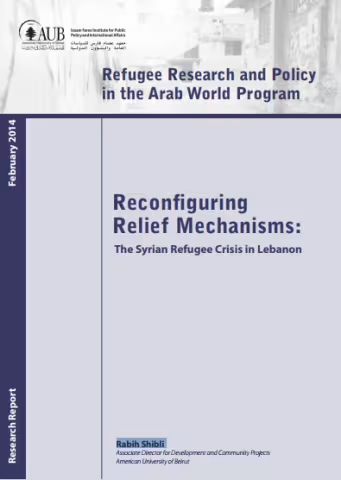
The Swiss Agency for Development and Cooperation (SDC) is pleased to share with you the report:  “Responding to the Impact of the Syrian Crisis on Lebanon: Recovery Framework for Wadi Khaled and Akroum, Akkar”, March 2014. SDC facilitated a process to shed light on the impact of the Syria crisis at the national level but also on the local level. The formulation of a recovery framework for Wadi Khaled and Akroum is a process that can be replicated for other affected regions of Lebanon. The findings and recommendations are based on consultations (between October 2013 and January 2014) with...
National
Publishing Date
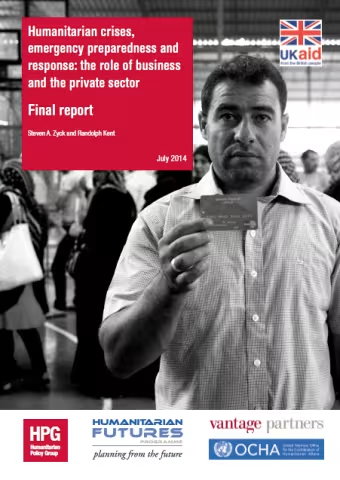
The private sector has long been a major contributor to humanitarian action. At the community level, businesses frequently use their materials and resources to aid people affected by crises. As local markets recover and supply chains are repaired, crisis-affected people are once again able to access basic goods and, in some cases, resume livelihoods. Large national, regional and multinational firms are also closely involved in supporting humanitarian objectives, whether indirectly, by resuming operations in crisis affected areas, or directly, by providing cash and in kind donations of goods or...
National
Publishing Date
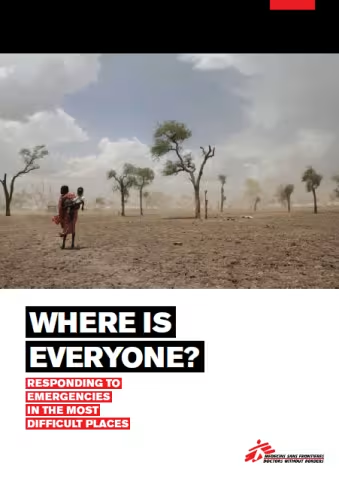
The humanitarian aid system is growing and expanding, and so surely its capacity to meet these challenges should also be growing. Yet despite the enormous resources, in the more complex, less high-profile and difficult contexts, MSF teams in the field have seen that humanitarian responses to displacement emergencies have not occurred in a timely and effective way. This is especially the case in conflict areas. These observations have prompted MSF to conduct this review, to better understand how the humanitarian system is responding to acute displacement emergencies. The review is based on...
National
Publishing Date
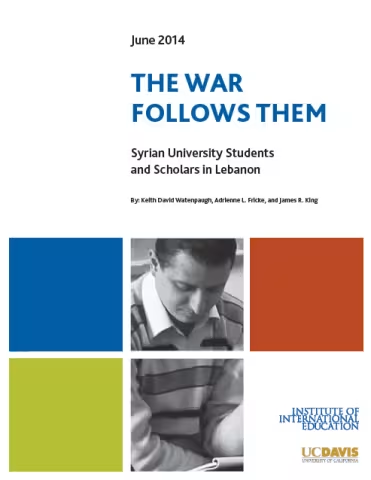
The crisis in Syria continues to have a devastating impact on professors, university students, and the education sector, not only in Syria but also in the neighboring countries that are hosting so many displaced Syrians. In this report, the Institute of International Education (IIE) and its Syria Consortium for Higher Education in Crisis looks at the conditions and educational needs of Syrians university students and scholars in Lebanon. “The War Follows Them: Syrian University Students and Scholars in Lebanon,” is based on first-hand research and interviews conducted in Lebanon in March 2014...
National
Publishing Date
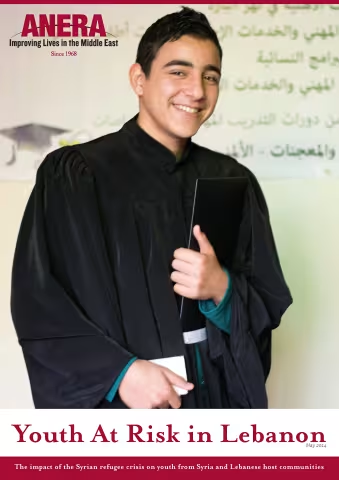
The Syrian conflict, now in its fourth year, has taken a heavy toll on Lebanon’s society. Among those most affected are young men and women in refugee camps and marginalized communities. Young people are increasingly confronting violence and discrimination. They are missing out on education and work opportunities. The rising number of unemployed and disenfranchised youth in Lebanon could become a security risk for both Lebanese and refugee communities. A society’s well-being relies on its youth, who can help revitalize the economy when education, health care and job opportunities are available...