This is an assessment done in the detention centers and prisons in south Lebanon in coordination with the prisons department in the ministry of interior through which the WASH situation inside these prisons and centers was detected, needs and priorities were defined and possible rehabilitation and enhancement explored.
The adapted version of the Global "Program P" manual provides concrete strategies and activities to engage men in active positive fatherhood, from their partner’s pregnancies through their children’s early years. It identifies best practices on engaging men in maternal and child health, care-giving, and preventing violence against women and children on basis of equality and non-violence.
This scoping study is intended to contribute to the ongoing policy discussions among governments, donors, and United Nations agencies about the education of Syrian refugees in Lebanon, Turkey, and Jordan (the three countries with the largest populations of Syrian refugees),
Widening Access to Quality Education for Syrian Refugees: The role of private and
NGO Sectors in Lebanon
Authors
Maha Shuayb, Nisrine Makkouk and Suha Tuttunji
September 2014
The crisis in Syria continues to have a devastating impact on professors, university students, and the education sector, not only in Syria but also in the neighboring countries that are hosting so many displaced Syrians. In this report, the Institute of International Education (IIE) and its Syria Consortium for Higher Education in Crisis looks at the conditions and educational needs of Syrians university students and scholars in Lebanon. “The War Follows Them: Syrian University Students and Scholars in Lebanon,” is based on first-hand research and interviews conducted in Lebanon in March 2014...
The Syrian conflict, now in its fourth year, has taken a heavy toll on Lebanon’s society.
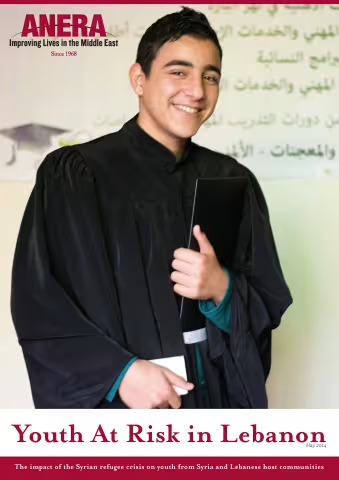
Among those most affected are young men and women in refugee camps and marginalized communities. Young people are increasingly confronting violence and discrimination. They are missing out on education and work opportunities. The rising number of unemployed and disenfranchised youth in Lebanon could become a security risk for both Lebanese and refugee communities.
A society’s well-being relies on its youth, who can help revitalize the economy when education, health care and job opportunities are available...
The crisis in Syria has entered its fourth year. Children have been on the front-line from the outset. They have experienced or witnessed horrific acts of indiscriminate
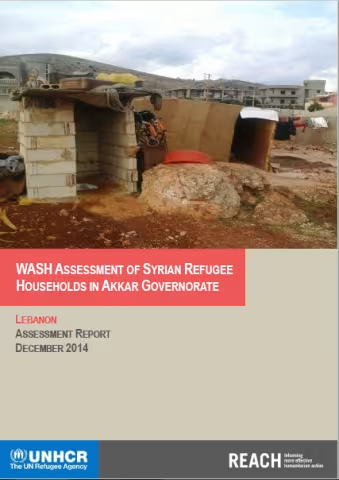
As the Syrian Crisis enters its fourth year, numerous water, sanitation, and hygiene (WASH) needs remain to be filled among Syrian refugees living in Lebanon, who now number more than 1.1 million.
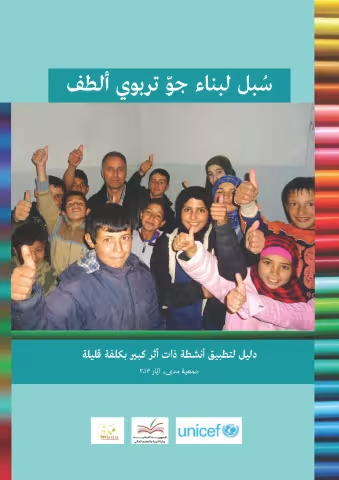
تم تصميم هذا الدليل إستناداً إلى الممارسات الجيدة التي تم جمعها في إطار مشروع «دعونا نذهب جميعاً إلى المدرسة » الممول من قبل منظّمة اليونيسف وقد أُعد ليكون مرجعاً مساعداً في عملية بناء شخصية الطفل مساهماً في تلطيف العملية التربوية التعليمية وخاصة في البيئة المحرومة التي تفتقر إلى أبسط الوسائل الترفيهية والثفافية. يتضمن هذا الدليل نماذج عن نشاطات لمختلف المراحل العمرية يمكن تطبيقها بأقل كلفة ممكنة، إضافتاً إلى مجموعة من المراجع عملت عليها جمعيات ومنظمات عديدة للهدف عينه.
بعد تحقيق المراحل الأساسية من المشروع تم إصدار هذا الدليل الذي يلخص كل الأعمال والخبرات التعلمية والنشاطات اللاصفية، نظراً...
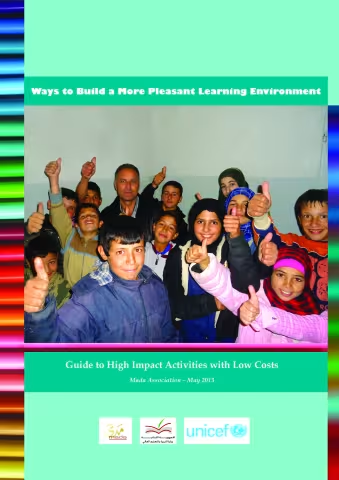
This guide has been designed by Mada, in close partnership UNICEF and the Ministry of Education, based on the good practices collected within the UNICEF funded project “Let’s All Go to School Initiative”. It has been prepared to serve as a reference tool to help in boosting up the educational and pedagogical process and developing the child’s personality, especially in deprived environments lacking the most basic recreational and cultural means.The guide offers easily implementable low-cost extracurricular activities and presents the reader with an overview of reference material and guides on...
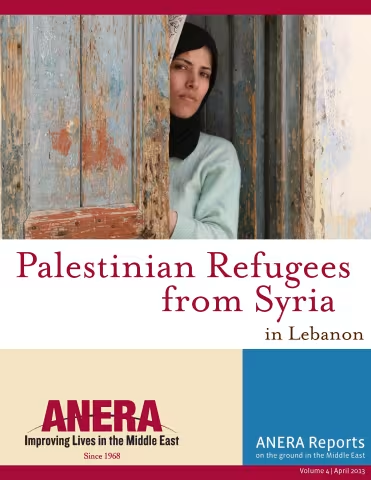
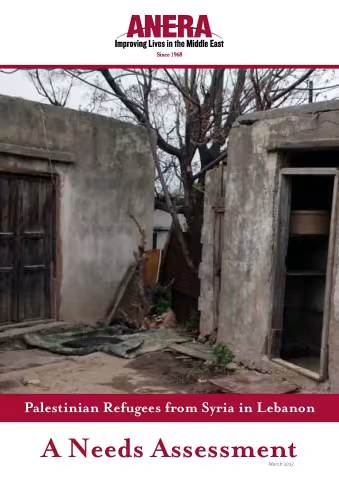
Palestinian refugees from Syria living in Lebanon are one of the most vulnerable sub-populations affected by the crisis. In April 2013, ANERA conducted a survey of these families to gain a clear picture of the situation on the ground and to assess the critical needs that exist. The findings are shocking and the situation is getting worse, day by day.
Palestinian refugees in Syria have attempted to remain neutral in the civil conflict, which began in March 2011, but they have increasingly been pulled into and affected by the conflict. Palestinian refugees entering Lebanon from Syria have particular needs and vulnerabilities vis-à-vis the general Syrian refugee population. Drawing on its mission of 45 years to serve Palestinian refugees in the Middle East, ANERA (American Near East Refugee Aid) has been monitoring and responding to the needs of Palestinian refugees from Syria. The refugee numbers now surpass 30,000. ANERA conducted the...
As part of the assessment support mission, capacity assessment requested by the WASH partners to be carried out, the assessment team developed a Capacity Assessment Tool designed to collect information covering aspects, such as, profile, WASH response, WASH activities, transpo
This report is the result of 4 months of field data collection from April to August 2013 carried out in the Informal Tented Settlements (ITS) of the two districts of Zgharta and Minieh-Dennieh by SOLIDARITÉS INTERNATIONAL’s (SI) outreach workers.
The number of Syrian refugees registered in Lebanon has more than quadrupled over the past six months. On January 1, 2013 Lebanon was hosting some 130,000 refugees; today that figure stands at more than 600,000.
This thematic report provides an overview of available lessons identified from assessments undertaken concerning the humanitarian situation in Syria as well as the situation for Syrian refugees in host-countries.
The purpose of the needs assessment conducted in the Bekaa area is to identify the needs of Syrian refugees (SR), in terms of food, non food items (NFIs), shelter, water and education.
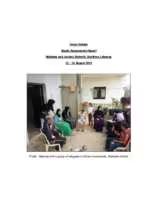
Swiss Solidar undertook a multi-sectoral needs assessment in August 2013 to assess the humanitarian needs of Syrian refugees residing in Nabatieh and Jezzine Districts in Southern Lebanon.1 Prior to undertaking its field assessment, Solidar undertook a detailed documentation r