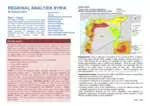
This Regional Analysis of the Syria Conflict (RAS) seeks to bring together information from all sources in the region and provide holistic analysis of the overall Syria crisis.
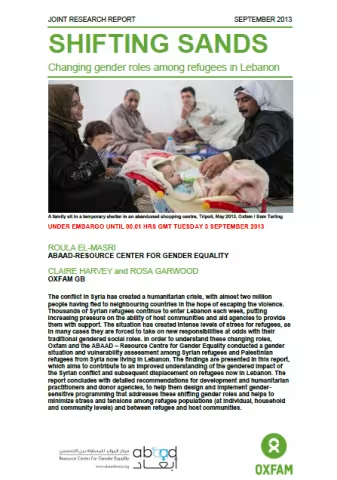
The conflict in Syria has created a humanitarian crisis, with almost two million people having fled to neighbouring countries in the hope of escaping the violence.
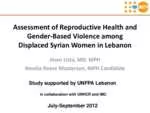
This study, supported by UNFPA, assessed the reproductive health and gender-based violence among displaced Syrian women in Lebanon between July and September 2012.
Since the unrest in Syria began in March 2011, the Bekaa Valley in Lebanon has hosted varying numbers of displaced Syrian families. Local actors such as municipalities and NGOs registered families for assistance received through regional and international donors.
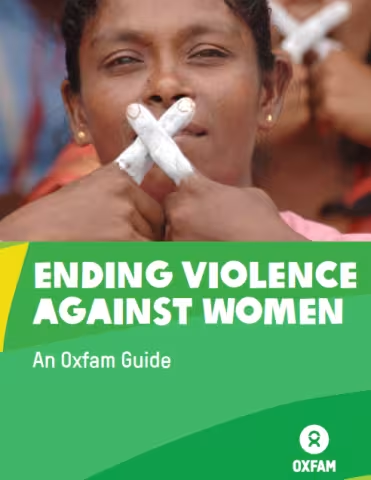
This guide is a resource for Oxfam staff, published in 2012, intended to inform and inspire their work, and to share with partners. It can be read and consulted individually – or used for discussion with peers.
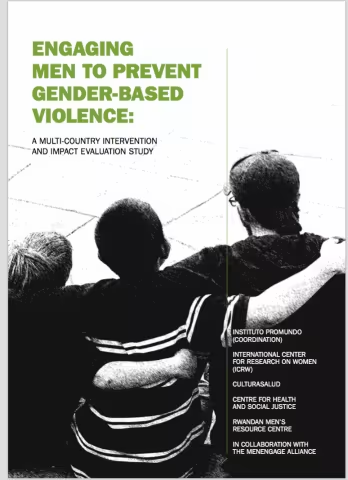
Over the span of three years, Instituto Promundo, with support from the United Nations Trust Fund to End Violence Against Women, implemented a multi-country project to engage men and boys in preventing violence against women and promote gender equality.
The human rights situation in the Syrian Arab Republic has deteriorated significantly since November 2011, causing further suffering to the Syrian people. Widespread violence and increasingly aggravated socio-economic conditions have left many communities in a perilous state.
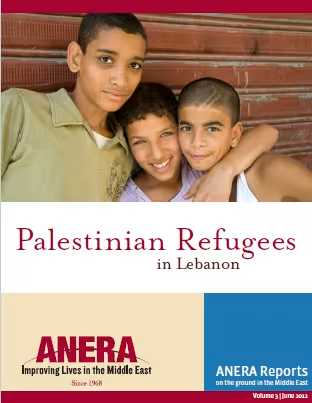
The list of challenges Palestinian refugee families living in Lebanon face is long and overwhelming. They live in overcrowded camps and have to deal with discrimination, isolation and social exclusion.
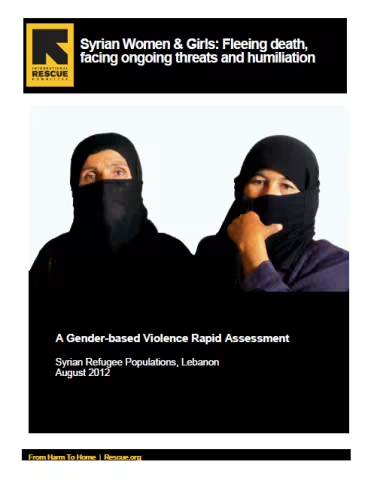
This Gender-based Violence Rapid Assessment conducted by International Rescue Committee in 2012 focuses on risks and violence faced by women and girls among the Syrian refugee population within Lebanon.
This resource is a United Nations Relief and Works Agency for Palestine Refugees in the Near East (UNRWA) reference training manual for frontline staff on how to work with GBV survivors.
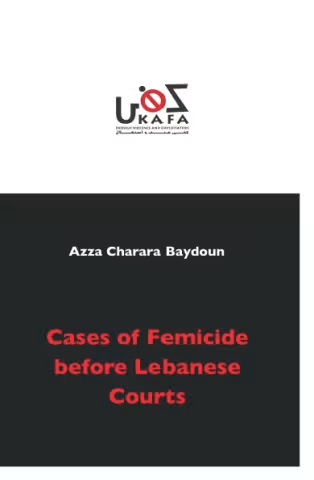
This case study book entitled “Cases of Femicide before Lebanese Courts” was written by Azza Charara Baydoun and published by KAFA (enough) Violence & Exploitation in 2011.
Oxfam GB commissioned the pilot study discussed in this report in order to understand further the context that shapes men’s gender roles and affects their behaviours, practices, and attitudes towards gender equality, with an explicit focus on VAW.
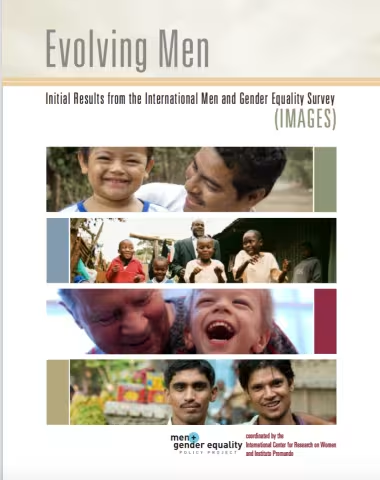
The International Men and Gender Equality Survey (IMAGES) is a comprehensive household questionnaire on men’s attitudes and practices – along with women’s opinions and reports of men’s practices – on a wide variety of topics related to gender equality.
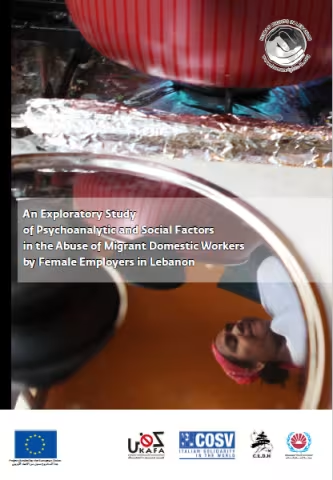
The brief of this qualitative exploratory study was to conduct targeted interviews with female employers of migrant domestic workers, psychiatrists, lawyers and institutional stakeholders in Lebanon.
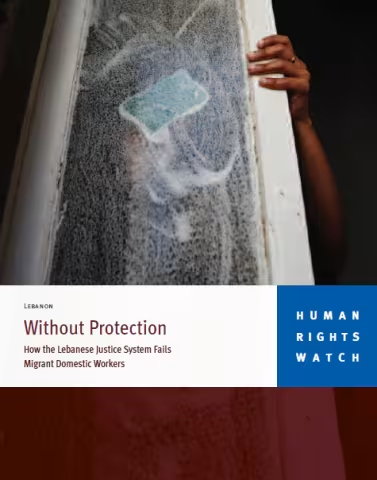
On December 9, 2009, a Lebanese criminal court sentenced a Lebanese woman to 15 days in jail for repeatedly beating Jonalin Malibago, her Filipina maid, three years earlier. Lebanese newspapers hailed the case a landmark victory for the country’s estimated 200,000 migrant domestic workers (MDWs), many of whom report abuse at the hands of their employers. The case illustrated the positive role that the judiciary can play in protecting MDWs, even though the sentence was lenient given the violation. But it also raised at least one significant question: was the Malibago verdict a rare instance of...
This document is the outcome of a workshop organised by UNRWA on the 31st of March 2010 on “Community of Practice in Building Referral Systems for Women Victims of Violence”.
This report was presented at the International Labour Conference, 99th Session, 2010. It was intended to facilitate the discussion of domestic work at the Conference and consists of ten chapters, each of which covers issues pertaining to the topic of domestic work.