More than a decade after the United Nations’ adoption of the Convention on the Elimination of All Forms of Discrimination against Women, which is adopted by many countries including Lebanon, these countries returned in 2015 to commit themselves to achieve gender equality and t
UNFPA on behalf of UNDP and UN Women organized a national workshop on gender-related laws, policies and practices in Lebanon, which was held in Beirut on the 7th and 8th of August, 2018.
This issue of Tatimma focuses on the question of civil rights and liberties in Lebanon. Whilst it is usually considered that civil freedoms in Lebanon are light-years ahead of other Arab countries. Yet this state of liberties appears to be more a facade for a discriminatory system which limits the liberties of Lebanese citizens, specifically Lebanese women, refugees, foreign workers to name a few.
This Policy Brief is based on research that explored the process of establishing and implementing Law 293, and on a policy dialogue that took place at the Institute on March 8, 2017 t
Today, women in Lebanon are fighting for equal access to opportunities and rights without prejudice against their gender, their expectations and their careers.
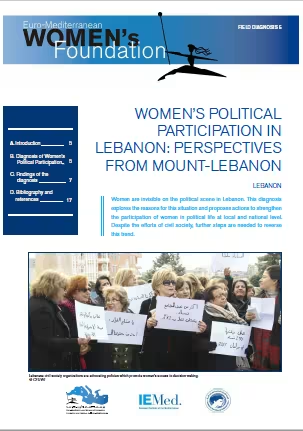
Although Lebanon is sometimes considered as the only democratic country in the Arab region with a free political environment and electoral system, the situation of women has not been strengthened enough for them to have a role on an equal footing with men. Lebanese women form a majority of 53% and they are actively participating in all aspects of Lebanese society. They enjoy equal constitutional rights with men and have the right to vote, hold public office, elect and be elected in municipal councils. Yet, this diagnosis, elaborated by the Committee for the Follow-Up on Women’s Issues (CFUWI)...
This report examines the nature of interaction and engagement between Lebanese citizens’ collectives and the state on gender-specific matters, through the case study of
This document provides elements of discussion and pragmatic solutions to challenges in addressing GBV in the context of resistance. It does not provide clear cut answers to all questions, but intends to bring together evidence from UNRWA and results from other agencies.
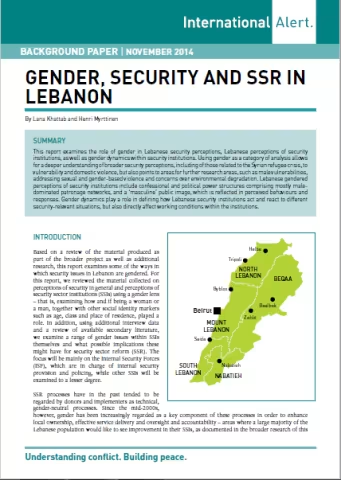
This report examines the role of gender in Lebanese security perceptions, Lebanese perceptions of security institutions, as well as gender dynamics within security institut
Violence against women is directly linked to the historic discrimination against them. It is an expression of the gendered imbalance of power that has resulted in a gap intensified by the existing legal, social, and cultural institutions.
This resource, published by Oxfam in 2013, aims to present standards that were originally developed for Oxfam staff to ensure a consistent approach to promoting gender equality in humanitarian preparedness and response programming.
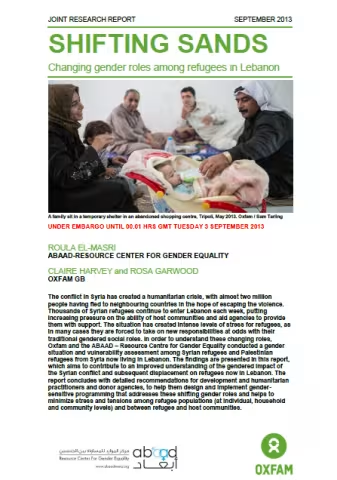
The conflict in Syria has created a humanitarian crisis, with almost two million people having fled to neighbouring countries in the hope of escaping the violence.
Since the unrest in Syria began in March 2011, the Bekaa Valley in Lebanon has hosted varying numbers of displaced Syrian families. Local actors such as municipalities and NGOs registered families for assistance received through regional and international donors.
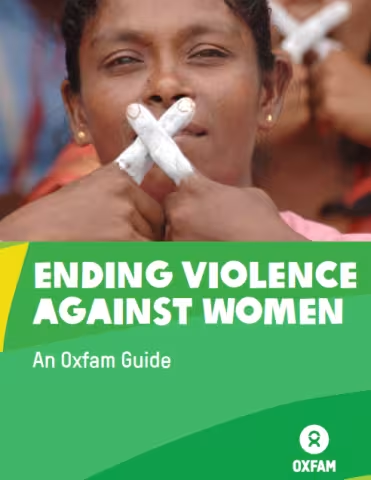
This guide is a resource for Oxfam staff, published in 2012, intended to inform and inspire their work, and to share with partners. It can be read and consulted individually – or used for discussion with peers.
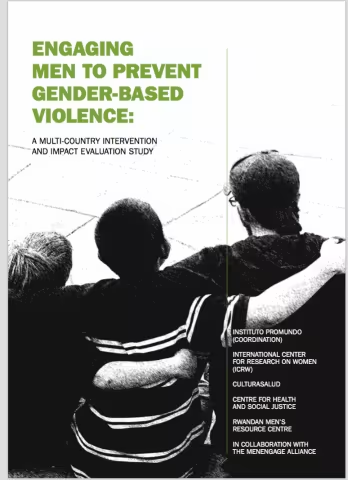
Over the span of three years, Instituto Promundo, with support from the United Nations Trust Fund to End Violence Against Women, implemented a multi-country project to engage men and boys in preventing violence against women and promote gender equality.
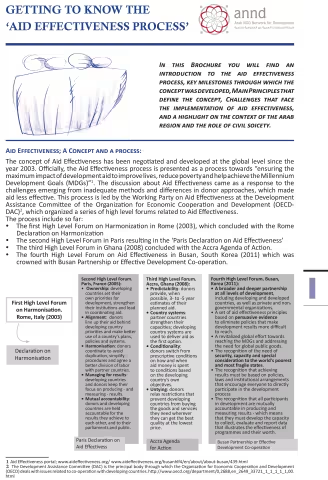
In this Brochure you will find an introduction to the aid effectiveness process, key milestones through which the concept was developed, Main Principles that define the concept, Challenges that face the implementation of aid effectiveness, and a highlight on the context of the