Terre des hommes foundation has been present in Lebanon since 1977. We provide life saving child protection assistance to the most vulnerable children and their families regardless of their nationality, ethnic origin and religious affiliation. Through our child protection in migration and access to justice programmes, our staff support victims of physical and sexual abuse, worst forms of child labor, child marriage, severe neglect and children in contact or conflict with the law. We work with children, their families, communities, NGO and UN partners, local authorities and religious leaders .
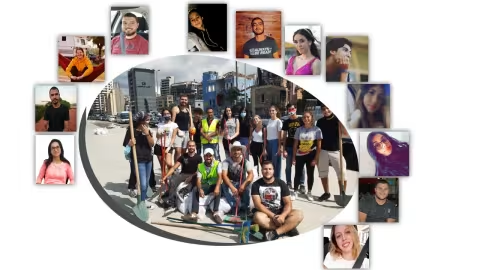
Beirut Explosion: Greatest Tragedies Come With Greatest Acts of Kindness.
Youth from a Sports and Youth Association (Chabibeh Sporting Club) become volunteers and share stories of compassion and pain mixed together to shed light on the darkest hour of their country.
This policy brief was developed based on an in-depth report titled “Women’s Political Participation: Exclusion and Reproduction of Social Roles. Case Studies from Lebanon;” in addition to discussions and insights gathered during a consultation workshop held on 8 November 2018, and which marked the participation of women who had taken part of the research, as well as activists, representatives of civil society organisations, and academics.
With globalisation, the mobility of people has grown, and women are essential actors in this migratory phenomenon. This article focuses on the role of women in migration and the role of migration in advancing women’s rights to achieve gender equality.
Violence against women is directly linked to the historic discrimination against them. It is an expression of the gendered imbalance of power that has resulted in a gap intensified by the existing legal, social, and cultural institutions.
This article addresses the public policy concept of gender mainstreaming and the extent of its efficacy since the 1995 Beijing Platform for Action (PfA) and the UN's adoption thereof in 1997.
The study upon which this article is based analyzes the status of Arab women in general, gender relations in the Middle East, and the situation of Arab women with disabilities, based on available disability statistics from a few selected countries and the author's observations